세계 경제는 서로 얽히고설킨 실타래와 같습니다. 한 나라의 무역 정책이 전 세계 경제의 운명을 좌우할 수 있다는 사실, 과거 100년 전 미국의 관세 정책이 그 무서운 증거입니다. 오늘은 명지대학교 김두얼 교수님의 해설을 통해 1930년대 스무트-홀리 관세가 어떻게 대공황을 심화시켰는지, 그리고 그 역사적 교훈이 현재 우리에게 무엇을 말해주는지 심도 있게 살펴보겠습니다.
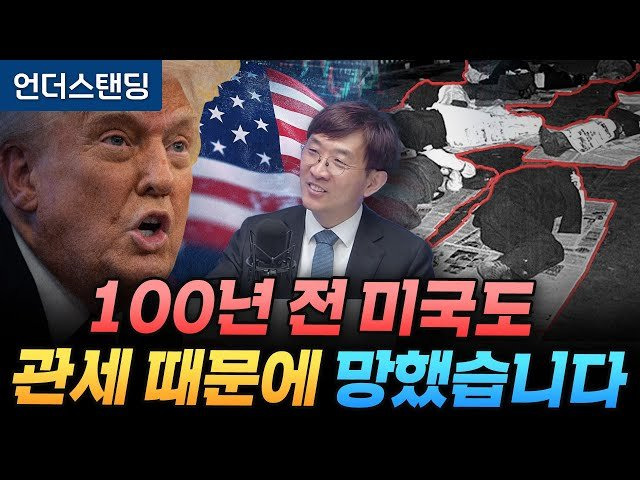
100년 전 미국의 관세, 대공황을 더 키웠습니다 (명지대 경제학과 김두얼 교수)
이 영상은 **100년 전 미국의 관세 정책**이 대공황을 심화시킨 과정을 명지대 김두얼 교수님의 해설을 통해 심도 있게 분석합니다. 당시 미국의 스무트-홀리 관세가 발단이 되어 **보복 관세**가
lilys.ai
보호무역주의의 씨앗: 스무트-홀리 관세의 탄생
농민 보호에서 시작된 관세 폭탄
"모든 경제적 재앙에는 선의의 의도가 깔려 있다"라는 말이 있습니다. 스무트-홀리 관세법도 마찬가지였습니다. 제1차 세계대전 동안 미국을 비롯한 많은 농업국가들은 전쟁 중인 유럽 국가들에 식량을 수출하며 호황을 누렸습니다. 그러나 전쟁이 끝나고 유럽 국가들이 농업 생산을 재개하자, 미국 농민들은 과잉생산과 가격 하락으로 큰 어려움을 겪게 되었습니다^2.
1922년, 미국 의회는 포드니-매컴버 관세를 도입하여 농민들을 보호하려 했지만, 이것만으로는 문제 해결이 충분하지 않았습니다. 그러자 더 강력한 관세 인상 요구가 일어났고, 여기에 여러 제조업 생산자들도 동참하게 되었습니다. 처음에는 농민 보호가 목적이었지만, 점차 다양한 산업군이 이 '관세 열차'에 올라타 자신들의 이익을 보호하려 했던 것입니다^2.
전례 없는 고율 관세의 탄생
결국 1930년 7월, 리드 스무트 상원의원과 윌리스 홀리 하원의원이 발의한 스무트-홀리 관세법이 시행되었습니다. 이 법안은 약 2만 종이 넘는 상품에 높은 관세를 부과했으며, 평균 관세율은 미국 역사상 가장 높은 60% 수준에 달했습니다^2.
흥미로운 점은 이 관세법이 1929년 말부터 시작된 세계 대공황과 직접적인 관련 없이 시작되었다는 것입니다. 스무트-홀리 관세법은 대공황을 일으킨 원인이라기보다, 이미 시작된 대공황을 심화시킨 요인이었습니다^2.
[이슈/국제] - 미중 무역전쟁 격화: 중국의 34% 보복관세와 그 파급효과
미중 무역전쟁 격화: 중국의 34% 보복관세와 그 파급효과
대외 무역에 의존도가 높은 국가들에게 세계 최대 경제 강국들 간의 갈등은 결코 좋은 소식이 아닙니다. 특히 최근 미국과 중국 사이에 벌어지고 있는 관세 전쟁은 글로벌 경제에 큰 파장을 일
agent-katrina.tistory.com
도미노처럼 무너진 세계 무역 체계
보복 관세의 연쇄 반응
"한 뺨을 맞으면 다른 뺨도 내밀라"는 가르침이 국제 무역에서는 통하지 않았습니다. 미국이 강력한 보호주의 정책을 시행하자, 다른 나라들은 보복 관세로 맞대응했습니다^1.
가장 대표적으로 영국은 1932년 모든 제품에 25%의 관세를 부과하는 일반관세 정책을 실시했습니다. 이는 눈에는 눈, 이에는 이라는 국제 무역의 냉혹한 현실을 보여주는 사례였습니다^2.
김두얼 교수는 "보복 관세가 서로 높아지면 무역이 원활하게 이루어지지 않아 양측 모두 겪는 비극이 발생합니다. 1930년대 대공황 당시에도 무역 전쟁이 상황을 악화시켰던 경험이 있으며, 무역이 줄어들면 경기 침체로 이어지는 악영향이 있습니다"라고 설명합니다^1.
블록 경제체제로의 전환
각국은 금본위제 탈퇴와 보호무역 정책을 통해 몇몇 국가 혹은 식민지만으로 교류를 제한하는 블록경제 체제로 전환했습니다. 이런 정책들은 세계 경제 침체와 맞물리며 국제 무역을 크게 위축시켰습니다^2.
그 결과는 참담했습니다. 1930년대 말에는 국제 교역량이 이전 해와 비교해 3분의 1 수준으로 줄어들었습니다^2. 미국의 수출액은 1929∼1933년 사이 61% 급감했고, 대공황 시기 전 세계 교역 규모도 25% 감소했습니다^9.
금본위제와 국제 금융 질서의 붕괴
데이비드 흄과 금본위제의 작동 원리
국제 무역에서 금본위제는 중요한 역할을 했습니다. 데이비드 흄이 정식화한 금본위제는 국제 무역에서 가격을 설정하는 메커니즘이었지만, 다양한 이유로 제대로 작동하지 않았습니다^1.
김두얼 교수는 "금본위제는 각국 중앙은행이 금으로 종이 돈을 지원하며 화폐 활동을 이루는 시스템입니다. 무역에서 A 나라가 흑자를 내면 B 나라는 금으로 결제를 하게 되고, 이로 인해 B 나라의 통화량이 줄어들게 됩니다"라고 설명합니다^1.
킨들버거의 헤게모니 이론과 국제 질서
찰스 킨들버거는 국제 무역 질서와 금융 질서의 유지에 있어 지배 국가(헤게모니)의 중요성을 강조했습니다. 19세기 말, 20세기 초의 국제 경제 질서는 영국이 지배 국가로서 중앙은행과 같은 역할을 통해 유지되었으나, 제1차 세계대전으로 이 체계가 파괴되었습니다^1.
제1차 세계대전 이후, 미국은 경제 규모 면에서 가장 강력한 국가가 되었으나, 국제 경제 질서를 주도할 의사와 능력이 없었습니다. 킨들버거의 주장에 따르면, 미국이 지배 국가로서 국제 질서를 안정시키려는 노력이나 의사가 부족하여 경제 질서가 불안정해졌다는 점이 강조됩니다^1.
대공황의 심화: 실물경제로의 연쇄 반응
은행 위기와 신용 경색
스무트-홀리 관세와 보복 관세의 연쇄 작용은 국제 무역뿐만 아니라 금융 시스템에도 큰 충격을 주었습니다. 밀턴 프리드만은 대공황의 원인을 중앙은행의 잘못된 통화 정책으로 설명하며, 통화량을 줄였던 것이 경기를 악화시켰다고 강조했습니다^1.
1930년부터 시작된 주식 시장 폭락과 함께 미국에서 많은 은행들이 도산하게 되었습니다. 은행의 도산이 발생하면 신용이 경색되고, 기업들이 망하게 되어 경기가 침체되는 문제를 초래합니다^1.
실물 경제의 붕괴
관세 정책은 단순히 무역량 감소에 그치지 않고 실물 경제 전반에 악영향을 미쳤습니다. 대공황 첫해인 1929년 주가 하락 폭은 11% 내외였으나, 관세법이 만들어진 1930년부터 이후 10년간 하락 폭이 무려 90%를 넘었습니다^4.
유명한 경제 역사학자인 존 스틸 고든(John Steels Gordon)은 경제 대공황이 1929년 10월 29일 주가 대폭락 때문이 아닌 1930년 6월 17일 '스무트-홀리 법' 제정 후 시작되었음을 입증하는 논문을 발표하기도 했습니다^4.
역사는 반복된다: 현대적 함의와 교훈
무역 전쟁의 되풀이?
역사는 교훈을 주지만, 사람들은 그 교훈을 잘 배우지 못합니다. 현재 세계 경제 상황에서 보호무역주의의 귀환은 우려할 만한 사항입니다. 국제신용평가사 피치에 따르면, 현재 관세 정책으로 미국의 평균 관세율은 지난해 2.5%에서 22% 수준까지 치솟을 것으로 예상됩니다. 이는 1909년 23%를 기록한 이후 최고 수준입니다^6.
더글러스 어윈 미국 다트머스대 경제사학자는 "현재 미국의 수입이 국내총생산(GDP)에서 차지하는 비중은 1930년대 초반보다 훨씬 크다"고 지적하며, 현재의 관세 정책이 스무트-홀리 관세법보다 더 큰 영향을 미칠 수 있다고 경고합니다^3.
보호무역주의의 모순
김두얼 교수는 관세 인상을 통해 IRS(미국 국세청)를 없애자는 주장은 앞뒤가 맞지 않는다고 지적합니다. "관세를 높이면 정부 수입이 늘어나기 위해서는 수입품의 수량이 줄어서는 안 됩니다. 수입이 줄어들면 관세 인상에도 불구하고 수입이 늘어날 수 없는 모순이 발생합니다"^1.
또한 "관세 문제는 복잡한 세금 문제로, 생산자와 소비자의 이해 관계가 다르게 나타날 수 있습니다. 대공황의 경험을 통해, 잘못된 경제 이론과 국가 간의 협조 결여가 경제 혼란을 초래할 수 있음을 인식해야 합니다"라고 강조합니다^1.
자유무역과, 국제 협력의 중요성
제2차 세계대전 이후의 교훈
제2차 세계대전이 끝날 무렵 세계 각국 정부는 대공황과 같은 비극을 되풀이하지 않기 위해 새로운 세계 경제 질서를 논의했습니다. 당시 정책당국자와 학자들은 보호무역이 대공황을 심화시킨 주요 원인이라고 여겼기 때문에 자유무역 체제를 공고히 하는 새로운 무역 질서를 추구했습니다^2.
이러한 노력으로 GATT(관세 및 무역에 관한 일반협정)와 나중에 WTO(세계무역기구)가 설립되었으며, 이는 자유무역 체제의 근간이 되었습니다.
[이슈/경제] - 디지털 달러 패권의 시대: 스테이블 코인의 부상과 글로벌 금융 질서의 변화
디지털 달러 패권의 시대: 스테이블 코인의 부상과 글로벌 금융 질서의 변화
트럼프 행정부의 달러 기반 스테이블 코인 전략이 새로운 세계 금융 질서를 만들어가고 있습니다. 이 변화는 단순한 암호화폐 발전을 넘어 글로벌 경제 패권의 재편, 국가 화폐 주권의 도전, 그
agent-katrina.tistory.com
국제 협력의 필요성
김두얼 교수는 "국제 질서의 안정성은 헤게모니에 달려 있으며, 헤게모니가 없으면 질서가 무질서해질 수 있습니다. 대공황은 국제 질서의 공백이 어떻게 전쟁으로 연결될 수 있는지를 보여주는 사례입니다"라고 말합니다^1.
따라서 현재의 보호무역주의 경향에 대응하기 위해서는 국제 협력과 대화가 중요합니다. 역사적 교훈을 되새겨, 과거의 실패를 반복하지 않는 지혜가 필요한 시점입니다.
결론: 무역 전쟁에서 배우는 교훈
100년 전 미국의 관세 정책이 보여준 가장 큰 교훈은 무역 전쟁에서는 승자가 없다는 것입니다. 스무트-홀리 관세법은 미국 농민과 제조업자를 보호하려는 의도였지만, 결과적으로 세계 경제를 대공황의 수렁으로 더 깊이 빠뜨렸습니다.
김두얼 교수의 해설을 통해 우리는 국제 무역과 금융 질서의 중요성, 그리고 이를 유지하기 위한 국제 협력의 필요성을 다시 한번 확인할 수 있습니다. 과거의 실패를 교훈 삼아, 보호무역주의의 유혹에 쉽게 넘어가지 않는 지혜를 기르는 것이 현재 우리에게 필요한 자세일 것입니다.
여러분은 어떻게 생각하시나요? 현재의 관세 정책이 과거의 실패를 반복할 가능성이 있을까요? 아니면 지금은 상황이 달라서 다른 결과를 가져올 수 있을까요? 함께 생각해보면 좋겠습니다.
#관세정책 #스무트홀리관세법 #대공황 #세계경제 #보호무역주의 #자유무역 #미국경제 #경제역사 #금본위제 #국제협력 #무역전쟁 #경제위기 #김두얼교수 #경제학
Learning from History's Mistakes: How American Tariff Policies Deepened the Great Depression 100 Years Ago
The global economy is like an intricate web of interconnected threads. The fact that one country's trade policy can determine the fate of the world economy is a terrifying truth, and America's tariff policy from 100 years ago stands as powerful evidence of this. Today, through Professor Kim Doo-ol of Myongji University's analysis, we will take an in-depth look at how the Smoot-Hawley Tariff of the 1930s deepened the Great Depression and what historical lessons it offers us today.
Seeds of Protectionism: The Birth of the Smoot-Hawley Tariff
A Tariff Bomb That Started with Farmer Protection
There is a saying that "behind every economic disaster lies a well-intentioned idea." The Smoot-Hawley Tariff Act was no exception. During World War I, many agricultural countries, including the United States, prospered by exporting food to European countries at war. However, when the war ended and European countries resumed agricultural production, American farmers faced serious difficulties due to overproduction and falling prices^2.
In 1922, the U.S. Congress introduced the Fordney-McCumber Tariff to protect farmers, but this alone was not enough to solve the problem. As a result, demands for even stronger tariff increases arose, and various manufacturing producers joined in as well. What began as protection for farmers gradually evolved as various industries boarded this "tariff train" to protect their own interests^2.
The Birth of Unprecedented High Tariffs
Finally, in July 1930, the Smoot-Hawley Tariff Act, proposed by Senator Reed Smoot and Representative Willis Hawley, went into effect. This bill imposed high tariffs on more than 20,000 types of goods, with an average tariff rate of 60%, the highest in American history^2.
Interestingly, this tariff law began without any direct connection to the Great Depression that started in late 1929. The Smoot-Hawley Tariff Act was not the cause of the Great Depression but rather a factor that deepened the already-begun depression^2.
The World Trade System Collapsed Like Dominoes
The Chain Reaction of Retaliatory Tariffs
The teaching "if someone slaps you on one cheek, turn to them the other also" did not apply in international trade. When the United States implemented strong protectionist policies, other countries responded with retaliatory tariffs^1.
Most notably, Britain implemented a general tariff policy in 1932 that imposed a 25% tariff on all products. This was a case of "an eye for an eye, a tooth for a tooth" showing the harsh reality of international trade^2.
Professor Kim explains, "When retaliatory tariffs rise between countries, trade does not flow smoothly, creating a tragedy for both sides. During the Great Depression of the 1930s, trade wars worsened the situation, and when trade decreases, it leads to economic recession"^1.
Transition to Block Economic Systems
Countries switched to block economic systems, limiting exchanges to a few countries or colonies through abandoning the gold standard and implementing protectionist trade policies. These policies, coupled with the global economic recession, significantly reduced international trade^2.
The results were devastating. By the late 1930s, international trade volume had decreased to one-third of previous levels^2. U.S. exports decreased by 61% between 1929 and 1933, and global trade volume during the Great Depression decreased by 25%^9.
The Collapse of the Gold Standard and International Financial Order
David Hume and the Working Principles of the Gold Standard
The gold standard played an important role in international trade. The gold standard, formalized by David Hume, was a mechanism for setting prices in international trade, but it failed to work properly for various reasons^1.
Professor Kim explains, "The gold standard is a system where central banks of each country support paper money with gold. In trade, if country A has a surplus, country B has to settle in gold, which reduces country B's money supply"^1.
Kindleberger's Hegemony Theory and International Order
Charles Kindleberger emphasized the importance of a dominant country (hegemony) in maintaining international trade and financial order. The international economic order of the late 19th and early 20th centuries was maintained by Britain acting as a central bank-like role as the dominant country, but this system was destroyed by World War I^1.
After World War I, the United States became the most powerful country in terms of economic scale, but it lacked the will and ability to lead the international economic order. According to Kindleberger, the economic order became unstable because the United States lacked the effort or will to stabilize the international order as a dominant country^1.
Deepening of the Great Depression: Chain Reactions to the Real Economy
Banking Crisis and Credit Crunch
The chain reaction of Smoot-Hawley tariffs and retaliatory tariffs had a significant impact not only on international trade but also on the financial system. Milton Friedman explained the cause of the Great Depression as the central bank's incorrect monetary policy, emphasizing that reducing the money supply worsened the economy^1.
Beginning in 1930, many banks in the United States collapsed along with the stock market crash. When banks fail, credit tightens, businesses fail, and the economy goes into recession^1.
Collapse of the Real Economy
Tariff policies had adverse effects on the entire real economy, not just reducing trade volume. The stock market decline in 1929, the first year of the Great Depression, was around 11%, but from 1930, when the tariff law was created, the decline over the next decade exceeded 90%^4.
Famous economic historian John Steele Gordon published a paper proving that the Great Depression began after the enactment of the Smoot-Hawley Act on June 17, 1930, not because of the stock market crash on October 29, 1929^4.
History Repeats Itself: Modern Implications and Lessons
Repetition of Trade Wars?
History provides lessons, but people often fail to learn them. The return of protectionism in the current global economic situation is concerning. According to Fitch, a credit rating agency, the current tariff policy will increase the average U.S. tariff rate from 2.5% last year to 22%. This is the highest level since 1909 when it recorded 23%^6.
Douglas Irwin, an economic historian at Dartmouth College, points out that "the current share of imports in U.S. Gross Domestic Product (GDP) is much larger than in the early 1930s," warning that current tariff policies could have a greater impact than the Smoot-Hawley Tariff Act^3.
The Paradox of Protectionism
Professor Kim points out that the argument to eliminate the IRS (Internal Revenue Service) through tariff increases is contradictory. "For government revenue to increase when tariffs are raised, the quantity of imports must not decrease. If imports decrease, revenue cannot increase despite tariff increases, creating a contradiction"^1.
He also emphasizes that "tariff issues are complex tax issues where the interests of producers and consumers can differ. Through the experience of the Great Depression, we must recognize that incorrect economic theories and lack of cooperation between countries can cause economic chaos"^1.
The Importance of Free Trade and International Cooperation
Lessons After World War II
At the end of World War II, governments around the world discussed a new world economic order to avoid repeating tragedies like the Great Depression. Policy makers and scholars at the time pursued a new trade order that strengthened the free trade system because they believed protectionism was a major cause of the deepening Great Depression^2.
These efforts led to the establishment of GATT (General Agreement on Tariffs and Trade) and later the WTO (World Trade Organization), which became the foundation of the free trade system.
The Need for International Cooperation
Professor Kim says, "The stability of the international order depends on hegemony, and without hegemony, order can become disorderly. The Great Depression is a case showing how a void in international order can lead to war"^1.
Therefore, international cooperation and dialogue are important in responding to current protectionist tendencies. It is time to recall historical lessons and gain the wisdom not to repeat past failures.
Conclusion: Lessons from Trade Wars
The biggest lesson from American tariff policies 100 years ago is that there are no winners in trade wars. The Smoot-Hawley Tariff Act was intended to protect American farmers and manufacturers, but it ultimately dragged the world economy deeper into the quagmire of the Great Depression.
Through Professor Kim's analysis, we can once again confirm the importance of international trade and financial order, and the need for international cooperation to maintain it. Learning from past failures and developing the wisdom not to easily fall for the temptation of protectionism is the attitude we need today.
What do you think? Is there a possibility that current tariff policies will repeat past failures? Or could different results be possible because the situation is different now? Let's think about it together.
#TariffPolicy #SmootHawleyTariffAct #GreatDepression #WorldEconomy #Protectionism #FreeTrade #USEconomy #EconomicHistory #GoldStandard #InternationalCooperation #TradeWar #EconomicCrisis #ProfessorKimDooOl #Economics
#관세정책 #스무트홀리관세법 #대공황 #세계경제 #보호무역주의 #자유무역 #미국경제 #경제역사 #금본위제 #국제협력 #무역전쟁 #경제위기 #김두얼교수 #경제학
'이슈 > 국제' 카테고리의 다른 글
| 무역전쟁을 넘어선 협상 카드: 트럼프의 관세 폭탄과 글로벌 경제 재편 전략 (1) | 2025.04.05 |
|---|---|
| 미중 무역전쟁 격화: 중국의 34% 보복관세와 그 파급효과 (0) | 2025.04.04 |
| 트럼프 행정부와 미국 대학의 충돌: '학문의 자유' vs '정치적 개입'의 대립 (5) | 2025.04.04 |
| 트럼프의 반도체 관세, 글로벌 반도체 산업에 드리운 먹구름 (0) | 2025.04.04 |
| 미국 주가 폭락, 트럼프의 관세 폭탄이 글로벌 증시에 몰고 온 충격파: VIX 지수와 주요 지수 분석 (1) | 2025.04.04 |


