*"반도체에 대한 관세가 매우 곧 시작될 것"* - 도널드 트럼프 미국 대통령이 마이애미로 향하는 전용기에서 한 이 한마디가 전 세계 반도체 산업에 충격파를 던졌습니다. 이미 자동차 분야에 25% 관세를 부과한 트럼프 정부가 이제 첨단 기술의 핵심인 반도체 분야로 관세의 칼날을 확장하려는 움직임을 보이고 있습니다. 이는 어떤 의미를 갖고, 한국과 글로벌 반도체 산업에 어떤 영향을 미칠까요?
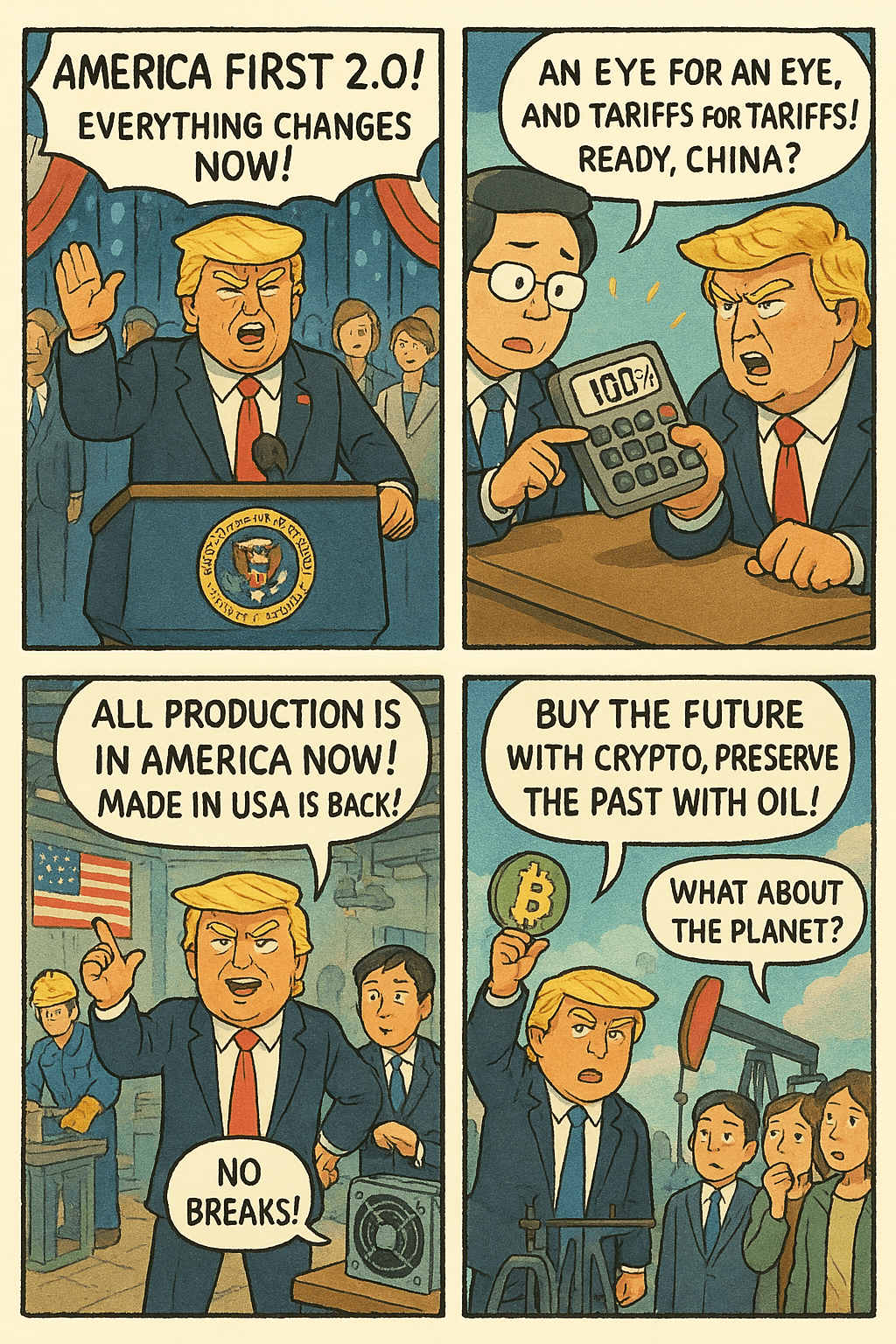
트럼프의 반도체 관세 선언, 무엇이 담겼나?
트럼프 대통령은 2025년 4월 3일(현지시간), 마이애미로 이동하는 전용기에서 기자들과 만나 반도체에 대한 관세 부과를 "매우 곧(very soon)" 시행할 것이라고 발표했습니다^2^8. 이는 전날 발표한 국가별 상호관세 정책에서 반도체가 일시적으로 제외되었던 것과는 대조적입니다^3.
왜 반도체는 상호관세에서 제외되었을까요? 백악관은 이에 대해 "트럼프 대통령이 별도 산업별 관세를 계획하고 있기 때문"이라고 설명했습니다^6. 즉, 반도체에는 별도의 품목별 관세를 적용할 계획이었던 것입니다.
이미 트럼프 대통령은 지난 2월, 외국산 반도체에 대한 품목별 관세가 최소 25% 이상이 될 것이라고 예고한 바 있습니다^6. 이는 자동차에 부과된 25% 관세와 비슷한 수준으로, 한국의 주요 수출품 1위(자동차)와 2위(반도체)가 모두 트럼프의 관세 정책에 직격탄을 맞게 된 셈입니다^5.
글로벌 반도체 기업들의 주가 폭락, 시장은 어떻게 반응했나?
트럼프 대통령의 관세 발표 이후 글로벌 반도체 관련 주식 시장은 급격한 하락세를 보였습니다^7. 엔비디아(Nvidia)의 주가는 7.5% 이상 하락했고, AMD는 8.9%, 브로드컴(Broadcom)은 10% 이상, 마이크론 테크놀로지(Micron Technology)는 무려 16%나 폭락했습니다^7.
특히 주목할 점은 엔비디아의 GPU 등 첨단 반도체를 생산하는 대만의 TSMC 역시 7% 이상 주가가 하락했다는 점입니다^7. 이는 반도체 공급망 전체가 트럼프의 관세 정책으로 인해 타격을 받을 것이라는 시장의 우려를 반영합니다.
한국 반도체 산업에 미치는 영향은?
한국 반도체 산업은 일단 상호관세 대상에서 제외되어 잠시 한숨을 돌렸지만, 전문가들은 여전히 긴장을 늦출 수 없다고 입을 모읍니다^6.
직접적인 영향: 한국의 반도체 대미 수출 비중은 7.5%로, 중국(32.8%), 홍콩(18.4%), 대만(15.2%) 등에 비해 상대적으로 적은 편입니다^8. 그러나 최소 25% 이상의 관세가 부과된다면, 가격 경쟁력이 크게 약화될 수밖에 없습니다.
간접적인 영향: 차용호 LS증권 연구원은 "반도체가 상호관세 제외 품목으로 지정됐으나, IT 디바이스에 대한 관세는 면제되지 않았다"며 "결국 수요 측면에서는 타격이 불가피하다"고 분석했습니다^6. 즉, 반도체를 사용하는 최종 제품에 관세가 부과되면 반도체 수요 자체가 감소할 수 있다는 우려입니다.
트럼프의 관세 정책, 어떻게 대응해야 할까?
반도체 업계는 현재 다양한 대응 방안을 모색 중입니다. 가장 확실한 방법은 미국 현지 생산을 확대하는 것이지만, 이는 상당한 비용과 시간이 소요되는 과제입니다^6.
더 중요한 것은 정부와 기업 간의 긴밀한 협력입니다. 한국 정부는 미국과의 협상을 통해 관세 완화 또는 면제를 받기 위한 외교적 노력을 기울여야 하며, 기업들은 생산기지 다변화와 기술 경쟁력 강화를 통해 관세 리스크를 완화해 나가야 합니다.
향후 전망과 시사점
트럼프 대통령의 관세 정책은 미국 자국 산업 보호와 무역 적자 해소라는 명분을 내세우고 있지만, 글로벌 공급망의 혼란과 소비자 가격 상승이라는 부작용을 초래할 가능성이 높습니다.
반도체는 현대 산업의 필수 요소이자 국가 안보와도 직결되는 전략 자원입니다. 따라서 관세 정책이 단기적인 무역 균형보다는 글로벌 기술 혁신과 공급망 안정이라는 더 큰 그림 속에서 재고될 필요가 있습니다.
여러분은 트럼프의 반도체 관세가 실제로 미국과 글로벌 경제에 어떤 영향을 미칠 것이라고 생각하시나요? 보호무역이 정말 미국 산업을 부흥시킬 수 있을까요, 아니면 모두에게 해가 되는 결과를 가져올까요?
#트럼프관세 #반도체관세 #글로벌공급망 #한국반도체 #보호무역정책 #무역전쟁 #반도체산업 #삼성전자 #SK하이닉스 #테크산업 #관세정책 #미국경제 #글로벌경제 #수출영향 #관세리스크
Trump's Semiconductor Tariffs: Dark Clouds Looming Over the Global Semiconductor Industry
*"Tariffs on semiconductors will be starting very soon"* - This single statement by US President Donald Trump aboard his presidential aircraft heading to Miami has sent shockwaves through the global semiconductor industry. After already imposing a 25% tariff on the automobile sector, the Trump administration is now extending its tariff blade to semiconductors, the core of advanced technology. What does this mean, and how will it affect the Korean and global semiconductor industries?
What's Behind Trump's Semiconductor Tariff Declaration?
On April 3, 2025 (local time), President Trump announced to reporters on his aircraft to Miami that he would implement tariffs on semiconductors "very soon"^2^8. This contrasts with the previous day's announcement of country-specific reciprocal tariffs, from which semiconductors were temporarily excluded^3.
Why were semiconductors excluded from the reciprocal tariffs? The White House explained this was "because President Trump is planning separate industry-specific tariffs"^6. In other words, there was already a plan to apply separate item-specific tariffs to semiconductors.
Trump had already indicated in February that item-specific tariffs on foreign semiconductors would be at least 25% or higher^6. This is similar to the 25% tariff imposed on automobiles, meaning South Korea's top export items - automobiles (1st) and semiconductors (2nd) - will both be directly hit by Trump's tariff policies^5.
Global Semiconductor Companies' Stock Plunge: How Did the Market React?
Following President Trump's tariff announcement, the global semiconductor-related stock market showed a sharp decline^7. Nvidia's stock fell by more than 7.5%, AMD dropped 8.9%, Broadcom declined over 10%, and Micron Technology plummeted by a staggering 16%^7.
Notably, Taiwan's TSMC, which produces advanced semiconductors including Nvidia's GPUs, also saw its stock price fall by more than 7%^7. This reflects market concerns that the entire semiconductor supply chain will be impacted by Trump's tariff policies.
What's the Impact on South Korea's Semiconductor Industry?
While Korea's semiconductor industry has temporarily breathed a sigh of relief after being excluded from the reciprocal tariffs, experts unanimously agree that they cannot relax their vigilance^6.
Direct Impact: South Korean semiconductor exports to the US account for 7.5% of total semiconductor exports, relatively small compared to China (32.8%), Hong Kong (18.4%), and Taiwan (15.2%)^8. However, if tariffs of at least 25% or higher are imposed, price competitiveness will inevitably be significantly weakened.
Indirect Impact: Cha Yong-ho, an analyst at LS Securities, noted, "Although semiconductors were designated as excluded items from reciprocal tariffs, tariffs on IT devices were not exempted," analyzing that "impact on the demand side is inevitable"^6. This means that if tariffs are imposed on end products using semiconductors, semiconductor demand itself could decrease.
How Should We Respond to Trump's Tariff Policies?
The semiconductor industry is currently exploring various response measures. The most definitive method would be to expand local production in the US, but this is a task that requires considerable cost and time^6.
More important is close cooperation between government and industry. The Korean government should make diplomatic efforts to negotiate tariff reductions or exemptions with the US, while companies should mitigate tariff risks through production base diversification and strengthening technological competitiveness.
Future Outlook and Implications
President Trump's tariff policies claim to protect domestic US industries and reduce trade deficits, but they are likely to cause disruptions in global supply chains and increases in consumer prices.
Semiconductors are essential elements of modern industry and strategic resources directly related to national security. Therefore, tariff policies need to be reconsidered within the bigger picture of global technological innovation and supply chain stability, rather than short-term trade balances.
What do you think will be the actual impact of Trump's semiconductor tariffs on the US and global economies? Can protectionism really revitalize American industry, or will it bring harmful results to everyone?
#TrumpTariffs #SemiconductorTariffs #GlobalSupplyChain #KoreanSemiconductors #ProtectionistPolicy #TradeWar #SemiconductorIndustry #SamsungElectronics #SKHynix #TechIndustry #TariffPolicy #USEconomy #GlobalEconomy #ExportImpact #TariffRisk
'이슈 > 국제' 카테고리의 다른 글
| 역사의 반복? 100년 전 미국 관세의 비극이 현대에 주는 경고 (1) | 2025.04.04 |
|---|---|
| 트럼프 행정부와 미국 대학의 충돌: '학문의 자유' vs '정치적 개입'의 대립 (5) | 2025.04.04 |
| 미국 주가 폭락, 트럼프의 관세 폭탄이 글로벌 증시에 몰고 온 충격파: VIX 지수와 주요 지수 분석 (1) | 2025.04.04 |
| 트럼프의 상호관세 폭탄 정책: 미국의 자폭이 될 수 있는 이유와 한국의 대응 전략 (1) | 2025.04.03 |
| 충격! 트럼프의 25% 살인관세, 한국 경제 직격탄 (0) | 2025.04.03 |


