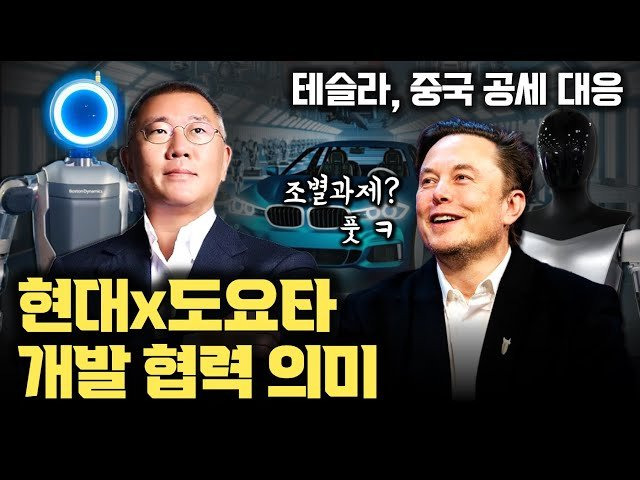
현대자동차와 토요타자동차가 손을 잡고 인공지능(AI) 기반 휴머노이드 로봇 개발에 나섰습니다. 두 글로벌 자동차 기업의 이번 협력은 단순한 기술 교류를 넘어 제조업의 미래를 재정의할 중요한 시도로 평가받고 있습니다. 특히 현대차 계열사인 보스턴 다이내믹스의 '아틀라스' 로봇과 토요타리서치연구소의 거대행동모델(LBM) 기술이 만나면서 어떤 혁신을 가져올지 업계의 관심이 집중되고 있습니다. 이번 글에서는 두 기업의 협력이 가져올 기술적 변화와 미래 제조업에 미칠 영향에 대해 심층적으로 살펴보겠습니다.
현대차 도요타 손잡다? 테슬라와 중국기업 약진 이겨내기 위한 AI 휴머노이드로 글로벌 제조업에
현대차와 토요타의 AI 휴머노이드 로봇 개발 협력은 **제조업의 미래**를 재정의하려는 중요한 시도입니다. 이 협력은 테슬라와 중국 기업의 약진에 대응하고, AI 휴머노이드를 통해 글로벌 제조
lilys.ai
현대차와 토요타의 휴머노이드 로봇 협력과 기술적 전환
현대차와 토요타의 AI 휴머노이드 로봇 개발 협업
현대자동차와 토요타는 AI 기술을 활용한 휴머노이드 로봇을 공동 개발한다고 공식 발표했습니다. 블룸버그통신에 따르면 양사는 현대차 계열사 보스턴다이내믹스의 휴머노이드봇 '아틀라스'와 토요타리서치연구소의 거대행동모델(LBM) 학습 관련 전문 지식을 활용할 계획이라고 밝혔습니다4. 이 협력은 인간과 로봇의 상호작용 분야에서 AI로 훈련된 로봇 사용 사례 등을 함께 연구하는 것을 포함합니다.
보스턴다이내믹스는 현대차그룹이 2020년에 인수한 회사로, 로봇개로 알려진 4족 보행 로봇 '스폿', 2족 보행 로봇 '아틀라스', 창고·물류 특화 로봇 '스트레치' 등을 개발한 로봇 기술 분야의 선두주자입니다4. 한편 토요타는 AI 기술을 이용해 로봇에게 개별 업무를 수행하게 하는 분야에서 진전을 이루었으며, 로봇이 여러 업무를 동시에 배울 수 있도록 LBM 개발에 집중하고 있습니다4.
에런 손더스 보스턴다이내믹스 최고기술책임자(CTO)는 "휴머노이드 로봇을 대규모로 세상에 내놓겠다는 약속을 실현할 것"이라고 말했으며, 길 프랫 토요타 수석과학자는 "AI 기술은 장래에 엄청난 가능성을 제공할 것"이라고 전망했습니다4.
전동식 액츄에이터의 장점과 유압식 액츄에이터의 단점
아틀라스 로봇의 새로운 버전에서 가장 주목할 만한 변화 중 하나는 기존의 유압식 장치에서 전기로 구동되는 강력한 액추에이터로의 전환입니다5. 이는 단순한 부품 교체가 아닌 로봇 기술의 패러다임 전환을 의미합니다.
유압식 액츄에이터는 일반적으로 더 높은 힘 용량을 제공하여 건설 장비, 산업용 프레스, 자재 취급 시스템과 같은 고강도 응용 분야에 이상적입니다8. 그러나 유압 시스템에는 정기적인 유지 관리가 필요하며, 누출 가능성, 유압유 오염, 씰 및 기타 구성품의 마모 위험이 있습니다8. 또한 유압 시스템에는 유체 저장소가 필요하기 때문에 부피가 커지고 좁은 공간에 설치하기가 더 어렵다는 단점이 있습니다.
반면 전기 선형 액추에이터는 모터를 통해 전기 에너지를 직선 운동으로 변환합니다8. 이는 최소한의 유지 관리만 필요하고 설치가 더 쉽습니다. 유체 누출 위험이 없으며 청정실이나 멸균 설정과 같은 환경에서도 작동할 수 있습니다8. 또한 전기 액추에이터는 더 환경 친화적이며, 특히 정밀한 제어와 간헐적인 움직임이 필요한 응용 분야에서 에너지를 보다 효율적으로 소비합니다.
[경제] - 글로벌 경제 큰손들의 움직임: 현대차·틱톡샵·일본주가지수
글로벌 경제 큰손들의 움직임: 현대차·틱톡샵·일본주가지수
경제 뉴스를 따라가기 버거우신가요? 매일 쏟아지는 경제 소식 속에서 정말 중요한 핵심만 짚어드립니다. 특히 오늘은 주요 기업들의 대규모 투자 결정부터 주가지수 변화까지, 2025년 3월 25일
agent-katrina.tistory.com
전동식 액추에이터와 아틀라스의 기술적 특징
보스턴다이내믹스의 뉴 아틀라스는 전기 구동 방식으로 작동하는 특징을 갖추고 있습니다. 로봇의 액추에이터는 저장된 에너지를 움직임으로 구현하는 데 필요한 부품으로, 로봇의 '근육'이나 다름없습니다12. 전동식 액추에이터는 매우 유연한 맞춤형으로 구축되어 관절 움직임을 크게 높이고, 좁은 공간에서도 회전 반경을 크게 줄여 움직임 자유도를 높였습니다12.
로버트 플레이터 보스턴다이내믹스 CEO는 "대부분 관절에 고성능의 매우 유연한 맞춤형 액추에이터 세트를 구축했다"라며 "이를 통해 엄청난 동작 범위를 구현했다. 마치 엘리트 운동선수의 힘을 작은 패키지에 담은 것과 같다"라고 강조했습니다5.
뉴 아틀라스의 외관도 전 버전에 비해 부드러워졌습니다. 얼굴은 테두리에 조명이 달린 화장 거울과 같은 형태이며, 동체는 부드럽게 곡선으로 처리했습니다5. 이를 통해 인간의 거부감을 줄인다는 설명입니다.
[경제] - 미국 25% 관세 폭탄 앞에 선 현대차그룹의 31조 투자, 글로벌 자동차 산업에 미칠 충격파
미국 25% 관세 폭탄 앞에 선 현대차그룹의 31조 투자, 글로벌 자동차 산업에 미칠 충격파
미국 시장에서의 입지를 굳히기 위해 31조 원이라는 천문학적인 투자를 발표한 현대차그룹이 예상치 못한 장벽에 직면했습니다. 트럼프 대통령의 25% 자동차 관세 폭탄은 단순히 한 기업의 문제
agent-katrina.tistory.com
도요타의 AI 거대 행동 모델 LBM
토요타리서치연구소(TRI)는 대규모 행동 모델(LBM, Large Behavior Models)을 개발 중입니다. 대규모 언어 모델이 인간의 글쓰기 패턴을 학습하는 방식과 유사하게 토요타의 LBM은 관찰을 통해 학습한 다음 한 번도 배운 적 없는 새로운 기술을 일반화해 수행할 수 있습니다6.
TRI의 연구진은 생성 AI를 사용해 로봇에게 아침 식사를 만드는 방법을 가르쳤습니다. 수백 시간의 코딩이나 버그 수정 대신, 연구진은 로봇에 촉각을 부여하고 인공지능 모델에 이를 연결한 다음 실행 방법을 학습시켰습니다6. 연구진은 촉각이 학습의 핵심 요소 중 하나라고 언급했으며, 이를 통해 모델은 로봇이 수행하는 작업을 직접 느낌으로서 더 많은 정보를 제공할 수 있다고 설명했습니다.
연구 관계자는 "이 과정은 꽤 흥미롭다. 먼저 일련의 기술을 시연하면 모델이 백그라운드에서 몇 시간에 걸쳐 학습한다"며 "오후에 로봇을 가르치면 로봇이 밤새 학습하고 다음 날 아침에 새로운 행동을 취할 수 있다"고 설명했습니다6.
LBM의 기술적 진보와 적용 가능성
이 기술을 통해 로봇은 액체 붓기, 도구 사용하기, 변형 가능한 물체 조작하기 등 60개 이상의 까다로운 기술을 학습할 수 있습니다. 토요타리서치연구소는 오는 2024년 말까지 적용 가능한 기술의 개수를 1000개로 늘릴 목표를 갖고 있습니다6.
LBM은 다양한 멀티모델 데이터 통합을 통해 작업 환경의 변화를 실시간으로 감지하고 빠르게 적응할 수 있는 능력을 가집니다. 이는 기존의 단일 데이터 소스에 의존하는 AI보다 복합적이고 현실적인 상황에서도 뛰어난 적응력을 발휘할 수 있게 해줍니다.
휴머노이드 로봇의 자동차 조립 자동화
현대차와 토요타는 공동 개발한 휴머노이드 로봇을 현대차 공장에 맞게 배치할 계획을 갖고 있습니다4. 자동차 조립 라인은 정밀도가 필요한 반복 작업이 많아 휴머노이드 로봇 활용에 적합한 환경입니다.
자동차 조립 공정에서는 밀리미터 단위의 정밀도가 요구되며, 위치 오류가 제품 품질에 큰 영향을 미칠 수 있습니다. 아틀라스와 같은 휴머노이드 로봇은 고도의 위치 감지와 정밀한 동작 제어를 통해 이러한 작업을 안정적으로 수행할 수 있으며, 이는 산업 자동화 수준을 한 단계 더 높이는 데 기여할 수 있습니다.
특히 LBM이 탑재된 아틀라스는 작업자의 동작을 실시간으로 학습하고 보조하거나 대체할 수 있어, 다품종 소량 생산 환경에도 유연하게 대응할 수 있을 것으로 기대됩니다. 불규칙한 부품 배치나 복잡한 조립 과정도 자동화할 수 있어 생산성을 크게 향상시킬 가능성이 있습니다.
현대차와 도요타의 협력과 AI 로봇 기술 발전
글로벌 경쟁자들의 휴머노이드 로봇 개발 현황
글로벌 자동차 제조사들도 AI 로봇 기술 개발에 적극적으로 나서고 있습니다. 테슬라는 AI 로봇 기술을 통합한 옵티머스 휴머노이드 로봇을 개발하여 복잡한 제조 공정을 자동화하고 고도의 자율성을 제공하는 데 활용하고 있습니다. 테슬라의 옵티머스는 현대차의 아틀라스에 비해 가격 경쟁력이 있다는 평가를 받고 있습니다12.
현대차와 토요타 협력의 배경과 전략적 의미
현대차와 토요타는 협력의 배경으로 두 회사의 전략적 목표를 공유하고 있습니다. 장재훈 현대차 사장은 "토요타 뿐만 아니라 GM 등 글로벌 기업들과 협업 가능성은 언제든지 열려 있다"며 "토요타 등 다른 회사로부터 배워야 할 부분도 많기 때문에 경계 없이 협업할 수 있는 부분은 가능하다면 (협업을) 해야 할 것 같다"고 말했습니다7.
아울러 "현대차는 모빌리티 사업을 넘어 모든 산업군과 지향하는 뜻이 같다면 협업은 가능하리라 본다"고 덧붙였습니다7. 이러한 발언은 현대차가 토요타와의 협력을 통해 다양한 분야에서 시너지를 창출하고자 하는 의지를 보여줍니다.
수소 모빌리티 분야에서의 시너지 기대
현대차와 토요타는 특히 수소 모빌리티 분야에서 협력을 강화하고 있습니다. 두 회사는 글로벌 수소차 시장에서 1위, 2위를 달리고 있는 만큼 두 회사가 협력에 나선다면 시너지 그 이상의 효과를 낼 수 있을 것이라는 전망이 지배적입니다7.
업계 관계자는 "자동차 산업 뿐 아니라 모든 산업군에서 동맹군 구축에 나서고 있다"며 "글로벌 산업계 분위기는 경쟁보다 공존하면서 살아남기에 초점이 맞춰져 있다"고 전했습니다. 이어 "글로벌에서 내놓라하는 기업들이 힘을 합친다면 당연 그 효과는 배 이상이 될 것"이라며 "현대차 또한 글로벌 기업들과 수소 관련 사업에 협력한다면 더욱 가속도가 붙을 것으로 본다"고 덧붙였습니다7.
현대차와 토요타의 액츄에이터와 배터리 기술
액츄에이터 기술의 중요성과 두 회사의 강점
액츄에이터는 로봇의 움직임을 직접 제어하는 '근육' 역할을 합니다. 현대차는 보스턴 다이내믹스와 협력하여 고속 응답성과 정밀한 제어가 가능한 전동식 액츄에이터를 개발하고 있습니다.
전동 액추에이터는 정확한 위치 지정 및 제어가 필요한 응용 분야에 탁월합니다. 디지털 제어 시스템과 쉽게 통합되어 정확한 위치, 속도 및 이동 프로필을 프로그래밍할 수 있는 기능을 제공합니다8. 이러한 수준의 정밀도는 자동화 시스템, 로봇공학, 의료 장비에 필요한 경우가 많습니다.
한편 토요타는 전동 모터 제어 기술에 대한 오랜 경험을 바탕으로 효율성과 신뢰성을 극대화한 액츄에이터를 제공할 수 있습니다. 두 회사의 기술이 결합되면 더욱 강력하고 정밀한 로봇 제어 시스템을 구축할 수 있을 것으로 기대됩니다.
배터리 시스템과 전력 관리 기술
배터리 시스템은 휴머노이드 로봇에서 중요한 역할을 합니다. 로봇의 작동 시간은 배터리의 에너지 밀도와 전력 관리 시스템에 따라 좌우됩니다. 현대차와 토요타는 전기차 개발을 통해 쌓은 배터리 기술을 휴머노이드 로봇에 적용하여 에너지 효율을 높이고 있습니다.
또한 두 회사는 무선 충전 기술 및 회생 제동을 통한 에너지 회수 기술 등을 연구하여 로봇의 배터리 수명을 연장하고 운용 효율성을 높이는 방안을 모색하고 있습니다.
AI 협력이 가져올 실질적 혜택
현대차와 토요타의 AI 협력은 자동차 조립 라인의 생산성 향상 및 인건비 절감, 작업자의 안전성 강화 등 실질적인 혜택을 가져올 것으로 기대됩니다. 또한 양사의 AI 기술 공유를 통해 로봇의 학습 능력이 크게 향상될 것으로 전망됩니다.
길 프랫 토요타 수석 과학자는 "우리가 하는 작업은 보스턴 다이내믹스가 해온 작업에 도움이 될 수 있다"고 설명했습니다11. 프라트는 이러한 협력이 결과적으로 공장 조립 라인과 노인 요양시설에 도입하는 것을 목표로 한다고 덧붙였습니다.
글로벌 제조업의 AI와 로봇 기술 혁신
글로벌 동향과 국내 산업에 미칠 영향
현대차와 토요타의 AI 휴머노이드 로봇 개발 협력은 글로벌 제조업에 새로운 혁신의 바람을 불러일으킬 것으로 예상됩니다. 이러한 글로벌 동향은 국내 산업에도 긍정적인 영향을 미칠 것으로 보입니다.
특히 로봇 기술의 발전은 생산성 향상뿐만 아니라 작업 환경의 안전성을 높이는 데도 기여할 것입니다. 위험하거나 반복적인 작업을 로봇이 대신함으로써 근로자들은 더 창의적이고 가치 있는 업무에 집중할 수 있게 될 것입니다.
수소 모빌리티와 로봇 기술의 융합 가능성
수소 연료전지는 자동차나 트럭 등 현존 모빌리티의 동력원을 대체하는 용도로 중요하지만, 드론이나 로봇과 같은 미래 모빌리티의 동력원으로 더 활용도가 높아질 것이라는 전망이 있습니다10.
이두순 두산모빌리티이노베이션 대표는 로봇에도 수소연료전지가 필요하게 될 것이라고 전망했습니다. 그는 "로봇은 아직은 일반 배터리로도 가동되지만 향후 사물인터넷(IoT)이나 5세대(5G) 이동통신 등에 사용되면서 더 많은 에너지를 필요로 할 것"이라고 말했습니다. 이어 "자동차나 트럭의 동력원을 바꾸는 데 논의가 집중돼 있지만 수소연료전지의 진정한 쓰임새는 로봇과 드론"이라고 강조했습니다10.
미래 전망 및 시사점
전기차 트렌드와 함께 휴머노이드 로봇 개발이 가속화되면서 기존 완성차 제조업체와 신규 진입자 간의 경쟁이 심화될 것으로 보입니다. 그러나 현대차와 토요타의 사례에서 볼 수 있듯이, 경쟁사 간의 협력을 통해 더 큰 시너지를 창출하는 방향으로 산업이 재편될 가능성도 있습니다.
이번 협력은 글로벌 자동차 산업의 경쟁 구도를 넘어 AI와 로봇 기술을 통한 새로운 가치 창출의 가능성을 보여줍니다. 두 기업이 가진 기술적 역량과 노하우가 결합되어 제조업 혁신을 주도할 것으로 기대됩니다.
Redefining the Future of Manufacturing: Hyundai and Toyota's AI Humanoid Robot Collaboration
Hyundai Motor Company and Toyota Motor Corporation have joined forces to develop artificial intelligence (AI)-based humanoid robots. This collaboration between the two global automotive companies is being evaluated as a significant attempt to redefine the future of manufacturing, beyond simple technology exchange. Industry attention is particularly focused on what innovations will emerge from the combination of Hyundai subsidiary Boston Dynamics' 'Atlas' robot and Toyota Research Institute's Large Behavior Model (LBM) technology. In this article, we will take an in-depth look at the technological changes this collaboration will bring and its impact on future manufacturing.
Hyundai and Toyota's Humanoid Robot Collaboration and Technological Transition
Hyundai and Toyota's AI Humanoid Robot Development Collaboration
Hyundai Motor Company and Toyota have officially announced their collaboration to develop humanoid robots utilizing AI technology. According to Bloomberg, the two companies plan to leverage the expertise of Hyundai's subsidiary Boston Dynamics' humanoid robot 'Atlas' and Toyota Research Institute's Large Behavior Model (LBM) learning4. This collaboration includes joint research on use cases for AI-trained robots in the field of human-robot interaction.
Boston Dynamics, acquired by Hyundai Motor Group in 2020, is a leader in robotics technology that has developed the quadruped robot 'Spot' known as a robot dog, bipedal robot 'Atlas', and warehouse and logistics specialized robot 'Stretch'4. Meanwhile, Toyota has made progress in using AI technology to enable robots to perform individual tasks and is focusing on developing LBM to allow robots to learn multiple tasks simultaneously4.
Aaron Saunders, Boston Dynamics' Chief Technology Officer (CTO), said, "We will realize our promise to bring humanoid robots to the world on a large scale," while Gil Pratt, Toyota's Chief Scientist, predicted that "AI technology will provide tremendous possibilities in the future"4.
Advantages of Electric Actuators and Disadvantages of Hydraulic Actuators
One of the most notable changes in the new version of the Atlas robot is the transition from traditional hydraulic devices to powerful electric actuators5. This represents not just a component replacement but a paradigm shift in robotics technology.
Hydraulic actuators generally provide higher force capacity, making them ideal for high-intensity applications such as construction equipment, industrial presses, and material handling systems8. However, hydraulic systems require regular maintenance and carry risks of leakage, hydraulic fluid contamination, and wear of seals and other components8. Additionally, hydraulic systems require fluid reservoirs, making them bulkier and more difficult to install in confined spaces.
In contrast, electric linear actuators convert electrical energy into linear motion through motors8. They require minimal maintenance and are easier to install. They have no risk of fluid leakage and can operate in environments such as clean rooms or sterile settings8. Electric actuators are also more environmentally friendly and consume energy more efficiently, particularly in applications where precise control and intermittent movement are required.
Electric Actuators and Technical Features of Atlas
Boston Dynamics' new Atlas operates on an electric drive system. A robot's actuators are components necessary for converting stored energy into movement, essentially serving as the robot's 'muscles'12. Electric actuators are built as highly flexible custom components that greatly enhance joint movement and reduce rotation radius in tight spaces, increasing freedom of movement12.
Robert Playter, CEO of Boston Dynamics, emphasized, "We have built a set of highly flexible custom actuators for most joints," adding, "This has enabled an incredible range of motion. It's like packing the power of an elite athlete into a small package"5.
The appearance of the new Atlas has also become smoother than the previous version. The face is shaped like a makeup mirror with lights around the border, and the body is smoothly curved5. This is explained as reducing human aversion.
Toyota's AI Large Behavior Model (LBM)
Toyota Research Institute (TRI) is developing Large Behavior Models (LBM). Similar to how large language models learn human writing patterns, Toyota's LBM learns through observation and then can perform new skills it has never learned before by generalizing6.
TRI researchers have used generative AI to teach robots how to make breakfast. Instead of hundreds of hours of coding or bug fixing, the researchers gave the robot tactile sense, connected it to an AI model, and then taught it how to execute6. The researchers mentioned that tactile sense is one of the key elements of learning, allowing the model to directly feel the tasks the robot performs, providing more information.
A research official explained, "This process is quite interesting. First, a series of skills are demonstrated, and the model learns in the background over several hours," and "If you teach the robot in the afternoon, the robot can learn overnight and exhibit new behaviors the next morning"6.
Technical Advancement and Application Potential of LBM
With this technology, robots can learn more than 60 challenging skills such as pouring liquids, using tools, and manipulating deformable objects. Toyota Research Institute aims to increase the number of applicable technologies to 1,000 by the end of 20246.
LBM has the ability to detect and quickly adapt to changes in the work environment in real-time through various multi-model data integration. This allows it to demonstrate superior adaptability in complex and realistic situations compared to conventional AI that relies on a single data source.
Automotive Assembly Automation with Humanoid Robots
Hyundai and Toyota plan to deploy the jointly developed humanoid robots to fit Hyundai's factories4. Automotive assembly lines, with their many precision-required repetitive tasks, provide an environment well-suited for humanoid robot utilization.
Automotive assembly processes require millimeter-level precision, and position errors can significantly impact product quality. Humanoid robots like Atlas can reliably perform such tasks through advanced position detection and precise motion control, contributing to raising the level of industrial automation one step further.
In particular, Atlas equipped with LBM is expected to be able to learn and assist or replace worker movements in real-time, flexibly responding even in environments with multiple product varieties and small production runs. It has the potential to significantly improve productivity by automating irregular part placement or complex assembly processes.
Hyundai and Toyota's Collaboration and AI Robot Technology Development
Humanoid Robot Development Status of Global Competitors
Global automobile manufacturers are also actively engaging in AI robot technology development. Tesla has developed the Optimus humanoid robot integrated with AI robot technology to automate complex manufacturing processes and provide a high degree of autonomy. Tesla's Optimus is evaluated to have price competitiveness compared to Hyundai's Atlas12.
Background and Strategic Significance of Hyundai and Toyota Collaboration
Hyundai and Toyota share strategic goals as the background for their collaboration. Jae-hoon Chang, President of Hyundai Motor Company, said, "The possibility of collaboration with global companies like Toyota and GM is always open," and "Because there is much to learn from other companies like Toyota, we should collaborate where possible without boundaries"7.
He added, "Hyundai Motor Company believes collaboration is possible with any industry beyond mobility business if we share the same aim"7. These statements show Hyundai's willingness to create synergy with Toyota in various fields through collaboration.
Expected Synergy in Hydrogen Mobility
Hyundai and Toyota are particularly strengthening cooperation in the field of hydrogen mobility. As the two companies are ranked first and second in the global hydrogen vehicle market, the prevailing view is that if the two companies cooperate, they can achieve effects beyond synergy7.
An industry official said, "Alliance building is happening not only in the automotive industry but in all industry groups," and "The global industry atmosphere is focused on coexistence and survival rather than competition." He added, "If leading global companies join forces, the effect will certainly be more than double," and "If Hyundai also collaborates with global companies on hydrogen-related businesses, it will gain more momentum"7.
Hyundai and Toyota's Actuator and Battery Technology
Importance of Actuator Technology and Strengths of Both Companies
Actuators directly control the movement of robots, acting as 'muscles.' Hyundai is developing electric actuators capable of high-speed responsiveness and precise control in collaboration with Boston Dynamics.
Electric actuators excel in applications requiring accurate positioning and control. They easily integrate with digital control systems, providing the ability to program accurate position, speed, and movement profiles8. This level of precision is often necessary for automation systems, robotics, and medical equipment.
Meanwhile, Toyota can provide actuators that maximize efficiency and reliability based on its long experience with electric motor control technology. The combination of technologies from both companies is expected to build a more powerful and precise robot control system.
Battery Systems and Power Management Technology
Battery systems play a crucial role in humanoid robots. A robot's operating time depends on the energy density of the battery and the power management system. Hyundai and Toyota are applying battery technology accumulated through electric vehicle development to humanoid robots to improve energy efficiency.
The two companies are also exploring ways to extend robot battery life and improve operational efficiency by researching wireless charging technology and energy recovery technology through regenerative braking.
Practical Benefits of AI Collaboration
The AI collaboration between Hyundai and Toyota is expected to bring practical benefits such as improved productivity in automobile assembly lines, reduced labor costs, and enhanced worker safety. The sharing of AI technology between the two companies is also expected to greatly improve the learning ability of robots.
Gil Pratt, Toyota's Chief Scientist, explained, "The work we do can help the work Boston Dynamics has been doing"11. Pratt added that the goal of this collaboration is ultimately to introduce it to factory assembly lines and elderly care facilities.
Global Manufacturing's AI and Robotics Technology Innovation
Global Trends and Impact on Domestic Industry
Hyundai and Toyota's collaboration in AI humanoid robot development is expected to bring a new wind of innovation to global manufacturing. These global trends are expected to have a positive impact on domestic industry as well.
In particular, the advancement of robotics technology will contribute not only to improving productivity but also to enhancing the safety of the work environment. By having robots perform dangerous or repetitive tasks, workers will be able to focus on more creative and valuable work.
Possibilities of Fusion Between Hydrogen Mobility and Robotics Technology
Hydrogen fuel cells are important as alternative power sources for existing mobility such as cars and trucks, but there is a prospect that they will be more utilized as power sources for future mobility such as drones and robots10.
Doo-soon Lee, CEO of Doosan Mobility Innovation, predicted that robots will also need hydrogen fuel cells. He said, "Robots are currently operated with general batteries, but they will need more energy as they are used with the Internet of Things (IoT) or 5G mobile communications in the future." He further emphasized, "Discussion is focused on changing the power source of cars and trucks, but the true utility of hydrogen fuel cells is in robots and drones"10.
Future Outlook and Implications
As the development of humanoid robots accelerates along with the electric vehicle trend, competition between existing automobile manufacturers and new entrants is expected to intensify. However, as seen in the case of Hyundai and Toyota, there is also the possibility that the industry will be reorganized in the direction of creating greater synergy through cooperation between competitors.
This collaboration demonstrates the possibility of creating new value through AI and robotics technology beyond the competitive structure of the global automotive industry. The combined technological capabilities and know-how of the two companies are expected to lead manufacturing innovation.
#휴머노이드로봇 #AI기술혁신 #현대차 #토요타 #보스턴다이내믹스 #아틀라스 #거대행동모델 #전동식액츄에이터 #제조업혁신 #수소모빌리티 #로봇기술 #자동차산업 #기술협력 #미래제조 #인공지능
'이슈 > AI' 카테고리의 다른 글
| AI 비즈니스 혁명: 기업 가치 창출의 무한한 가능성을 열다 (0) | 2025.04.01 |
|---|---|
| 'AI Limit' 완전 가이드 : AI와 인류의 경계를 넘나드는 소울라이크의 신작 (0) | 2025.03.31 |
| 미래를 재편할 세 가지 혁명: 의학의 한계, 드론 전쟁, 그리고 GLP-1의 시대 (0) | 2025.03.31 |
| GPT-4o의 혁신적인 이미지 생성 기능 탐험기 (1) | 2025.03.31 |
| 알고리즘의 선택권: 디지털 시대의 자유와 주체성 확보하기 (0) | 2025.03.30 |


