
인간의 마음 깊은 곳에는 누구나 한 번쯤 경험하지만 쉽게 인정하기 어려운 감정이 있습니다. 친구가 승진했다는 소식에 "축하해!"라고 말하면서도 가슴 한편에서 느껴지는 묘한 불편함, 연인이 다른 사람과 친밀하게 대화하는 모습에 느껴지는 날카로운 감정... 이것이 바로 시기와 질투입니다. 우리는 왜 남이 잘되는 모습을 보면 온전히 기뻐하지 못하고 불편함을 느끼는 걸까요? 오늘은 인간의 본성 깊숙이 자리한 이 복잡한 감정을 진화심리학과 예술, 그리고 문화적 관점에서 탐구해 보겠습니다.
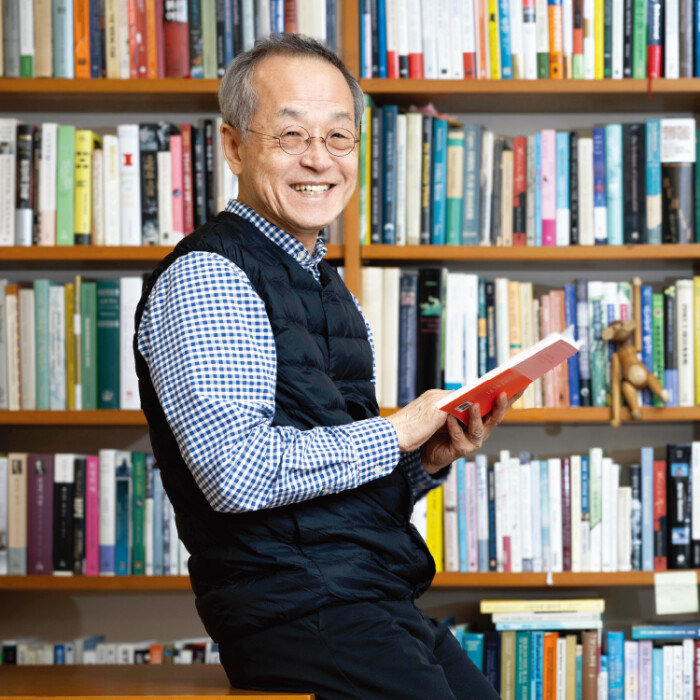
우리는 왜 남 잘되는 꼴을 못 보는가? 시기와 질투는 다르다? 전지적관찰자시점 | 최재천의 아마
우리는 왜 남 잘되는 꼴을 못 볼까? 이 영상은 **시기와 질투**라는 인간의 복잡한 감정을 진화론적, 심리학적 관점에서 탐구합니다. 최재천 교수는 시기와 질투가 단순히 부정적인 감정이 아니
lilys.ai
시기와 질투, 같은 듯 다른 감정
우리는 흔히 '시기질투'라는 말을 하나의 단어처럼 사용하지만, 사실 시기(猜忌)와 질투(嫉妬)는 그 결이 조금 다릅니다.
시기는 남을 향한 부러움과 샘
고대 철학자 아리스토텔레스는 시기를 '타인'에게 초점을 맞춰서 "자기가 갖지 못한 좋은 것을 이웃이 가진 것을 슬퍼하는 것"이라고 정의했습니다^13. 시기는 주로 타인이 가진 것, 타인의 성취나 능력에 대한 부러움에서 시작됩니다. '저 사람은 저런 것을 가지고 있는데, 나는 왜 없지?'라는 생각이 시기의 본질입니다.
질투는 내가 가진 것을 지키려는 욕망
반면, 질투는 '나 자신'에 초점을 맞춰 "이웃이 지닌 것을 자신이 소유하지 못해 슬퍼하는 것"으로 정의됩니다^2. 질투에는 보통 제삼자가 등장하며, 자신이 소유한 것(관계, 지위, 명예 등)을 빼앗길지도 모른다는 두려움에서 비롯됩니다.
심리학자들에 따르면, "질투는 자신이 소유한 것 즉 가진 것을 빼앗기지 않으려는 것에 대한 반응"이며, 인간 관계적 상황에서 "관계의 상실에 대한 두려움, 불신, 불안, 분노, 걱임 등의 정서가 혼합된 복합적인 감정"입니다^8.

진화론으로 본 질투와 시기의 생물학적 기원
최재천 교수를 비롯한 많은 진화생물학자들은 시기와 질투가 단순한 부정적 감정이 아니라 생존과 번식에 도움이 되었던 적응적 기능을 가진 감정이라고 봅니다.
수컷의 경쟁과 암컷의 선택
"모든 수컷들이 다 아름답게 태어날 수는 없는 것 아닙니까. '미(美)가 받쳐주지 않으면 '힘'으로 승부할 수밖에 없죠. 자연계에서 왜 힘겨루기를 하는 동물은 거의 예외없이 수컷일 수 밖에 없는 것을 설명해주는게 두번째의 '수컷 경쟁' 이론입니다."^3
이는 인간 사회에서 남성들이 출세하기 위해 투쟁하는 이유를 설명해줍니다. 권력, 재력, 학력 등 '힘'을 얻지 않으면 여성(암컷)에게 선택될 가능성이 줄어들기 때문입니다. 이것이 바로 진화적 관점에서 본 경쟁의 원천입니다.
질투는 본래 남성의 속성?
흥미롭게도, 진화심리학적 관점에서 질투는 오히려 남성의 특성으로 볼 수 있습니다.
"여성을 볼 때 남성들은 사뭇 이중적인 태도를 보입니다. 흔히 질투란 여성들이나 하는 것이라고 말하지만 생물학적으로 볼 때 질투는 오히려 남성의 속성입니다."^3
"암컷은 자기 몸으로 직접 낳았기 때문에 자식을 의심을 이유가 없지요. 만일 수컷들이 질투할 줄 모른다면 남의 자식을 기르고 있을 확률이 퍽 높을 겁니다."^3
진화심리학 연구에 따르면, 여성들은 자신의 배우자가 다른 여성과 단순히 육체적인 성관계를 갖는 것보다 정신적인 관계를 맺는 것을 더 두려워하는 반면, 남성들은 정반대로 육체적인 성관계에 훨씬 민감하게 반응하는 것으로 나타났습니다^3. 이는 자식의 친자 확인이 중요한 남성의 진화적 심리를 반영합니다.

예술 속에 담긴 질투의 모습: 뭉크의 '질투'
노르웨이 화가 에드바르트 뭉크(Edvard Munch)는 '질투'라는 제목의 그림을 통해 인간의 복잡한 감정을 표현했습니다. 특히 뭉크는 자신의 실제 경험에서 비롯된 강렬한 질투심을 여러 작품에 담아냈습니다.
삼각관계의 고통을 담은 '질투'
뭉크로 하여금 '질투'의 연작을 그리게 한 여인은 아름답고 지성적인 노르웨이 출신의 여류 작가 다그니 유을입니다. 이 발랄한 여성은 스칸디나비아 예술가 그룹의 마음을 단숨에 사로잡았고, 뭉크 역시 그녀에게 사랑을 고백했습니다. 그러나 결국 그녀는 폴란드 출신의 작가 프시비지예프스키를 선택했고, 뭉크는 "하늘이 무너지는 듯 강렬한 질투에 사로잡히게" 됩니다^5.
친구의 아내가 된 여인을 사랑할 수밖에 없었던 아픔, 친구를 속여야 하는 죄책감까지 겹친 삼각관계의 이중 체험의 고통을 뭉크는 그림에 담아냈습니다^5. 그의 '질투' 연작에는 친구 부부와 그들을 질투하는 자신의 모습이 함께 등장합니다^17.
질투의 표현법
17세기 프랑스 화가 샤를 르브룅은 회화 교본에서 질투 표현법에 대해 이렇게 설명했습니다: "질투는 열정을 불러일으키는 대상을 향해 움직이다가 고개를 돌리는 척하면서 슬쩍 옆으로 보는 눈동자로 표현된다. 눈동자는 쉴 새 없이 움직이면서 이글이글 불타는 것처럼 표현한다."^17

한국인의 시기와 질투 심리
흥미롭게도, 동아시아 3국의 비교 연구에서 한국인은 시기·질투 지수가 가장 높은 것으로 나타났습니다.
한·중·일 3국의 마음지도 비교
2011년 연구에 따르면, 한국인의 시기·질투 지수는 5점 만점에 3.7점으로, 중국인(3.49점)과 일본인(3.09점)보다 훨씬 높게 나타났습니다^2. '경쟁에서 누군가가 나보다 잘할 때 그 사람이 부럽다'라는 질문에 한국인의 71%가 긍정적으로 답변했습니다^6.
한국인의 시기·질투가 높은 이유
전문가들은 한국인들이 어린 시절부터 사교육과 입시 준비로 경쟁에 내몰리며 비교하는 환경에 익숙해진 것이 원인일 수 있다고 분석합니다^2. 발달된 SNS를 통해서도 항상 남과 자신을 비교하는 문화가 이러한 경향을 강화시킵니다.
또한 한국인은 일본이나 중국에 비해 남의 눈치를 가장 많이 보는 것으로 나타났는데, 이는 남과 비교를 아주 많이 한다는 의미이기도 합니다^7. 한국인들은 '의식주'라고 하여 입는 옷(의)을 가장 중요시하는 반면, 중국인들은 '식의주'라고 하여 먹을 것(식)을 더 강조합니다. 옷은 남에게 보이는 것이므로, 그만큼 타인의 시선을 의식한다는 의미입니다^7.
시기와 질투, 어떻게 다루어야 할까?
시기와 질투는 누구나 경험하는 자연스러운 감정입니다. 그러나 이를 잘 다루지 못하면 자신과 타인 모두에게 해를 끼칠 수 있습니다.
시기와 질투의 폐해 인식하기
시기를 받게 되면 공격의 대상이 됩니다. 자신은 상대에게 어떤 해악을 가한 적이 없는데도 가해 상대의 시기로 함정에 빠지거나 험담과 추악한 소문, 중상모략으로 치명적인 손상을 입을 수 있습니다^13.
반면 시기하는 쪽도 온통 신경과 시선을 상대에게 둔 나머지 정작 자신이 해야 할 일에 몰입하지 못하고 전문성 계발에 에너지를 쏟지 못해 자신의 성장에 엄청난 지장을 초래합니다. 결국 양쪽 다 피해자가 되는 것입니다^13.
긍정적인 동기부여로 전환하기
시기와 질투를 긍정적인 동기부여로 승화시킬 수 있습니다. 다른 사람의 성공이나 능력을 보고 부러워하는 대신, 이를 자신의 성장 기회로 삼는 것입니다.
"질투는 나의 힘"이라는 말처럼, 건강한 방법으로 질투를 열정으로 승화시킬 수 있습니다^2. 남이 이룬 성취를 통해 자신도 노력하고 발전할 수 있는 자극제로 삼는 것입니다.
자기 자신에게 집중하기
나와 타인을 끊임없이 비교하는 것보다, 자신의 고유한 장점과 능력에 집중하는 것이 중요합니다. "인생은 가까이서 보면 비극이지만 멀리서 보면 희극"이라는 찰리 채플린의 말처럼, 우리의 감정과 상황을 좀 더 넓은 관점에서 바라보는 것이 필요합니다^14.
클릭의 유혹, 조회수의 노예: '도파민 저수지'가 된 유튜브와 가짜뉴스의 범람
세상을 변화시켰던 유튜브가 창립 20주년을 맞았습니다. 한때 '자유의 땅'이자 '기회의 땅'으로 불리던 이 플랫폼이 점차 '도파민 저수지'로 변모하고 있습니다. 조회수 1회당 0.6원의 수익을 위해
agent-katrina.tistory.com
양심과 마음의 촛불
최재천 교수는 시기와 질투같은 감정을 넘어 양심의 중요성을 강조합니다. 그는 자신의 책 '양심'에서 "양심은 아무리 불어도 이상하게 안 꺼지는 내 마음속 촛불"이라고 표현했습니다^10.
"그 불빛은 꺼지지도 않고 계속 내 안에서 나를 따끔따끔 찌르며 괴롭힌다. 세상 사람들을 모두 속일 수 있어도 딱 한 사람, 나를 속이지 못하기 때문에 끝내 양심과 마주하게 된다."^10
오늘날 비양심적인 행동이 이익이 되고, 무책임한 태도가 묵인되는 분위기 속에서 양심이 설 자리는 점점 좁아지고 있습니다. 그럼에도 불구하고 최 교수는 아직 촛불이 완전히 꺼지지 않았다고 믿습니다^10. 시기와 질투의 감정을 이해하고 건강하게 다루는 것도 이러한 양심의 촛불을 지키는 한 방법일 것입니다.
인간은 누구나 시기와 질투를 느낍니다. 하지만 그 감정을 어떻게 다루느냐에 따라 파괴적인 결과를 낳을 수도, 건설적인 성장의 원동력이 될 수도 있습니다. 오늘부터 남의 성공에 진심으로 축하하고, 그것을 자신의 발전 동력으로 삼는 건강한 마음가짐을 가져보는 건 어떨까요?
#시기 #질투 #진화심리학 #최재천 #에드바르트뭉크 #심리학 #한국인심리 #자기계발 #정서관리 #인간관계 #양심 #감정코칭 #심리상담 #인문학 #자존감 #성장마인드셋
Why Can't We Stand to See Others Succeed? The Psychology of Envy and Jealousy
Deep within the human mind, there exists emotions that everyone experiences at least once but may find difficult to admit. That strange discomfort felt in one corner of your heart when saying "Congratulations!" to a friend who's been promoted, or that sharp feeling when seeing your loved one intimately conversing with someone else... These are envy and jealousy. Why do we feel uncomfortable and unable to be purely happy when we see others doing well? Today, we'll explore these complex emotions deeply rooted in human nature from evolutionary psychology, artistic, and cultural perspectives.
Envy and Jealousy: Similar Yet Different Emotions
We often use "envy and jealousy" as a single phrase, but in fact, envy (시기) and jealousy (질투) have slightly different nuances.
Envy is Admiration and Covetousness Directed at Others
Ancient philosopher Aristotle defined envy as focusing on "others" and "feeling sad that neighbors have good things that you don't possess"^13. Envy primarily begins with admiration for what others have, their achievements or abilities. The essence of envy is the thought: "That person has such things, why don't I?"
Jealousy is the Desire to Protect What You Have
In contrast, jealousy focuses on "oneself" and is defined as "feeling sad that one doesn't possess what neighbors have"^2. Jealousy typically involves a third party and stems from fear of losing something you possess (relationships, status, honor, etc.).
According to psychologists, "jealousy is a response to not wanting to lose what one already possesses," and in human relationships, it's "a complex emotion that combines fear of loss, distrust, anxiety, anger, and worry"^8.
The Biological Origins of Jealousy and Envy from an Evolutionary Perspective
Professor Choi Jae-cheon and many evolutionary biologists view envy and jealousy not simply as negative emotions but as emotions with adaptive functions that helped with survival and reproduction.
Male Competition and Female Selection
"Not all males can be born beautiful. If 'beauty' doesn't support you, you have no choice but to compete with 'strength.' This explains why animals that engage in power struggles are almost without exception males. This is the second theory of 'male competition.'"^3
This explains why men struggle to succeed in human society. Without gaining 'power' such as authority, wealth, or education, the chances of being selected by women (females) diminish. This is the source of competition from an evolutionary perspective.
Is Jealousy Inherently a Male Trait?
Interestingly, from an evolutionary psychological perspective, jealousy can be considered more of a male characteristic.
"Men show quite ambivalent attitudes toward women. It's commonly said that jealousy is something only women do, but biologically speaking, jealousy is rather a male attribute."^3
"Females have no reason to doubt their offspring because they gave birth directly. If males didn't know how to be jealous, there would be a high probability of raising someone else's children."^3
According to evolutionary psychology research, women fear their partners forming emotional relationships with other women more than just having physical relationships, while men react much more sensitively to physical relationships^3. This reflects the evolutionary psychology of men for whom confirming paternity is important.
Jealousy Depicted in Art: Munch's 'Jealousy'
Norwegian painter Edvard Munch expressed complex human emotions through paintings titled 'Jealousy.' In particular, Munch captured intense jealousy stemming from his own experiences in several works.
'Jealousy' Capturing the Pain of a Love Triangle
The woman who inspired Munch to paint the 'Jealousy' series was Dagny Juel, a beautiful and intellectual Norwegian female writer. This vivacious woman captivated the hearts of the Scandinavian artists' group, and Munch also confessed his love to her. However, she ultimately chose Stanisław Przybyszewski, a Polish writer, and Munch was "consumed by intense jealousy as if the sky had fallen"^5.
Munch captured in his paintings the pain of loving a woman who became his friend's wife, coupled with the guilt of having to deceive his friend—the double experience of a triangular relationship^5. In his 'Jealousy' series, the friend couple and himself jealously observing them appear together^17.
How to Express Jealousy
17th-century French painter Charles Le Brun explained how to express jealousy in his painting manual: "Jealousy is expressed by eyes that appear to move toward the object of passion, then pretend to turn away while looking sideways. The eyes move incessantly as if burning with fire."^17
The Psychology of Envy and Jealousy Among Koreans
Interestingly, in a comparative study of three East Asian countries, Koreans showed the highest index of envy and jealousy.
Comparison of Mind Maps Among Korea, China, and Japan
According to a 2011 study, Koreans' envy and jealousy index scored 3.7 out of 5, significantly higher than Chinese (3.49) and Japanese (3.09)^2. 71% of Koreans responded positively to the question 'I envy someone who does better than me in competition'^6.
Why Koreans Have Higher Envy and Jealousy
Experts analyze that Koreans may have become accustomed to comparison from early childhood due to private education and entrance exam preparation^2. The culture of constantly comparing oneself to others through developed social media reinforces this tendency.
Additionally, Koreans were found to be most conscious of others' opinions compared to Japanese and Chinese, which means they compare themselves to others very frequently^7. Koreans prioritize clothing (의) in the term '의식주' (clothing, food, shelter), while Chinese emphasize food (식) in '식의주'. Since clothing is visible to others, this indicates greater consciousness of others' perspectives^7.
How to Handle Envy and Jealousy
Envy and jealousy are natural emotions everyone experiences. However, if not handled well, they can harm both yourself and others.
Recognizing the Harms of Envy and Jealousy
If you become the target of envy, you become the subject of attack. Even though you haven't done any harm to the other person, you can fall into a trap due to the envy of others, suffering critical damage from gossip, ugly rumors, and slander^13.
Conversely, the person feeling envy focuses all their attention on the other person, failing to immerse themselves in their own work and unable to devote energy to developing their expertise, causing tremendous hindrance to their own growth. In the end, both sides become victims^13.
Converting to Positive Motivation
You can sublimate envy and jealousy into positive motivation. Instead of envying another person's success or abilities, you can use it as an opportunity for your own growth.
As the saying goes, "Jealousy is my strength," you can healthily transform jealousy into passion^2. Use others' achievements as a stimulus for your own efforts and development.
Focusing on Yourself
Rather than constantly comparing yourself to others, it's important to focus on your own unique strengths and abilities. As Charlie Chaplin said, "Life is a tragedy when seen in close-up, but a comedy in long-shot," we need to view our emotions and situations from a broader perspective^14.
Conscience and the Candle in the Heart
Professor Choi Jae-cheon emphasizes the importance of conscience beyond emotions like envy and jealousy. In his book 'Conscience,' he expresses, "Conscience is a candle in my heart that strangely never goes out no matter how much you blow it"^10.
"That light never goes out and keeps pricking me inside, troubling me. Because even if you can deceive everyone in the world, there's just one person you can't deceive—yourself—you eventually face your conscience."^10
In today's atmosphere where unethical behavior brings benefits and irresponsible attitudes are overlooked, there's increasingly less space for conscience to stand. Nevertheless, Professor Choi believes that the candle has not completely gone out^10. Understanding and healthily handling emotions of envy and jealousy is also one way to keep this candle of conscience burning.
Everyone feels envy and jealousy. But depending on how you handle these emotions, they can lead to destructive results or become a driving force for constructive growth. How about starting today with a healthy mindset that sincerely congratulates others' success and uses it as a driving force for your own development?
#Envy #Jealousy #EvolutionaryPsychology #ChoiJaeCheon #EdvardMunch #Psychology #KoreanPsychology #SelfDevelopment #EmotionalManagement #Relationships #Conscience #EmotionalCoaching #PsychologicalCounseling #Humanities #SelfEsteem #GrowthMindset
#시기 #질투 #진화심리학 #최재천 #에드바르트뭉크 #심리학 #한국인심리 #자기계발 #정서관리 #인간관계 #양심 #감정코칭 #심리상담 #인문학 #자존감 #성장마인드셋
'이슈 > 사회' 카테고리의 다른 글
| 🤫 조용함의 반란: 왜 모두가 '조용한 트렌드'에 열광하는가? (0) | 2025.04.24 |
|---|---|
| 🌟 '사람들의 교황' 프란치스코, 그의 한국 방문과 남긴 울림 (0) | 2025.04.24 |
| 은행 점포폐쇄의 딜레마: 금융접근성과 경영자율성 사이의 줄다리기 (0) | 2025.04.24 |
| 클릭의 유혹, 조회수의 노예: '도파민 저수지'가 된 유튜브와 가짜뉴스의 범람 (0) | 2025.04.23 |
| 프란치스코 교황의 마지막 선물, 소박함으로 완성한 유산 (0) | 2025.04.23 |


