1970년대 서울 하늘을 가르며 솟은 31빌딩. 한때 대한민국의 랜드마크였던 이 건물의 주인공은 누구였을까요? 대한민국 재계 역사에서 화려하게 빛났다가 IMF 외환위기와 함께 사라진 '삼미그룹'과 그 창업주 김두식 회장, 그리고 아들 김현철 회장의 이야기를 함께 살펴보겠습니다.
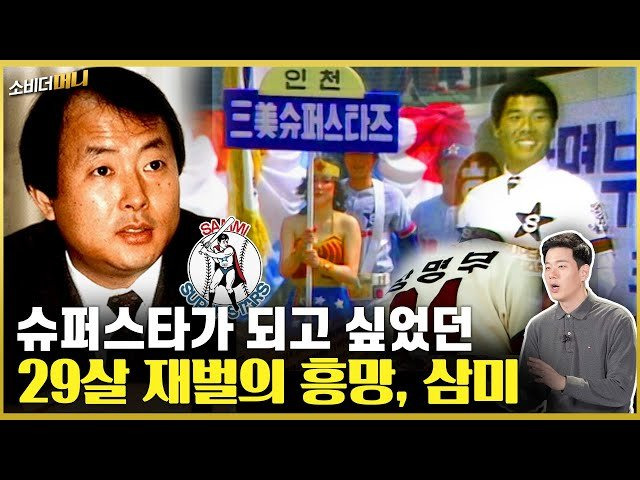
한때 소득세 1위! 국내 최고층 빌딩에, 야구단도 품었던 재벌의 몰락, 삼미그룹 이야기 / 소비더
한때 소득세 1위, 국내 최고층 빌딩 소유, 프로 야구단 운영 등 화려한 역사를 자랑했던 삼미그룹의 흥망성쇠를 다룬 영상입니다. 창업주 김두식 회장의 성공 스토리부터 2세 김현철 회장의 과감
lilys.ai
비누 공장에서 재계 17위 그룹으로
해방 후 작은 시작에서 대기업으로
해방 이후 혼란기, 김두식은 비누 제조와 고철 장사로 사업을 시작했습니다. 전쟁 후 복구 과정에서 목재 사업에 뛰어들어 제재소를 성공적으로 운영하며 사업의 기반을 다졌습니다. 1960년 무역회사를 설립한 그는 살아있는 돼지, 박화, 합판 등을 주요 수출 품목으로 삼아 사세를 확장해 나갔습니다.
1970년대 들어 특수강과 군수 장비 분야로 사업을 확대한 삼미그룹은 1976년, 김두식 회장이 국세청 소득세 랭킹 1위를 기록하며 대한민국 최고의 기업인으로 자리매김했습니다. 이 시기에 김두식 회장은 서울의 랜드마크가 된 31빌딩을 건설하여 많은 이들을 놀라게 했습니다. 31빌딩은 당시 최신 건축 공법인 철골 구조와 대규모 창문을 사용한 혁신적인 건물이었습니다^3.
29세 재벌 회장, 김현철의 도전
젊은 리더십의 출현과 시련
1980년, 골수암으로 투병하던 김두식 회장이 세상을 떠나자 당시 29세였던 아들 김현철이 삼미그룹의 2대 회장으로 취임했습니다. 미국 워싱턴 대학을 졸업한 김현철은 1973년부터 한국에서 경영 수업을 받았고, 아버지의 뜻에 따라 울산 공장에서 직원들과 기숙사 생활을 하며 혹독한 훈련을 받았습니다.
취임 초기, 신군부 실세들과의 관계와 긍정적인 경영 환경 덕분에 성공적인 출발을 알린 김현철 회장은 야구에 대한 열정을 바탕으로 프로야구팀 삼미 슈퍼스타즈를 창단하는 파격적인 결정을 내리기도 했습니다.
삼일빌딩과 프로야구단의 영광
김현철 회장은 서울 중심부에 삼일빌딩을 건설하며 삼미그룹의 위상을 높였습니다. 야구팀은 초기 연패로 어려움을 겪었지만, 장명부라는 '괴물 투수'를 영입하여 시즌 2위에 오르는 등 반전을 이끌어내었습니다. 그러나 이러한 성공도 오래가지 못했고, 3년 반 만에 야구단은 45억에 달하는 적자를 기록하게 됩니다.
무리한 확장과 위기의 시작
글로벌 도전과 위기의 시작
1983년 세계 경기 하락과 함께 해운업이 타격을 입으면서 삼미그룹은 삼미해운을 매각하게 되었습니다. 이어 삼일빌딩과 야구단 슈퍼스타즈까지 정리하면서 계열사가 10개에서 5개로 줄어들게 되었습니다.
그러나 80년대 후반, 3저 호황(저달러, 저유가, 저금리)과 88 서울올림픽의 영향으로 한국 경제가 활성화되면서 삼미그룹은 다시 부활의 기회를 맞이했습니다. 계열사를 12개로 늘리며 재계 순위 17위까지 올라섰습니다.
무리한 투자, 발목을 잡다
삼미그룹은 2,000억 원(약 2억 달러)으로 기업을 인수하고, 전 직원에게 특별 보너스를 지급하며 글로벌 기업으로 도약하고자 했습니다. 창원에는 연 100만 톤 규모의 특수관 공장을 증설하며 기업 몸집을 확장했습니다.
그러나 1990년대 소련 붕괴와 글로벌 경제 불확실성 속에서 북미 시장이 얼어붙으면서 삼미그룹의 캐나다 공장은 적자 공장이 되었고, 창원 공장의 고정비 부담도 커지기 시작했습니다. 특히 캐나다 공장 인수 당시 1,500억 원을 투자했으나, 실사 결과 공장 가치는 400억 원에 불과한 것으로 드러났습니다. 창원 공장 증설로 인한 빚도 수천억 원에 달했고, 적자는 1,600억 원까지 누적되었습니다.
IMF와 삼미그룹의 몰락
외환위기의 쓰나미
1997년, 아시아 금융위기가 한국을 강타했습니다. 이미 경영난에 시달리던 삼미그룹은 3월에 부도 처리되었으며, 이는 한보, 진로, 기아 등 대기업들의 연쇄 부도로 이어졌습니다^5. 이러한 재벌들의 무너짐은 결국 한국 경제의 외환위기와 IMF 구제금융으로 이어지게 되었습니다.
외환위기 당시 한국은 570억 달러라는 기록적인 IMF 구제금융을 받아 국가 부도 위기를 모면했으나, 그 대가로 재벌 해체, 대규모 실업, 그리고 실물 경제의 위기가 가속화되었습니다^5. 삼미그룹도 법정 관리를 거쳐 제3자 인수의 과정을 밟게 되었으며, 결국 수십 년간의 영광을 뒤로하고 역사 속으로 사라졌습니다.
변화된 삶
삼미그룹의 계열사들은 매각과 합병을 통해 모두 다른 주인을 찾았고, 김현철 회장은 두 차례의 직장암 수술을 겪은 후 회복하여 도미니카 공화국에서 선교 활동을 이어가고 있습니다.
삼미그룹의 몰락이 주는 교훈
무리한 확장의 위험성
삼미그룹의 사례는 비즈니스에서 적절한 속도 조절의 중요성을 보여줍니다. 김현철 회장의 캐나다 공장 인수와 창원 공장 증설과 같은 과감한 투자는 호황기에는 좋은 전략처럼 보였으나, 경기 하락기에는 치명적인 약점이 되었습니다.
재벌 시스템의 허점
한국의 재벌 시스템은 '한강의 기적'이라 불리는 경제 성장을 이끌었지만, 과도한 차입경영과 정경유착은 결국 1997년 금융위기의 원인이 되었습니다^2. 삼미그룹을 포함한 많은 재벌들이 위험한 수준의 부채를 안고 있었고, 이는 외부 충격에 취약한 구조를 만들었습니다.
경영 승계의 과제
29세라는 젊은 나이에 대기업을 물려받은 김현철 회장의 사례는 준비되지 않은 경영 승계의 위험성을 보여줍니다. 전문 경영인으로서의 충분한 경험과 훈련 없이 대규모 기업을 이끄는 것은 큰 도전이며, 이는 오늘날 많은 기업들이 직면한 승계 문제와도 연결됩니다.
맺음말: 한국 경제사의 한 페이지
삼미그룹의 이야기는 한국 현대 경제사의 축소판이라고 할 수 있습니다. 빠른 성장과 확장, 과감한 투자와 혁신의 기회들, 그리고 위기 상황에서의 취약점이 그대로 드러난 사례입니다. "만약 캐나다 공장을 인수하지 않았다면..." 이라는 가정은 많은 비즈니스 리더들에게 중요한 질문을 던집니다.
오늘날 삼성, SK, 현대 등 한국의 대기업들이 글로벌 시장에서 경쟁하는 모습을 보며, 우리는 삼미그룹과 같은 과거의 기업들이 남긴 교훈을 되새길 필요가 있습니다. 특히 삼성과 같은 기업이 반도체 분야에서 글로벌 경쟁에 직면한 상황^4은 과거 삼미그룹의 위기와 맥을 같이 합니다.
삼미그룹의 31빌딩이 서울의 스카이라인을 바꾸었듯이, 그들의 이야기는 한국 기업 문화와 경제사에 중요한 흔적을 남겼습니다. 성공과 실패, 그리고 그 과정에서 배울 수 있는 교훈들이 오늘날 우리의 경제 환경에도 여전히 유효하기 때문입니다.
#한국경제사 #삼미그룹 #김두식회장 #김현철회장 #재벌해체 #IMF외환위기 #31빌딩 #기업실패사례 #경영승계 #차입경영 #삼미슈퍼스타즈 #한국야구 #경제위기 #글로벌경쟁 #기업리더십 #경영전략 #기업위기관리
Rise and Fall: Sammi Group's Glory and Collapse in Korean Economic History
Looking up at Seoul's skyline in the 1970s, the 31 Building stood tall as a symbol of progress. Who was behind this landmark that once dominated South Korea's capital? Let's explore the story of Sammi Group, its founder Kim Doo-sik, and his son Kim Hyun-chul – a tale of spectacular rise and dramatic fall that parallels South Korea's own economic journey.
From Soap Factory to 17th Largest Conglomerate
Humble Beginnings to Corporate Giant
In the chaos following Korea's liberation, Kim Doo-sik began his business journey making soap and trading scrap metal. During post-war reconstruction, he ventured into the timber industry, successfully operating a sawmill that laid the foundation for his business empire. In 1960, he established a trading company that expanded by exporting live pigs, veneer, and plywood.
By the 1970s, Sammi Group had diversified into special steel and military equipment. In 1976, Kim Doo-sik made headlines by ranking first on the National Tax Service's income tax list, cementing his status as one of Korea's top businessmen. During this period, he constructed the 31 Building that became a Seoul landmark – an innovative structure using steel frame construction and extensive windows that was revolutionary for its time^3.
A 29-Year-Old Chaebol Chairman
The Emergence of Young Leadership
In 1980, after Kim Doo-sik lost his battle with leukemia, his son Kim Hyun-chul took over as the second chairman of Sammi Group at just 29 years old. A graduate of the University of Washington, Kim Hyun-chul had been receiving management training in Korea since 1973 and underwent rigorous preparation, living in company dormitories with employees at the Ulsan factory as per his father's wishes.
In his early days as chairman, he enjoyed a successful start thanks to good relationships with military regime power players and a positive business environment. Driven by his passion for baseball, he made the bold decision to establish the professional baseball team Sammi Superstars.
The Glory of Samil Building and Professional Baseball
Kim Hyun-chul constructed the Samil Building in central Seoul, raising Sammi Group's profile. The baseball team initially struggled with consecutive losses but staged a comeback by recruiting star pitcher Jang Myung-bu, achieving second place in the season. However, this success was short-lived, and within three and a half years, the team accumulated losses of 4.5 billion won.
Overexpansion and the Beginning of Crisis
Global Ambitions and Early Warning Signs
In 1983, as the global economy declined and the shipping industry suffered, Sammi Group was forced to sell Sammi Shipping. The company subsequently divested the Samil Building and the Superstars baseball team, reducing its subsidiaries from ten to five.
However, in the late 1980s, Sammi Group experienced a revival thanks to the "three lows" boom (low dollar, low oil prices, low interest rates) and the economic stimulus from the 1988 Seoul Olympics. The group expanded to twelve subsidiaries and climbed to 17th place in the business rankings.
Excessive Investment Becomes a Burden
Sammi Group acquired companies for 200 billion won (approximately $200 million), distributed special bonuses to all employees, and aimed to become a global enterprise. In Changwon, they expanded with a special steel pipe factory with an annual capacity of 1 million tons.
However, in the 1990s, amid the collapse of the Soviet Union and global economic uncertainty, the North American market froze, turning Sammi's Canadian factory into a loss-making operation, while the fixed costs of the Changwon factory became increasingly burdensome. The Canadian factory acquisition had cost 150 billion won, but subsequent due diligence revealed its actual value was only 40 billion won. Debt from the Changwon factory expansion reached thousands of billions of won, and accumulated losses grew to 160 billion won.
IMF Crisis and Sammi Group's Downfall
The Tsunami of Financial Crisis
In 1997, the Asian financial crisis hit Korea hard. Already struggling with management difficulties, Sammi Group defaulted in March, leading to a chain reaction of defaults among major conglomerates like Hanbo, Jinro, and Kia^5. The collapse of these chaebols ultimately led to Korea's foreign exchange crisis and the IMF bailout.
During the crisis, Korea avoided national bankruptcy by accepting a record $57 billion IMF bailout, but the price was steep: chaebol dissolution, massive unemployment, and an accelerated crisis in the real economy^5. Sammi Group went through court receivership and third-party acquisition processes, ultimately disappearing into history after decades of glory.
Lives Transformed
Sammi Group's subsidiaries found new owners through sales and mergers. Kim Hyun-chul, after recovering from two stomach cancer surgeries, now conducts missionary work in the Dominican Republic.
Lessons from Sammi Group's Collapse
The Dangers of Rapid Expansion
Sammi Group's case demonstrates the importance of appropriate pacing in business. Kim Hyun-chul's bold investments, such as acquiring the Canadian factory and expanding the Changwon factory, seemed like good strategies during boom times but became fatal weaknesses during economic downturns.
Vulnerabilities in the Chaebol System
Korea's chaebol system drove the "Miracle on the Han River" economic growth, but excessive debt financing and political-business collusion ultimately caused the 1997 financial crisis^2. Many chaebols, including Sammi Group, carried dangerous debt levels, creating structures vulnerable to external shocks.
The Challenge of Management Succession
The case of Kim Hyun-chul, who inherited a major corporation at age 29, illustrates the risks of unprepared management succession. Leading a large enterprise without sufficient experience and training as a professional manager is a significant challenge, connecting to succession issues many companies face today.
Conclusion: A Chapter in Korean Economic History
Sammi Group's story is a microcosm of modern Korean economic history. It reflects rapid growth and expansion, bold investments and opportunities for innovation, and vulnerabilities that emerge during crises. The question "What if they hadn't acquired the Canadian factory?" poses important considerations for many business leaders.
As we observe today's Korean giants like Samsung, SK, and Hyundai competing in global markets, we need to remember the lessons left by companies like Sammi Group. Samsung's current challenges in the semiconductor industry^4 echo past crises faced by Sammi Group.
Just as Sammi Group's 31 Building changed Seoul's skyline, their story has left important marks on Korean corporate culture and economic history. The lessons of success, failure, and the journey between remain relevant in today's economic environment.
#KoreanEconomicHistory #SammiGroup #KimDooSik #KimHyunChul #ChaebolDissolution #IMFCrisis #31Building #CorporateFailure #ManagementSuccession #DebtFinancing #SammiSuperstars #KoreanBaseball #EconomicCrisis #GlobalCompetition #CorporateLeadership #BusinessStrategy #CrisisManagement
#한국경제사 #삼미그룹 #김두식회장 #김현철회장 #재벌해체 #IMF외환위기 #31빌딩 #기업실패사례 #경영승계 #차입경영 #삼미슈퍼스타즈 #한국야구 #경제위기 #글로벌경쟁 #기업리더십 #경영전략 #기업위기관리
'이슈 > 사회' 카테고리의 다른 글
| 권력과 술잔 사이: 더본코리아 '술자리 면접' 논란이 드러내는 기업문화의 민낯 (0) | 2025.04.09 |
|---|---|
| 직장 스트레스와 정신건강: 여의도 증권맨의 비극적 사건이 주는 교훈 (1) | 2025.04.08 |
| 대구가톨릭대병원 간호사 "낙상 마렵다" 발언 파문... 신생아 학대 논란의 전말과 교훈 (0) | 2025.04.08 |
| 천혜의 자연이 빚어낸 보물, 태평염전의 모든 것 - 소금의 역사와 미래를 만나다 (1) | 2025.04.08 |
| 250도 오븐 앞에서 50년: 미국까지 사로잡은 우리의 옛날 과자 이야기 (0) | 2025.04.07 |


