부동산 시장의 높은 진입 장벽으로 내 집 마련이 갈수록 어려워지는 가운데, 정부가 새로운 대안을 모색하고 있습니다. 금융위원회가 검토 중인 '지분형 모기지'는 주택 구매 자금이 부족한 서민들에게 희망의 빛이 될 수 있을까요? 전통적인 대출 방식과는 다른 이 제도의 개념부터 해외 사례까지 자세히 알아보겠습니다.
왜 한국 부동산은 수익 없어도 가격이 떨어지지 않을까? - 서동기 박사의 시장 분석
당신은 이런 의문을 가져본 적 없나요? "왜 한국에서는 부동산 임대 수익률이 낮아도 집값이 떨어지지 않을까?" 이 현상은 한국 부동산 시장의 가장 독특한 특징 중 하나입니다. 서동기 박사(전
agent-katrina.tistory.com
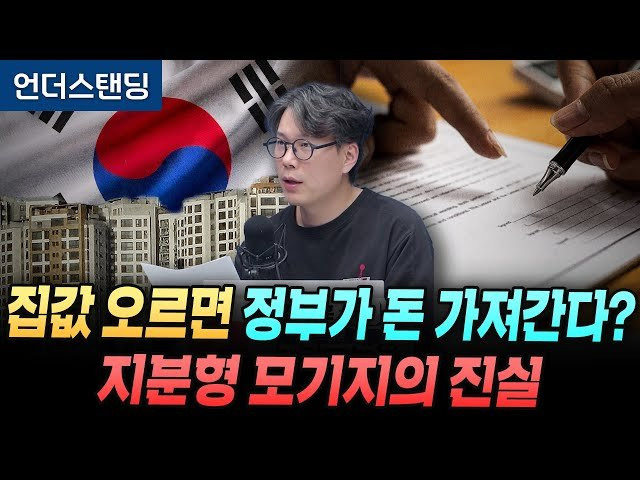
이건 뭘까, 지분형 모기지? 우리 집 방 한 칸을 정부에 내어준다면? (언더스탠딩 김상훈 기자)
정부에서 발표한 **지분형 모기지** 상품에 대해 알아봅니다. 이 상품은 집을 살 때 돈이 부족한 사람들에게 정부가 일부 지분을 투자하여 집을 공동으로 구매하는 방식입니다. 과거 박근혜 정부
lilys.ai
지분형 모기지란 무엇인가?
지분형 모기지는 개인이 주택을 구매할 때 정부나 금융기관이 일부 지분을 함께 소유하는 방식입니다. 집을 사려는 사람이 전체 가격의 일부만 부담하고, 나머지는 정부나 금융기관이 지분으로 참여하는 구조입니다^1.
김병환 금융위원장은 최근 기자간담회에서 "가계대출에 대해 정부가 지분형으로 지원할 수 있는 방안에 대한 생각을 갖고 있다"고 밝혔습니다^10. 이는 단순한 대출 지원이 아닌, 정부가 주택의 일부 지분을 실제로 보유하는 형태로 접근하겠다는 의미입니다.
왜 지금 지분형 모기지인가?
현재 한국의 가계부채는 GDP 대비 세계 2위 수준으로, 주택 구매를 위한 과도한 대출이 큰 부담이 되고 있습니다^9. 또한 총부채원리금상환비율(DSR) 규제가 강화되면서 현금이 충분하지 않은 사람들은 내 집 마련이 더욱 어려워지고 있습니다.
지분형 모기지는 이런 상황에서 초기 자금 부담을 줄이면서도 자가 주택 보유율을 높일 수 있는 대안으로 떠오르고 있습니다.
과거의 실패, 새로운 도전
지분형 모기지는 2013년 박근혜 정부 시절 시행된 '공유형 모기지'와 유사한 개념입니다^10. 당시 제도는 정부로부터 낮은 금리로 주택담보대출을 받는 대신, 주택 매도 시 발생한 시세 차익의 일부를 정부와 나눠야 했습니다.
왜 실패했나?
공유형 모기지는 여러 이유로 인기를 끌지 못했습니다:
- 주택 가격 상승 시 정부와 수익을 공유해야 한다는 심리적 거부감
- 주택의 일부 지분을 정부가 소유함으로써 발생하는 매각이나 상속 절차의 복잡성
- 실제 혜택 대비 제약 조건이 많다는 인식
새로운 접근방식
현재 검토 중인 지분형 모기지는 이러한 단점을 보완하면서, 보다 명확한 지분 소유 구조를 제시하려는 시도입니다. 특히 정부가 주택금융공사를 활용해 자금 조달을 지분형으로 할 수 있는 방법을 모색하고 있습니다
지분형 모기지의 작동 원리
지분형 모기지는 일반적인 모기지와 어떻게 다를까요? 가장 큰 차이점은 대출이 아닌 '지분 투자' 개념이 도입된다는 점입니다.
기본 구조
- 주택 구매자는 주택 가격의 일부(예: 50-80%)만 부담합니다
- 나머지 부분은 정부나 금융기관이 지분으로 투자합니다
- 구매자는 자신이 소유한 부분에 대해서만 모기지를 갖게 됩니다
- 나중에 주택을 팔 때 가격 상승분을 지분 비율에 따라 나눕니다
예를 들어, 2억원 주택을 구매할 때 구매자가 1억 6천만원(80%)을 부담하고, 정부가 4천만원(20%)을 지분으로 투자합니다. 5년 후 이 주택이 3억원에 팔리면, 상승분 1억원 중 8천만원은 구매자가, 2천만원은 정부가 가져가는 식입니다^11.
손익 공유 방식
지분형 모기지는 주택 가격 변동에 따른 손익을 공유합니다:
- 가격 상승 시: 지분 비율에 따라 이익 배분
- 가격 하락 시: 지분 비율에 따라 손실 부담
이는 정부와 구매자가 주택 시장의 위험을 공유하는 구조로, 양측 모두 주택 가치 유지에 이해관계를 갖게 됩니다.
해외 지분형 모기지 사례
전 세계적으로 여러 국가들이 다양한 형태의 지분형 주택금융 프로그램을 운영하고 있습니다. 특히 영국의 사례는 한국이 참고할 만한 중요한 모델입니다.
영국의 'Help to Buy' 프로그램
영국의 'Help to Buy' 에쿼티 론은 가장 성공적인 사례 중 하나입니다:
- 구매자는 주택 가격의 5%만 보유
- 정부가 20%를 에쿼티 론으로 제공
- 나머지 75%는 일반 모기지로 조달
- 첫 5년간 에쿼티 론에 이자 없음
- 6년째부터 약 1.7%의 이자 발생^11
2013년부터 2023년까지 약 34만 가구가 이 제도를 통해 주택을 구매했으며, 이는 약 200조 원 규모의 부동산 시장을 형성했습니다^11.
캐나다의 'First-Time Home Buyer Incentive'
캐나다의 제도는 다음과 같은 특징이 있습니다:
- 정부가 주택 가격의 5%(신축 주택의 경우 10%)를 지분으로 투자
- 25년 이내 또는 주택 매각 시 상환
- 주택 가치 변동에 따라 상환액 변동
- 최대 상환 금액은 초기 대출액 + (연 8% × 보유 연수)
호주와 기타 국가들
호주, 뉴질랜드 등 다른 국가들도 유사한 프로그램을 운영하고 있으며, 각국의 주택 시장과 금융 환경에 맞게 조정된 형태로 적용하고 있습니다.
지분형 모기지의 장단점
장점
- 낮은 초기 자금: 주택 가격의 일부만으로 입주 가능하므로 진입 장벽이 낮아집니다^11
- 대출 부담 감소: 대출 금액이 적어 DSR 규제에 덜 영향을 받습니다^3
- 주택 소유 기회 확대: 소득이 낮은 가구도 자가 주택 보유 가능성이 높아집니다^2
- 위험 분담: 주택 가격 하락 시 손실을 정부와 공유할 수 있습니다^6
단점
- 복잡한 구조: 일반 대출보다 이해하기 어려운 복잡한 구조입니다^11
- 이익 공유 부담감: 주택 가격이 크게 오를 경우 정부에 이익의 일부를 지불해야 합니다^10
- 매각 제한: 정부 지분으로 인해 매각이나 상속 절차가 복잡해질 수 있습니다^10
- 대상 제한: 일정 소득 이하 가구나 특정 가격 이하 주택으로 제한될 가능성이 높습니다^11
누구에게 적합할까?
지분형 모기지는 모든 사람에게 적합한 솔루션은 아닙니다. 다음과 같은 경우에 특히 도움이 될 수 있습니다:
- 초기 자금이 부족한 무주택 실수요자^2
- 대출 규제로 인해 기존 주택담보대출 이용이 어려운 가구^2
- 신혼부부, 청년, 다자녀 가구 등 주거 지원이 필요한 계층^2
- 장기적 주거 안정성을 원하는 사람들^2
정책의 나아갈 방향
지분형 모기지가 성공하기 위해서는 몇 가지 중요한 요소들이 고려되어야 합니다:
- 명확한 규칙 설정: 지분 소유와 관련된 모든 조건이 명확하게 제시되어야 합니다
- 유연한 지분 구매 옵션: 입주자가 시간이 지남에 따라 점진적으로 지분을 늘릴 수 있는 옵션이 필요합니다^4
- 시장 영향 고려: 영국 사례처럼 이 제도가 오히려 주택 가격을 상승시키는 부작용이 없도록 해야 합니다^5
- 공급 확대 병행: 수요 지원책만으로는 주택 문제 해결이 어려우므로 공급 확대 정책과 병행되어야 합니다^5
결론: 새로운 선택지로서의 가능성
지분형 모기지는 기존 주택 금융 방식의 한계를 넘어 새로운 선택지를 제공할 수 있는 정책입니다. 물론 여러 과제가 남아있지만, 세심한 설계와 시행을 통해 무주택자들에게 실질적인 도움이 될 가능성이 있습니다^2.
중요한 것은 이 제도가 단순한 가계부채 문제 해결책이 아닌, 장기적인 주거 안정성을 높이는 방향으로 설계되어야 한다는 점입니다. 정부의 구체적인 계획이 발표되면 더 자세한 분석이 가능할 것입니다^2.
여러분은 어떻게 생각하시나요? 지분형 모기지가 한국의 주택 시장에 긍정적인 영향을 미칠 수 있을까요? 댓글로 여러분의 생각을 나눠주세요!
#지분형모기지 #내집마련 #주택정책 #부동산투자 #가계부채 #주택금융 #정부정책 #금융위원회 #부동산시장 #주택구매 #첫집구매 #주택담보대출 #주택지원정책 #서민주택 #헬프투바이
Complete Guide to Shared Equity Mortgages in 2025: A New Option for Home Ownership
As the barriers to entering the real estate market continue to rise, making homeownership increasingly difficult, the government is exploring new alternatives. Could the "shared equity mortgage" being considered by the Financial Services Commission be a ray of hope for ordinary citizens who lack sufficient funds to purchase homes? Let's explore this concept in detail, from its basic principles to international case studies.
What is a Shared Equity Mortgage?
A shared equity mortgage is a system where the government or financial institutions co-own a portion of a property with an individual. The homebuyer bears only part of the total price, while the government or financial institution participates as an equity investor for the remainder^1.
Financial Services Commission Chairman Kim Byung-hwan recently stated at a press conference, "We are considering ways the government could provide equity-type support for household loans when purchasing houses"^10. This indicates an approach that goes beyond simple loan support, suggesting the government would actually hold a portion of equity in the property.
Why Shared Equity Mortgages Now?
Currently, South Korea's household debt ranks second highest in the world relative to GDP, with excessive loans for home purchases creating a significant burden^9. Additionally, as the Debt Service Ratio (DSR) regulations have been strengthened, people without sufficient cash find it increasingly difficult to purchase homes^10.
Shared equity mortgages are emerging as an alternative that can reduce the initial financial burden while increasing the rate of home ownership.
Past Failures, New Challenges
The shared equity mortgage concept is similar to the "shared mortgage" implemented during the Park Geun-hye administration in 2013^10. At that time, the program offered low-interest mortgage loans from the government in exchange for sharing a portion of the price appreciation with the government when selling the property.
Why Did It Fail?
The shared mortgage program failed to gain popularity for several reasons:
- Psychological resistance to sharing profits with the government when housing prices increased
- Complexity in procedures for sale or inheritance due to government ownership of partial equity
- Perception that the actual benefits were outweighed by numerous constraints^10
New Approach
The shared equity mortgage currently under consideration attempts to address these shortcomings while proposing a clearer equity ownership structure. In particular, the government is exploring ways to structure equity funding through the Korea Housing Finance Corporation^10.
How Shared Equity Mortgages Work
How does a shared equity mortgage differ from a conventional mortgage? The biggest difference is the introduction of an 'equity investment' concept rather than a loan.
Basic Structure
- The homebuyer covers only a portion of the house price (e.g., 50-80%)
- The remaining portion is invested as equity by the government or financial institution
- The buyer only has a mortgage for the portion they own
- When selling the house later, the price appreciation is divided according to the equity ratio^3
For example, when purchasing a 200 million won house, the buyer might pay 160 million won (80%), and the government invests 40 million won (20%) as equity. If this house sells for 300 million won after 5 years, the buyer would receive 80 million won of the 100 million won increase, while the government would receive 20 million won^11.
Profit and Loss Sharing Method
Shared equity mortgages share profits and losses according to housing price fluctuations:
- Price increase: Profits distributed according to equity ratio
- Price decrease: Losses shared according to equity ratio^6
This creates a structure where the government and buyer share the risks of the housing market, giving both parties an interest in maintaining the value of the property.
International Shared Equity Mortgage Cases
Various countries around the world operate different forms of shared equity housing finance programs. The UK case, in particular, is an important model for Korea to consider.
UK's 'Help to Buy' Program
The UK's 'Help to Buy' equity loan is one of the most successful cases:
- Buyer owns just 5% of the house price
- Government provides 20% as an equity loan
- Remaining 75% is financed through a conventional mortgage
- No interest on the equity loan for the first 5 years
- Interest of about 1.7% begins from the sixth year^11
From 2013 to 2023, approximately 340,000 households purchased homes through this program, creating a real estate market worth about 200 trillion won^11.
Canada's 'First-Time Home Buyer Incentive'
Canada's program has the following features:
- Government invests 5% of the house price as equity (10% for new construction)
- Repayment within 25 years or upon sale of the house
- Repayment amount varies with changes in housing value
- Maximum repayment amount is initial loan amount + (8% per year × years held)^6
Australia and Other Countries
Australia, New Zealand, and other countries also operate similar programs, adapted to suit each country's housing market and financial environment.
Advantages and Disadvantages of Shared Equity Mortgages
Advantages
- Low Initial Investment: The ability to move in with only a portion of the house price lowers the barrier to entry^11
- Reduced Loan Burden: Smaller loan amounts are less affected by DSR regulations^3
- Expanded Homeownership Opportunities: Even households with lower incomes have increased possibilities for home ownership^2
- Risk Sharing: Losses can be shared with the government if housing prices fall^6
Disadvantages
- Complex Structure: More difficult to understand than conventional loans due to complex structure^11
- Profit Sharing Burden: If housing prices rise significantly, a portion of the profit must be paid to the government^10
- Sales Restrictions: Government equity can complicate procedures for sale or inheritance^10
- Eligibility Restrictions: Likely to be limited to households below certain income levels or properties below specific price points^11
Who Is It Suitable For?
Shared equity mortgages are not a solution for everyone. They may be particularly helpful in the following cases:
- First-time homebuyers with insufficient initial funds^2
- Households that find it difficult to use existing mortgage loans due to loan regulations^2
- Newlyweds, young adults, multi-child households, and other groups needing housing support^2
- People seeking long-term housing stability^2
Future Policy Direction
For shared equity mortgages to succeed, several important factors must be considered:
- Clear Rules: All conditions related to equity ownership must be clearly presented
- Flexible Equity Purchase Options: Residents need options to gradually increase their equity share over time^4
- Market Impact Consideration: Care must be taken to prevent this system from inadvertently driving up housing prices, as seen in the UK case^5
- Concurrent Supply Expansion: Demand support policies alone cannot solve housing problems; they must be implemented alongside supply expansion policies^5
Conclusion: Potential as a New Option
Shared equity mortgages represent a policy that can provide new options beyond the limitations of existing housing finance methods. While several challenges remain, careful design and implementation could make this a substantive help for those without homes^2.
The important point is that this system should be designed to increase long-term housing stability, rather than simply as a solution to household debt problems. More detailed analysis will be possible once the government announces specific plans^2.
What do you think? Could shared equity mortgages have a positive impact on Korea's housing market? Share your thoughts in the comments!
#SharedEquityMortgage #Homeownership #HousingPolicy #RealEstateInvestment #HouseholdDebt #HousingFinance #GovernmentPolicy #FinancialServicesCommission #RealEstateMarket #HomePurchase #FirstHomebuyer #MortgageLoan #HousingSupportPolicy #AffordableHousing #HelpToBuy
#지분형모기지 #내집마련 #주택정책 #부동산투자 #가계부채 #주택금융 #정부정책 #금융위원회 #부동산시장 #주택구매 #첫집구매 #주택담보대출 #주택지원정책 #서민주택 #헬프투바이
'이슈 > 경제' 카테고리의 다른 글
| 세계 최고의 댐을 향한 타지키스탄의 야심찬 도전: 로군 댐 프로젝트의 모든 것 (0) | 2025.04.02 |
|---|---|
| 상호관세로 인한 증시 불확실성, 이것만 알면 대비 가능 (1) | 2025.04.02 |
| K원전 수출의 불편한 진실: 웨스팅하우스와의 협상이 가져온 국익 논란 (0) | 2025.04.01 |
| 경제 지형을 뒤흔드는 '트럼프 관세폭탄'과 AI 열풍의 이면 - 경제 핵심 이슈 총정리 (1) | 2025.04.01 |
| 정부 10조 추경 추진 배경 📉 한국 경제, 반짝 반등인가? (0) | 2025.03.31 |


