대한민국의 방위산업은 K2 전차, K9 자주포 등으로 세계 시장에서 주목받고 있지만, 이면에는 끊임없이 불거지는 방산비리 문제가 존재합니다. 특히 4차 산업혁명 시대를 맞아 방위산업의 환경이 급변하면서 방산비리의 양상도 새롭게 진화하고 있습니다. 첨단 기술의 발전과 함께 방위산업은 '밀리테크 4.0'이라는 새로운 패러다임을 맞이했지만, 비리의 유형과 수법도 함께 고도화되는 '방산비리 4.0' 시대에 진입했습니다. 이 글에서는 방산비리의 본질과 실태, 그리고 4차 산업혁명 시대에 걸맞은 방위산업 육성과 비리 척결 방안에 대해 살펴보겠습니다.
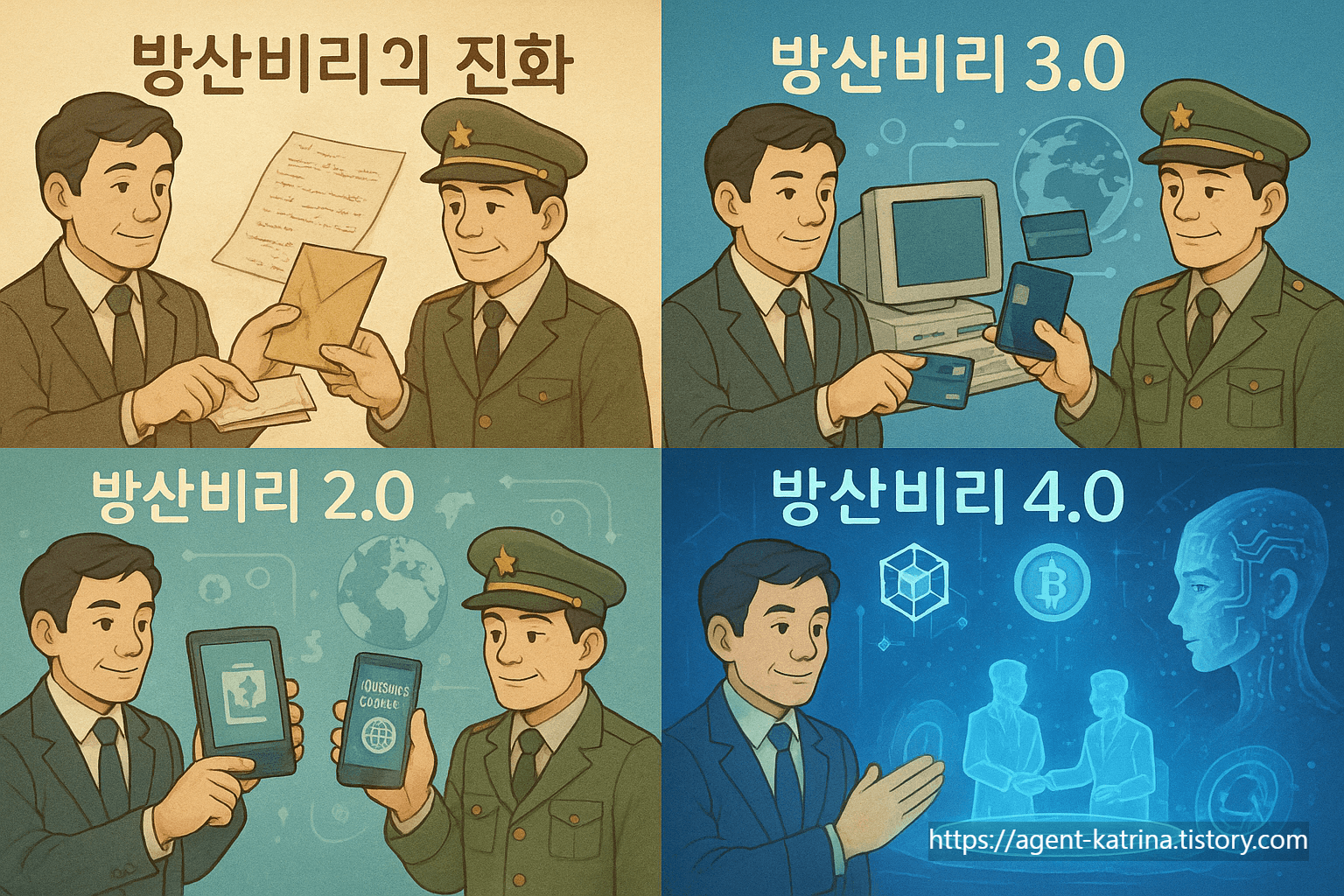
방산비리의 개념과 실태
방산비리란 무엇인가?
방위산업비리(이하 방산비리)는 방위산업 영역에서 발생하는 부패범죄를 통칭하는 개념입니다. 더 넓은 의미로는 '국방비리'라는 용어가 사용되기도 하지만, 방산비리는 주로 "방위력개선사업 업무 영역에서 발생하는 부패범죄"를 의미합니다^3. 구체적으로 방산비리는 △군사기밀 유출 △원가비리 △공문서 위조 △부실한 군수품 획득 및 납품 △특정한 업체와 유착 및 편의 제공 등 다양한 형태로 나타나며, 국가안보와 경제에 심각한 영향을 미칩니다^4.
방산비리는 단순한 부패 문제가 아니라 국가의 안보와 경제를 위협하는 심각한 범죄입니다. 2014년 세월호 참사 당시 구조함인 통영함의 수중음파탐지기(SONA) 납품 비리를 시작으로, 이른바 '사자방(4대강, 자원외교, 방산비리)'이라는 오명이 생겨났고, 이후 주요 무기체계 획득사업에서 각종 비리 의혹이 제기되었습니다^7.
![국내 방위산업 주요 지표. 방위사업청제공[뉴스락]](https://blog.kakaocdn.net/dna/yCGNP/btsNnCd8xsU/AAAAAAAAAAAAAAAAAAAAANN7koJNsSaE4lHq-gmafF6IB-bikdt6wKy7wRXxVveb/img.png?credential=yqXZFxpELC7KVnFOS48ylbz2pIh7yKj8&expires=1772290799&allow_ip=&allow_referer=&signature=9whj2OZOuXSAZ%2Bj0MSBiDoRGpZI%3D)
주요 방산비리 사례
최근 몇 년간 드러난 주요 방산비리 사례들은 다음과 같습니다:
- 통영함 수중음파탐지기(SONA) 납품 비리: 세월호 침몰사고 당시 통영함이 음파탐지기 불량으로 구조 현장에 투입되지 못한 사실이 드러나면서 비리 의혹이 불거졌습니다^9.
- 방탄복 납품 비리: 육군 특전사 방탄복 납품 과정에서 비리가 발생했습니다^9.
- K-11 복합소총 납품 비리: 육군의 차세대 소총 도입 과정에서 비리 의혹이 제기되었습니다^9.
- 공군전자전훈련장비(EWTS) 납품 비리: 공군 훈련장비 도입 과정에서 비리가 적발되었습니다^9.
- '박스 갈이' 허위보고 사건: 미사일 발사체 국산화 개발 과정에서 한 업체가 수입산을 국산화처럼 제출한 사례가 있었습니다^8.
2015년 방위사업비리 합동수사단(합수단)이 밝힌 중간수사 결과에 따르면, 밝혀진 비리사업 규모가 9809억원에 이르렀고, 전 해군참모총장 2명을 포함해 전 국가보훈처장, 현역 및 예비역 장성 10명 등 모두 63명이 기소되었습니다^9.
방산비리의 원인과 구조적 문제
방산비리가 끊임없이 발생하는 데에는 여러 구조적인 원인이 있습니다:
- 방위산업의 집중화와 과다경쟁: 소수의 방산 대기업들이 매출의 대부분을 차지하며, 이로 인해 우수한 기술력을 가진 중소·중견 방산업체들이 줄어들고 있습니다^4.
- 방산정책의 비현실성: 정책당국은 방산 사업의 개발일정이나 개발비용, 원가 등을 현실성 없이 낮게 책정하여 방산업체들이 정상적인 사업 수행을 하기 어렵게 만들고 있습니다^4.
- 군 특유의 폐쇄적 계급문화: 상명하복의 의사결정에 익숙한 군 문화에서 상급자의 지시를 거부하기 어려워 비리에 연루되는 경우가 많습니다^9.
- 정보독점에 따른 유착관계: 퇴직자-실무자-수요군-업체의 유착관계는 정보 독점성에 따른 '군피아' 또는 '방피아'로 인식될 수 있는 소지가 있습니다^9.
- 군사기밀 관련 폐쇄성: 사업 자체가 군사기밀과 관련되어 접근이 제한되기 때문에 기밀로 관리되는 방위사업 관련 내용은 이를 미리 빼내려는 업체들의 핵심 표적이 됩니다^9.
4차 산업혁명과 방위산업의 변화
밀리테크 4.0의 등장
4차 산업혁명 시대에 접어들면서 방위산업도 큰 변화를 맞이하고 있습니다. 국방 및 방위산업 분야에서도 '밀리테크 4.0'이라는 이름으로 변화가 불어 닥치고 있습니다^10.
밀리테크 4.0은 4차 산업혁명 시대의 군사 과학기술과 방위산업의 혁신을 의미합니다. 인공 지능(AI), 사물 인터넷(IoT), 클라우드 컴퓨팅, 빅데이터, 모바일 등 지능정보기술이 기존 산업과 서비스에 융합되거나 3D 프린팅, 로봇공학, 생명공학, 나노기술 등 여러 분야의 신기술과 결합되어 무기체계와 방위산업에 혁신을 가져오고 있습니다^10.
4차 산업혁명 시대의 방위산업 육성 정책
국방부와 방위사업청은 "방산비리 척결과 4차 산업혁명 시대에 걸맞은 방위산업 육성"이라는 정책 목표를 설정하고, 다음과 같은 주요 과제를 추진하고 있습니다^1:
- 방위사업 비리 근절·차단 및 효율적인 국방 획득체계 구축
- 첨단 무기체계에 대한 국방 R&D 역량 확보 및 방산기업 경쟁력 강화로 일자리 창출에 기여
이를 위한 구체적인 정책으로는 다음과 같은 것들이 있습니다:
- 방위사업 비리 사전예방 강화: 방산분야 퇴직자의 취업심사 대상기관 확대, 출연기관의 재산등록·취업심사 대상자 확대 등^1
- 국방획득체계 개선: 4차 산업혁명기술(무인, VR, 인공지능 등)이 적용된 민간 제품을 군에서 시범운용 후 신속하게 전력화하는 '신속시범획득사업' 추진^1
- 국방R&D 역량 강화: 「국방과학기술혁신 촉진법」 제정으로 도전적 연구개발 및 개방·협업 등을 위한 국방 R&D 혁신 기반 마련^1
- 방위산업 지원으로 국내 방산기업 경쟁력 제고: 「방위산업 발전 및 지원에 관한 법률」 제정으로 국방 중소‧벤처기업 육성 및 일자리 창출 등 방위산업 진흥 기반 마련^1
방산비리 4.0의 특성과 새로운 양상
4차 산업혁명 시대의 방산비리 특성
4차 산업혁명 시대의 방산비리는 기존의 방산비리와는 다른 새로운 특성을 보이고 있습니다. 기술이 고도화되고 복잡해지면서 비리의 양상도 변화하고 있는 것입니다.
- 첨단기술 관련 비리: 인공지능, 드론, 사이버 방어 시스템 등 첨단 기술 개발 과정에서 새로운 형태의 비리가 발생할 가능성이 높아졌습니다.
- 데이터 조작 및 해킹: 빅데이터와 인공지능 시스템에 의존하는 무기체계가 증가함에 따라 데이터 조작이나 해킹을 통한 비리가 증가할 수 있습니다.
- 지식재산권 침해: 첨단 기술의 개발이 활발해지면서 지식재산권 침해나 기술 탈취 관련 비리가 증가할 수 있습니다.
최근 방산비리 사례의 특징
최근 적발된 방산비리 사례들은 기존의 뇌물 수수나 단순 문서위조를 넘어 더욱 복잡하고 교묘한 형태로 진화하고 있습니다.
2024년 초에 드러난 "박스 갈이 허위보고" 사건은 미사일 발사체 국산화 개발 과정에서 한 업체가 수입산을 국산화처럼 제출한 사례로, 국방과학연구소(ADD)는 2017년부터 4년간 미사일 발사체에 사용되는 '리오셀 탄소 직물' 국산화 개발에 29억원을 투자했지만, 연구업체가 실제로는 개발에 실패하고 수입품을 국산인 것처럼 속인 것입니다^8.
또한 군사기밀 유출 문제도 심각해지고 있습니다. KF-21과 같은 첨단 무기체계 개발 과정에서 인도네시아 기술자가 USB를 통해 기술을 유출하려다 적발된 사례가 있었고, 한국형 차기 구축함(KDDX) 사업에서도 HD 현대중공업 직원들이 군사기밀을 빼돌린 사건이 있었습니다^8.
4차 산업혁명 시대의 방산비리 대응 전략
제도적 개선방안
4차 산업혁명 시대에 걸맞은 방산비리 대응 전략으로는 다음과 같은 것들이 있습니다:
- 방산비리범죄 처벌 강화: 방산비리범죄에 대한 엄벌 요청에 대해 광범위하게 의견이 접근하고 있습니다. 일부에서는 「방위산업비리범죄 처벌 등에 관한 특별법」 제정을 통해 방산비리범죄자에게 3년 이상의 유기징역 및 무기징역을 기본법정형으로 규정하는 방안을 제시하고 있습니다^3.
- 투명성 제고와 내부고발 장려: 방위사업청의 "방위사업감독관" 제도를 통한 내부통제의 실효적인 정착을 통한 방위사업 전반의 투명성 제고와 내부고발의 장려·포상의 강화 및 고발자 보호 등의 예방·억제대책이 필요합니다^3.
- 방위사업 패러다임의 혁신: 방위산업의 재도약을 위해서는 기존의 패러다임을 파괴적으로 혁신해야 합니다. '정부통제형'에서 '기업자율형'으로 전환하는 것이 필요합니다^10.
![방위사업청은 지난 2015년부터 아날로그 방식의 군 무전기를 대용량 정보 통신이 가능하도록 디지털 통신망으로 바꾸는 5조4000억원 규모의 국군 전술정보통신체계(TICN) 사업을 진행하고 있다. 사진은 지난 5월 육군과학화전투훈련단에서 정보통신 병과 신임 장교들이 TICN 수신 안테나를 설치하는 모습. 사진 육군
[출처:중앙일보] https://www.joongang.co.kr/article/25020858](https://blog.kakaocdn.net/dna/AxUrQ/btsNkNmfV3y/AAAAAAAAAAAAAAAAAAAAANL0PnnAVKJFb_Nr8_eG7Lz3iXwa12UJNSzS69JEpzsH/img.jpg?credential=yqXZFxpELC7KVnFOS48ylbz2pIh7yKj8&expires=1772290799&allow_ip=&allow_referer=&signature=UEeWBPc%2FSn2WI%2FlVm%2By3balAAiI%3D)
방산비리 척결을 위한 정부의 노력
정부는 방산비리 척결을 위해 다양한 노력을 기울이고 있습니다:
- 방위사업 비리 사전예방 강화: 방산분야 퇴직자의 취업심사 대상기관을 확대하고, 방사청 출연기관의 재산등록·취업심사 대상자를 확대하는 등의 조치를 취했습니다^1.
- 방위사업법 개정 추진: 방위사업 비리 행위 유형화, 처벌·제재 강화, 방위사업 중개업 제도화 등을 반영한 「방위사업법」 개정을 추진하고 있습니다^1.
- 주식취득 제한: 방사청 직원의 '방산업체 주식보유현황 신고' 의무를 '방산업체 주식취득 제한'으로 강화하여 방산분야 이해충돌을 방지하고 있습니다^1.
방위산업의 올바른 인식과 미래 방향
방위산업은 비리산업이 아니다
방위산업에 대한 부정적인 인식을 개선하는 것이 중요합니다. 최기일 건국대 겸임교수(국내방위사업학 박사 1호)는 "방위산업은 비리산업이 아니다"라고 강조하며, 방위산업 자체가 비리산업이 아니라 실상은 일부 개인의 일탈과 비위에 따른 '개인비리'라고 지적했습니다^7.
방위산업은 경제적 파급효과와 일자리 창출에 기여하는 효자산업이며, 다른 제조업과 달리 해외로 공장을 이전하거나 외국인을 함부로 고용할 수 없어 고용 안정성이 높은 특성이 있습니다^7.
4차 산업혁명 시대의 방위산업 발전 방향
4차 산업혁명 시대에 방위산업이 발전하기 위해서는 다음과 같은 방향성이 필요합니다:
- 정부의 규제 일변도에서 육성과 지원정책으로 방향 전환: 방위산업은 대표적인 규제산업으로 분류되지만, 규제산업에서 비리가 발생하면 이를 '시장의 실패'가 아닌 '정부의 실패'로 봐야 합니다. 따라서 정부는 규제보다는 육성과 지원에 초점을 맞출 필요가 있습니다^7.
- 대한민국 방위산업의 새로운 문화와 정체성 재정립: 국내 방위산업은 50년 가까운 세월 속에 기적 같은 발전을 이뤘지만, 최근 "방산은 비리"라는 오해와 지나친 감시·규제로 인해 국가안보와 자주국방마저 위태롭게 하는 지경에 이르렀습니다. 새로운 인식과 접근으로 국민적 불신을 해소하고 신뢰를 회복할 필요가 있습니다^7.
- 첨단 무기체계에 대한 국방 R&D 역량 확보: 미래 군사력에 혁신적 변화를 가져올 수 있는 8대 Game Changer(양자물리, 합성바이오, 극초음속, 무인자율, 미래통신, 에너지, 인공지능, 우주) 분야에 연구개발 집중 투자가 필요합니다^1.
결론: 4차 산업혁명 시대, 청렴하고 혁신적인 방위산업을 위하여
4차 산업혁명 시대를 맞아 방위산업은 큰 전환점에 서 있습니다. 방산비리는 국가안보와 경제에 심각한 위협이 되지만, 이를 해결하기 위해서는 단순히 처벌을 강화하는 것을 넘어 방위산업 전반의 구조적 개혁이 필요합니다.
방산비리는 단순한 개인의 일탈행위나 업체의 부정을 넘어서는 구조적 문제가 존재하기 때문에, 방산의 비리를 사후에 감독하는 것이 아니라 산업자체를 구조적으로 개선해야 합니다^4. 특히 복잡한 사업추진 절차를 간소화하고 법률이나 제도 등도 단순화하는 것이 필요합니다^4.
또한 방위산업에 대한 인식을 전환하여 '방산=비리'라는 등식을 타파하고, 경제적 파급효과와 일자리 창출에 기여하는 효자산업으로서의 가치를 인정해야 합니다. 4차 산업혁명 시대에 걸맞은 청렴하고 혁신적인 방위산업을 육성함으로써, 국가안보 강화와 경제 발전이라는 두 마리 토끼를 모두 잡을 수 있을 것입니다.
방산비리 4.0 시대, 비리는 척결하되 산업은 육성하는 균형 잡힌 접근이 필요합니다. 정부와 기업, 그리고 국민 모두가 함께 노력할 때 우리나라 방위산업은 진정한 4차 산업혁명 시대의 리더로 자리매김할 수 있을 것입니다.
#방산비리 #4차산업혁명 #밀리테크4.0 #국방산업 #방위산업 #방사청 #국방개혁 #K방산 #군피아 #방산비리척결 #국방R&D #방위사업법 #국방기술 #국방혁신 #방산투명성
Defense Industry Corruption 4.0: Corruption and Innovation in the Defense Industry in the Fourth Industrial Revolution Era
The South Korean defense industry has been gaining attention in the global market with products like K2 tanks and K9 self-propelled howitzers, but behind this success lies the persistent issue of defense industry corruption. As we enter the Fourth Industrial Revolution era, the defense industry environment is rapidly changing, and with it, the nature of corruption is also evolving. Along with the development of advanced technologies, the defense industry has entered a new paradigm called 'Military Tech 4.0,' but corruption types and methods have also become more sophisticated, entering the 'Defense Industry Corruption 4.0' era. This article examines the essence and reality of defense industry corruption, and explores ways to foster the defense industry and eliminate corruption in the Fourth Industrial Revolution era.
Concept and Reality of Defense Industry Corruption
What is Defense Industry Corruption?
Defense industry corruption refers to corruption crimes occurring in the defense industry sector. In a broader sense, the term 'defense corruption' is also used, but defense industry corruption specifically refers to "corruption crimes occurring in the defense capability improvement business area"^3. Specifically, defense industry corruption appears in various forms such as △military secret leakage △cost corruption △document forgery △procurement and delivery of substandard military supplies △collusion and providing convenience to specific companies, seriously affecting national security and the economy^4.
Defense industry corruption is not just a simple corruption issue but a serious crime that threatens national security and economy. Starting with the corruption in the underwater sound detector (SONAR) procurement for the Tongyeong ship during the Sewol ferry disaster in 2014, the notorious term 'Sa-Ja-Bang' (Four Rivers, Resource Diplomacy, Defense Industry Corruption) was created, followed by various corruption allegations in major weapons systems acquisition projects^7.
Major Defense Industry Corruption Cases
Major defense industry corruption cases revealed in recent years include:
- Tongyeong Ship Underwater Sound Detector (SONAR) Procurement Corruption: Corruption allegations arose when it was revealed that the Tongyeong ship could not be deployed to the rescue site during the Sewol ferry sinking due to a faulty sound detector^9.
- Bulletproof Vest Procurement Corruption: Corruption occurred in the process of procuring bulletproof vests for the Army Special Forces^9.
- K-11 Complex Rifle Procurement Corruption: Corruption allegations were raised in the process of introducing the Army's next-generation rifle^9.
- Air Force Electronic Warfare Training Equipment (EWTS) Procurement Corruption: Corruption was detected in the process of introducing Air Force training equipment^9.
- 'Box Replacement' False Reporting Case: A company submitted imported products as if they were domestically developed during the development of missile launcher localization^8.
According to the interim investigation results announced by the Joint Investigation Team for Defense Industry Corruption in 2015, the scale of corruption projects identified amounted to 980.9 billion won, and 63 people were indicted, including two former Navy Chiefs of Staff, a former Minister of Patriots and Veterans Affairs, and 10 active and retired generals^9.
Causes and Structural Problems of Defense Industry Corruption
There are several structural causes for the persistent occurrence of defense industry corruption:
- Concentration and Excessive Competition in the Defense Industry: A few large defense companies account for most sales, leading to a decrease in small and medium-sized defense companies with excellent technology^4.
- Unrealistic Defense Industry Policies: Policy authorities set unrealistically low development schedules, development costs, and costs for defense projects, making it difficult for defense companies to perform normal business operations^4.
- Military's Closed Rank Culture: In the military culture accustomed to command and obedience decision-making, it is difficult to refuse superior officers' instructions, often leading to involvement in corruption^9.
- Collusion Based on Information Monopoly: The collusion relationship between retirees-practitioners-demand military-companies can be perceived as 'military pia' or 'defense pia' due to information monopoly^9.
- Secrecy Related to Military Secrets: As the projects themselves are related to military secrets and access is limited, defense project-related contents managed as classified become key targets for companies trying to extract them in advance^9.
Changes in the Defense Industry in the Fourth Industrial Revolution
The Emergence of Military Tech 4.0
The defense industry is undergoing significant changes as we enter the Fourth Industrial Revolution era. Changes are also blowing in the defense and defense industry fields under the name 'Military Tech 4.0'^10.
Military Tech 4.0 refers to innovation in military science technology and the defense industry in the Fourth Industrial Revolution era. Intelligent information technologies such as artificial intelligence (AI), Internet of Things (IoT), cloud computing, big data, and mobile are being integrated with existing industries and services, or combined with new technologies in various fields such as 3D printing, robotics, biotechnology, and nanotechnology, bringing innovation to weapons systems and the defense industry^10.
Defense Industry Promotion Policies in the Fourth Industrial Revolution Era
The Ministry of National Defense and the Defense Acquisition Program Administration have set a policy goal of "Eliminating defense industry corruption and fostering a defense industry suitable for the Fourth Industrial Revolution era" and are pursuing the following main tasks^1:
- Eradicating and blocking defense project corruption and establishing an efficient defense acquisition system
- Contributing to job creation by securing defense R&D capabilities for advanced weapons systems and strengthening the competitiveness of defense companies
Specific policies for this include:
- Strengthening prevention of defense project corruption: Expanding the target institutions for employment review of retirees in the defense industry, expanding the targets for property registration and employment review of affiliated institutions, etc.^1
- Improving the defense acquisition system: Promoting 'Rapid Demonstration Acquisition Projects' that rapidly militarize civilian products with Fourth Industrial Revolution technologies (unmanned, VR, artificial intelligence, etc.) after trial operation in the military^1
- Strengthening defense R&D capabilities: Establishing an innovation base for defense R&D for challenging research and development and open collaboration through the enactment of the "Law on Promoting Defense Science and Technology Innovation"^1
- Enhancing the competitiveness of domestic defense companies by supporting the defense industry: Establishing a base for defense industry promotion, such as fostering small and medium-sized venture companies in defense and creating jobs, through the enactment of the "Law on Development and Support of the Defense Industry"^1
Characteristics and New Aspects of Defense Industry Corruption 4.0
Characteristics of Defense Industry Corruption in the Fourth Industrial Revolution Era
Defense industry corruption in the Fourth Industrial Revolution era shows different characteristics from traditional defense industry corruption. As technology becomes more advanced and complex, the aspects of corruption are also changing.
- Advanced Technology-Related Corruption: The possibility of new forms of corruption is increasing in the development process of advanced technologies such as artificial intelligence, drones, and cyber defense systems.
- Data Manipulation and Hacking: As weapon systems that depend on big data and artificial intelligence systems increase, corruption through data manipulation or hacking can increase.
- Intellectual Property Infringement: With the active development of advanced technologies, corruption related to intellectual property infringement or technology theft can increase.
Characteristics of Recent Defense Industry Corruption Cases
Recent detected defense industry corruption cases have evolved into more complex and sophisticated forms beyond existing bribery or simple document forgery.
The "Box Replacement False Reporting" case revealed in early 2024 was a case where a company submitted imported products as if they were domestically developed during the development of missile launcher localization. The Agency for Defense Development (ADD) invested 2.9 billion won in the development of 'lyocell carbon fabric' used in missile launchers from 2017 to 2021, but the research company actually failed in development and deceived by pretending imported products were domestic^8.
The issue of military secret leakage is also becoming serious. There was a case where an Indonesian engineer was caught trying to leak technology through USB during the development of advanced weapons systems like the KF-21, and there was also an incident where HD Hyundai Heavy Industries employees stole military secrets in the Korean next-generation destroyer (KDDX) project^8.
Defense Industry Corruption Response Strategies in the Fourth Industrial Revolution Era
Institutional Improvement Measures
Strategies for responding to defense industry corruption suitable for the Fourth Industrial Revolution era include:
- Strengthening Punishment for Defense Industry Corruption Crimes: There is widespread agreement on the need for severe punishment for defense industry corruption crimes. Some suggest establishing the "Special Law on Punishment of Defense Industry Corruption Crimes" to prescribe three years or more of imprisonment and life imprisonment as the basic statutory penalty for defense industry corruption criminals^3.
- Enhancing Transparency and Encouraging Whistleblowing: It is necessary to establish preventive and deterrent measures such as enhancing transparency in defense projects through effective internal control via the "Defense Project Supervisor" system of the Defense Acquisition Program Administration, encouraging whistleblowing, strengthening rewards, and protecting whistleblowers^3.
- Innovating the Defense Project Paradigm: For the revitalization of the defense industry, it is necessary to disruptively innovate the existing paradigm. It is necessary to transition from 'government-controlled' to 'corporate autonomous'^10.
Government Efforts to Eliminate Defense Industry Corruption
The government is making various efforts to eliminate defense industry corruption:
- Strengthening Prevention of Defense Project Corruption: Measures have been taken such as expanding the target institutions for employment review of retirees in the defense industry and expanding the targets for property registration and employment review of affiliated institutions of the Defense Acquisition Program Administration^1.
- Pushing for Revision of the Defense Acquisition Program Act: The government is pushing for revision of the "Defense Acquisition Program Act" to reflect the categorization of defense project corruption acts, strengthening of punishment and sanctions, and institutionalization of defense project brokerage^1.
- Stock Acquisition Restriction: The obligation of 'reporting defense industry company stock holdings' for Defense Acquisition Program Administration employees has been strengthened to 'restricting defense industry company stock acquisition' to prevent conflicts of interest in the defense industry^1.
Correct Recognition and Future Direction of the Defense Industry
The Defense Industry is Not a Corruption Industry
It is important to improve the negative perception of the defense industry. Professor Choi Ki-il of Konkuk University (the first Ph.D. in domestic defense project studies) emphasized that "the defense industry is not a corruption industry," pointing out that the defense industry itself is not a corruption industry, but in reality, it is 'individual corruption' due to the deviation and misconduct of some individuals^7.
The defense industry is a beneficial industry contributing to economic ripple effects and job creation, and unlike other manufacturing industries, it has high employment stability as it cannot relocate factories overseas or employ foreigners arbitrarily^7.
Direction of Defense Industry Development in the Fourth Industrial Revolution Era
For the defense industry to develop in the Fourth Industrial Revolution era, the following directions are needed:
- Shifting Direction from Government Regulation to Promotion and Support Policies: The defense industry is classified as a representative regulated industry, but when corruption occurs in a regulated industry, it should be viewed as a 'government failure' rather than a 'market failure.' Therefore, the government needs to focus on promotion and support rather than regulation^7.
- Re-establishing New Culture and Identity of the Korean Defense Industry: The domestic defense industry has achieved miraculous development over nearly 50 years, but recently, due to the misunderstanding that "defense industry equals corruption" and excessive surveillance and regulation, even national security and self-defense are in jeopardy. There is a need to resolve public distrust and restore trust through new perceptions and approaches^7.
- Securing Defense R&D Capabilities for Advanced Weapons Systems: It is necessary to concentrate investment in research and development in 8 Game Changer areas (quantum physics, synthetic biology, hypersonic, unmanned autonomous, future communication, energy, artificial intelligence, space) that can bring innovative changes to future military power^1.
Conclusion: For a Clean and Innovative Defense Industry in the Fourth Industrial Revolution Era
The defense industry is at a major turning point as it faces the Fourth Industrial Revolution era. Defense industry corruption is a serious threat to national security and the economy, but to solve this, structural reform of the entire defense industry is needed beyond simply strengthening punishment.
Since defense industry corruption has structural problems beyond simple individual deviant behavior or company misconduct, rather than supervising defense corruption after the fact, the industry itself needs to be structurally improved^4. In particular, it is necessary to simplify complex project promotion procedures and laws and systems^4.
Also, it is necessary to transform the perception of the defense industry, break the equation 'defense industry = corruption,' and recognize its value as a beneficial industry contributing to economic ripple effects and job creation. By fostering a clean and innovative defense industry suitable for the Fourth Industrial Revolution era, it will be possible to achieve both strengthening national security and economic development.
In the Defense Industry Corruption 4.0 era, a balanced approach is needed to eradicate corruption but foster the industry. When the government, companies, and all citizens work together, our defense industry can establish itself as a true leader in the Fourth Industrial Revolution era.
#DefenseIndustryCorruption #FourthIndustrialRevolution #MilitaryTech4.0 #DefenseIndustry #DefenseAcquisition #DAPA #DefenseReform #KDefense #MilitaryPia #AntiCorruption #DefenseR&D #DefenseAcquisitionAct #DefenseTechnology #DefenseInnovation #DefenseTransparency
#방산비리 #4차산업혁명 #밀리테크4.0 #국방산업 #방위산업 #방사청 #국방개혁 #K방산 #군피아 #방산비리척결 #국방R&D #방위사업법 #국방기술 #국방혁신 #방산투명성
'이슈' 카테고리의 다른 글
| 권성동 원내대표의 뉴스타파 기자 폭행 사건, 언론 자유 침해 논란 일으켜 (0) | 2025.04.17 |
|---|---|
| 주가 폭락 속에서도 빛나는 기회! KG, HL, 대신증권 오너 자녀들의 과감한 지분확대 전략 (0) | 2025.04.17 |
| 연예기획사의 인공지능 아이돌 은폐설: 진실과 루머 사이 (0) | 2025.04.17 |
| 숨겨진 진실을 파헤치는 '뉴스타파', 명태균 게이트 폭로로 전국민 관심 집중 (1) | 2025.04.16 |
| 생명을 위협하는 순간, 사격 훈련중 총기사고 원인과 대처법 완벽 가이드 (1) | 2025.04.16 |


