현대 사회에서 가짜뉴스와 정보 왜곡은 민주주의의 근간을 위협하고 있습니다. 이런 문제를 해결하기 위해 대만의 오드리 탕 전 디지털장관이 제시한 '집단 지성'의 힘에 주목해 봅시다. 시민들이 주도적으로 참여하는 디지털 민주주의가 어떻게 사회 문제를 해결하고 정부와 시민 간의 신뢰를 회복시킬 수 있는지 살펴보겠습니다.
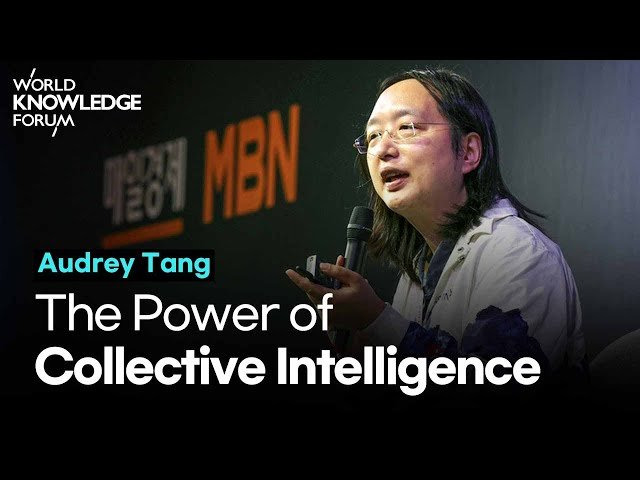
Audrey Tang: The Power of Collective Intelligence
오드리 탕은 **집단 지성**의 힘을 강조하며, 민주적 제도와 시민 간의 신뢰 하락이라는 시대적 과제를 해결하는 방안을 제시합니다. 대만 정부는 소셜 미디어의 단점을 극복하고 시민 참여를 장
lilys.ai
대만의 디지털 혁신과 오드리 탕의 역할
오드리 탕은 대만의 초대 디지털 담당 장관이자 유명 프로그래머로, 대만의 디지털 민주주의와 열린 정부 정책을 이끌어 온 핵심 인물입니다. 2016년 대만 사상 최연소인 35세의 나이로 정무위원에 임명되었고, 정보기술(IT) 강국으로 꼽히는 대만은 디지털 혁신을 위해 2022년 디지털부를 신설하고 오드리 탕을 초대 장관으로 임명했습니다.^1
집단 지성의 필요성과 탄생 배경
오드리 탕은 집단 지성의 힘을 강조하며, 대만은 시민들이 주도하는 팩트체크 시스템으로 가짜정보를 이겨내고 있다고 밝혔습니다. 그는 "여러 집단지성 시스템을 제도화한 후 정부와 국민의 관계가 긍정적으로 바뀌기 시작했다"고 설명합니다.^1
"정부가 국민을 근본적으로 신뢰하기 시작하면 그들도 정부를 신뢰하게 될 것" - 오드리 탕^1
대만 사회는 디지털 역량의 중요성에 대한 공감대가 형성돼 있을 뿐만 아니라, 시민들이 자발적으로 가짜뉴스를 검증하는 데 적극 나서는 분위기입니다. 이러한 문화적 토대 위에서 집단 지성을 활용한 다양한 이니셔티브가 탄생했습니다.^1
g0v(GovZero) 운동: 시민 주도 디지털 혁신의 시작
g0v(GovZero, 대만 영시(零時)정부)는 2012년 말 대만에서 시작된 오픈 소스, 열린 정부 협업 운동입니다. 이 이름은 'gov'의 'o'를 '0'으로 바꿔 정부의 역할을 '제로(0)'부터 다시 생각한다는 의미를 담고 있습니다.
"물타기 음모론": 한국 사회의 정치 스캔들과 관심 전환 전략에 대한 분석
한국 사회에서 종종 등장하는 '물타기 음모론'은 정부나 권력층이 정치적 위기 상황에서 대중의 관심을 분산시키기 위해 연예계 스캔들이나 다른 이슈를 의도적으로 터뜨린다는 주장입니다. 이
agent-katrina.tistory.com
시민 개발자들의 혁신적 시도
g0v는 주로 2개월마다 한 번씩 열리는 대규모 해커톤을 통해 운영되며, 참가자들은 다양한 프로젝트를 제안하고 자원봉사자를 모집합니다. 이런 방식은 상향식 아이디어 발상을 장려하며, '슬랙티비즘(나태한 행동주의)'이 아닌 진정한 행동주의를 촉진합니다.^15
실제 사례로, 대만의 부동산 가격 투명성 문제에 대응하여 내무부가 의뢰한 웹사이트가 출시 후 접속 폭주로 제대로 작동하지 않자, g0v 개발자들이 3일 만에 정부 데이터를 통합한 개선된 버전을 만들어 문제를 해결했습니다.^14
아이유와 허혜선 음모론: 인터넷 루머의 실체 파헤치기
인터넷에는 수많은 음모론이 떠돌고 있지만, 그중 '아이유'와 '허혜선'을 연결하는 음모론은 특히 기괴하고 근거 없는 주장들로 가득합니다. 이런 루머가 어떻게 시작되었고 어떤 내용을 담고
agent-katrina.tistory.com
코팩츠(Cofacts): 시민 주도 팩트체크 시스템
탕 전 장관은 팩트체크 챗봇 서비스인 '코팩츠(Cofacts)'를 소개하며 집단지성의 필요성을 강조했습니다. 2016년 오픈소스로 시작된 코팩츠는 여러 SNS에 광범위하게 적용되는 챗봇 서비스로, 시민들이 자발적으로 모여 허위정보를 제보하고 검증합니다.^1
민주적 문제 해결을 위한 AI 기술 활용
대만은 사회에서 일어나는 갈등과 분열을 민주적으로 해결하는 데에도 인공지능(AI) 기술을 적극 도입하고 있습니다. 딥페이크 규제와 인터넷의 자유를 두고 다양한 의견을 공유하는 과정에서도 AI가 공통 아이디어를 요약하게끔 활용하는 식입니다.^1
또한 공무원, 민간, 시민사회가 힘을 합쳐 지역문제를 해결하는 '대통령 해커톤'은 참여 민주주의의 성공적인 사례로 꼽힙니다. 이런 접근 방식은 정부와 시민 간의 신뢰 구축에 크게 기여했습니다.^1
하이퍼챗(Hyperchat): 집단 지성의 새로운 도구
최근에는 생성형 AI가 지원하는 집단 대화 모델인 '하이퍼챗(hyperchat)' 기술이 주목받고 있습니다. 이는 다양한 인원이 실시간으로 의사를 교환하고 의견을 수렴해 최적의 해답을 빠르게 도출하게 해주는 기술입니다.^6
집단 지성의 놀라운 성과
하이퍼챗의 실험적 활용 사례로 미국 최대의 대학 농구 토너먼트 'March Madness' 대회가 있습니다. 무작위로 선정된 50명의 스포츠 팬이 하이퍼챗 방식으로 토너먼트 예측을 구성한 결과, ESPN 공식 토너먼트 예측 대회에서 전체 참가자 3천만 명 중 상위 1.4%를 차지하는 뛰어난 성과를 냈습니다.^6
정량적 분석에서도 평균 IQ가 100인 실험 참가자들이 하이퍼챗 기반 협의를 통해 IQ 128 수준의 문제 해결 능력을 보였다는 결과가 나왔습니다. 이는 '영재(gifted)' 수준에 필적하는 성과입니다.^6
디지털 시대의 집단 지성과 민주주의
대의 정부의 지능성은 공공선을 찾아내는 집단적 능력으로 정의될 수 있으며, 이는 대의 정부에 내장된 귀족정과 민주정의 혼합 비율에 따라 달라집니다. 대의 정부의 집단 지능은 귀족정의 비율이 커지면 낮아지고, 민주정의 비율이 커지면 높아진다는 연구 결과가 있습니다.^2
디지털 혁명의 민주주의 강화 효과
다양한 사람들의 집단이 우수한 사람들의 집단보다 문제 해결 능력이 뛰어나고, 집단 예측의 정확성은 개인 예측의 정확성과 개인 예측의 다양성에 의존한다는 사실이 밝혀졌습니다. 디지털 혁명은 사람들의 인지적 다양성을 증대시키는 자기증강 메커니즘을 갖기 때문에, 이는 집단 지성의 힘을 더욱 강화합니다.^2
한국의 가짜뉴스 대응 현황과 과제
한국도 가짜뉴스와 SNS에서의 양극화 등 대만과 비슷한 문제를 겪고 있습니다. 오드리 탕 전 장관은 "공유 데이터베이스를 구축하고 시민사회가 참여하게 만든다면 효과를 볼 수 있을 것"이라고 조언했습니다.^1
포털 기업들의 대응 노력
현재 네이버와 카카오 같은 국내 IT 대기업들도 포털 가짜 뉴스에 대한 대응을 강화하고 있습니다. 네이버는 '클린봇 옵저버' 시스템을 통해 악성 댓글 작성 시도 비율을 분석하고, 감지된 기사를 자동으로 선별해 해당 언론사에 통보하고 있습니다.^4
카카오는 뉴스 댓글을 기사 게재 후 24시간 동안만 허용하는 '타임톡' 기능을 운영하며 '좌표 찍기'에 대응하고 있으며, AI 기반 댓글 필터링 기능인 '세이프봇'을 통해 욕설이나 비속어를 포함한 댓글을 필터링하고 있습니다.^4
결론: 집단 지성을 통한 신뢰 회복의 길
오드리 탕과 대만의 사례는 디지털 기술을 활용한 시민 참여와 집단 지성이 사회 문제 해결과 정부-시민 간 신뢰 회복에 중요한 역할을 할 수 있음을 보여줍니다. 가짜뉴스와 정보 왜곡이 민주주의를 위협하는 현 시대에, 시민들이 주도하는 팩트체크 시스템과 열린 정부 이니셔티브는 더욱 중요해지고 있습니다.
한국도 이러한 흐름에 발맞춰 시민 주도의 새로운 플랫폼을 구축하고, AI와 디지털 기술을 활용한 집단 지성의 힘을 극대화할 필요가 있습니다. 그것이 바로 진정한 디지털 민주주의로 가는 길일 것입니다.
The Pioneer of Digital Democracy: Audrey Tang and the Revolutionary Power of Collective Intelligence
In modern society, fake news and information distortion threaten the foundations of democracy. Let's focus on the power of 'collective intelligence' proposed by Taiwan's former Digital Minister Audrey Tang to solve these problems. We'll explore how citizen-led digital democracy can solve social problems and restore trust between government and citizens.
Taiwan's Digital Innovation and Audrey Tang's Role
Audrey Tang is Taiwan's first Digital Minister and a renowned programmer who has been a key figure in leading Taiwan's digital democracy and open government policies. Appointed as a political commissioner at the age of 35, the youngest in Taiwan's history in 2016, Taiwan, recognized as an IT powerhouse, established a Digital Ministry in 2022 and appointed Audrey Tang as its first minister.^1
The Need for Collective Intelligence and Its Origins
Audrey Tang emphasizes the power of collective intelligence, stating that Taiwan is overcoming fake information through a citizen-led fact-checking system. Tang explains, "After institutionalizing various collective intelligence systems, the relationship between the government and the people began to change positively."^1
"Once the government begins to fundamentally trust the people, they will also trust the government." - Audrey Tang^1
Taiwanese society not only has a consensus on the importance of digital capabilities but also has an atmosphere where citizens voluntarily and actively participate in verifying fake news. Various initiatives utilizing collective intelligence have emerged on this cultural foundation.^1
g0v (GovZero) Movement: The Beginning of Citizen-Led Digital Innovation
g0v (GovZero, Taiwan's "zero time" government) is an open-source, open government collaboration movement that started in Taiwan in late 2012. The name represents replacing the 'o' in 'gov' with '0', meaning to rethink the role of government from 'zero'.^14
Innovative Attempts by Citizen Developers
g0v operates mainly through large-scale hackathons held once every two months, where participants propose various projects and recruit volunteers. This approach encourages bottom-up ideation and promotes genuine activism rather than 'slacktivism'.^15
As a real example, when a website commissioned by the Ministry of the Interior to address Taiwan's real estate price transparency issues failed to function properly due to excessive traffic after its launch, g0v developers created an improved version integrating government data in just three days, solving the problem.^14
Cofacts: Citizen-Led Fact-Checking System
Former Minister Tang introduced the fact-checking chatbot service 'Cofacts' and emphasized the need for collective intelligence. Started as an open-source project in 2016, Cofacts is a chatbot service widely applied across various SNS platforms where citizens voluntarily gather to report and verify false information.^1
Using AI Technology for Democratic Problem Solving
Taiwan is also actively introducing artificial intelligence (AI) technology to democratically resolve conflicts and divisions in society. Even in the process of sharing various opinions on deepfake regulation and internet freedom, AI is utilized to summarize common ideas.^1
The 'Presidential Hackathon', where civil servants, the private sector, and civil society work together to solve local problems, is cited as a successful case of participatory democracy. This approach has greatly contributed to building trust between the government and citizens.^1
Hyperchat: A New Tool for Collective Intelligence
Recently, 'hyperchat' technology, a collective dialogue model supported by generative AI, has been gaining attention. This technology allows various individuals to exchange ideas in real-time, gather opinions, and quickly derive optimal solutions.^6
The Remarkable Results of Collective Intelligence
An experimental application of hyperchat is the 'March Madness' tournament, America's largest college basketball tournament. When 50 randomly selected sports fans constructed tournament predictions using the hyperchat method, they achieved an outstanding result, ranking in the top 1.4% among 30 million total participants in ESPN's official tournament prediction contest.^6
Quantitative analysis also showed that experimental participants with an average IQ of 100 demonstrated problem-solving abilities at an IQ level of 128 through hyperchat-based consultations. This is comparable to the 'gifted' level of performance.^6
Collective Intelligence and Democracy in the Digital Age
The intelligence of a representative government can be defined as the collective ability to find the common good, which varies according to the mixed ratio of aristocracy and democracy embedded in the representative government. Research results show that the collective intelligence of a representative government decreases as the proportion of aristocracy increases and increases as the proportion of democracy increases.^2
The Democracy-Enhancing Effect of the Digital Revolution
It has been revealed that a group of diverse people has better problem-solving abilities than a group of excellent people, and the accuracy of group predictions depends on the accuracy of individual predictions and the diversity of individual predictions. Because the digital revolution has a self-reinforcing mechanism that increases people's cognitive diversity, this further strengthens the power of collective intelligence.^2
South Korea's Current Status and Challenges in Responding to Fake News
South Korea is experiencing similar problems to Taiwan, such as fake news and polarization on SNS. Former Minister Audrey Tang advised that "building a shared database and encouraging civil society participation could be effective."^1
Response Efforts of Portal Companies
Currently, domestic IT giants such as Naver and Kakao are also strengthening their response to fake news on portals. Naver analyzes the rate of malicious comment writing attempts through its 'CleanBot Observer' system and automatically selects and notifies the relevant media outlets of detected articles.^4
Kakao operates a 'TimeTalk' function that only allows news comments for 24 hours after an article is posted to respond to 'coordinate marking', and filters comments containing swear words or slang through 'SafeBot', an AI-based comment filtering function.^4
Conclusion: The Path to Restoring Trust Through Collective Intelligence
The cases of Audrey Tang and Taiwan show that citizen participation and collective intelligence utilizing digital technology can play an important role in solving social problems and restoring trust between government and citizens. In the current era where fake news and information distortion threaten democracy, citizen-led fact-checking systems and open government initiatives are becoming increasingly important.
South Korea also needs to build new citizen-led platforms in line with these trends and maximize the power of collective intelligence utilizing AI and digital technology. That is the path to true digital democracy.
#집단지성 #디지털민주주의 #오드리탕 #가짜뉴스대응 #시민참여 #g0v #GovZero #코팩츠 #하이퍼챗 #AI활용 #팩트체크 #시민주도플랫폼 #대만디지털혁신 #정부신뢰회복 #열린정부 #디지털참여 #정보투명성 #시민해커 #인공지능민주주의 #디지털시민권
'이슈 > 사회' 카테고리의 다른 글
| 제주4·3기록물, 유네스코 세계기록유산 등재: 당신의 소중한 기억이 인류의 유산이 되는 특별한 여정 (1) | 2025.04.11 |
|---|---|
| 탈덕수용소의 몰락: K-Pop 아이돌을 괴롭힌 사이버 레커의 최후 (0) | 2025.04.11 |
| 충격과 공포의 '트렁크 살인사건', 김일곤의 잔혹한 범행과 충격적 진실 (1) | 2025.04.11 |
| 충격의 실체: 한민고에서 반복되는 교사들의 성범죄와 은폐의 진실 (1) | 2025.04.11 |
| 서울-부산 단 20분! 상상이 현실로, 하이퍼튜브 시대가 눈앞에 다가왔다 (1) | 2025.04.11 |


