2020년 단 9개에 불과했던 AI 관련 학과가 2024년 146개로 폭발적으로 증가했다는 사실, 알고 계셨나요? 재학생 수 역시 690명에서 1만 4549명으로 21배나 늘었습니다. 이런 급증 추세는 일견 미래 산업에 대한 교육계의 발 빠른 대응으로 보이지만, 그 화려한 간판 뒤에 숨겨진 실상은 어떨까요?
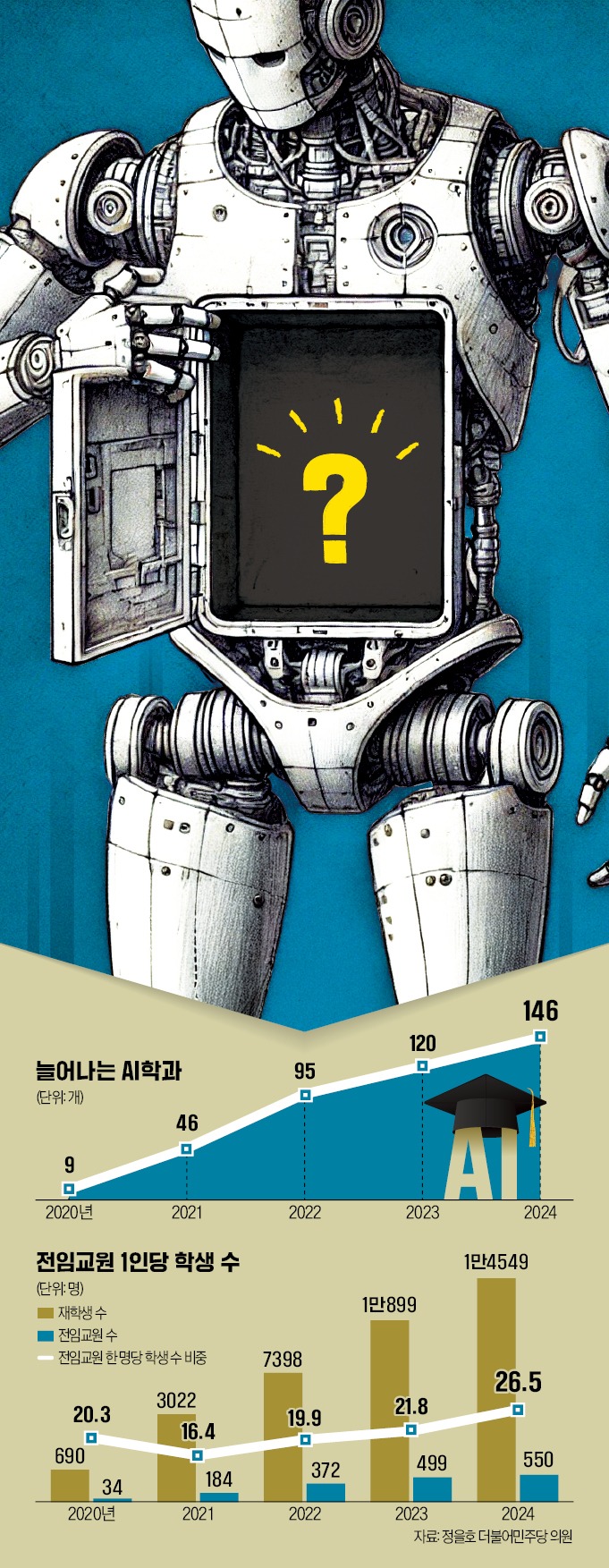
이름만 바꾼 '간판 갈이' 현상
"16년 동안 유행에 따라 세 번이나 학과 이름을 바꿨습니다. 마지막으로는 AI컴퓨터공학과가 됐죠." 충청권의 한 대학 사례는 우리나라 대학들의 '명칭 변경' 현실을 적나라하게 보여줍니다. 상당수 대학들, 특히 중하위권 대학을 중심으로 아래와 같은 사례가 빈번합니다:
- 기존 컴퓨터공학과를 단순히 AI컴퓨터공학과로 개명
- 물류학과를 AI융합학과로 통폐합
- IT 관련 학과들에 AI 접두어 추가
문제는 이러한 변화가 내용적인 혁신 없이 이루어지는 경우가 많다는 점입니다.
부족한 교육 인프라와 전문성 결여
"2021년 AI융합학부 출범 전까지 물류통계학과에서 '해운물류론' 등을 가르친 전문가가 지금은 AI융합학부에서 '인터넷정보윤리' 등을 강의합니다." A대학 교수의 말은 AI 학과의 교육 현실을 그대로 보여줍니다.
특히 충격적인 것은:
- AI를 전공하지 않은 교수가 관련 수업을 담당하는 경우가 비일비재
- 위성영상처리, 디자인 등을 전공한 비전문가가 AI 관련 수업을 맡는 사례 다수
- 세계적 IT 기업 경력의 조교수 4명을 영입한 연세대와 극명한 대조
정부 지원금과 정원 확대를 위한 '고육지책'
왜 이런 현상이 발생할까요? 핵심은 생존과 재정입니다. AI 학과 신설 시 정부가 제공하는 인센티브와 '수도권정비계획법'에 따른 정원 규제를 회피할 수 있다는 장점이 대학들의 '고육지책'을 낳고 있습니다.
여기서 '고육지책(苦肉之策)'이란 어쩔 수 없는 상황에서 고통을 감수하며 선택하는 불가피한 방법을 의미합니다. 존폐 위기에 처한 대학들이 내실보다는 생존을 위해 선택한 궁여지책인 셈입니다.
"요즘 인문사회과학 계열 연구에도 AI가 붙어야 정부 지원 사업 선정에 유리할 정도입니다." 서울의 C대학 사회학과 교수의 말처럼, 재정난을 겪는 중하위권 대학들에게 AI 학과는 고통스럽지만 피할 수 없는 선택인 셈입니다.
취업 시장의 냉정한 현실
이러한 '간판 갈이'식 AI 학과 운영은 취업 시장에서도 냉정한 평가를 받고 있습니다. 부산의 한 대학은 AI 학과 졸업생의 취업 사례로 전공과 무관한 교정직 공무원 합격을 홍보했다는 사실은 아이러니하지 않나요?
더 심각한 문제는:
- 충청권 B대학 'AI컴퓨터공학과'의 정시 경쟁률은 1대 1 미만
- 평균 합격선은 7등급 수준
- 화려한 간판과 달리 정원조차 채우지 못하는 현실
진정한 AI 교육을 위한 대안
신용태 숭실대 컴퓨터학부 교수는 "관련 학과만 늘리면 AI 인재는 저절로 양성될 것이라고 생각해선 안 된다"고 강조합니다. 그는 대안으로 **"기존 학과에 'AI전문트랙'을 별도로 만들어 모든 학생이 자신의 분야와 AI를 창의적으로 연결하도록 하는 게 효과적"**이라고 제안합니다.
성공적인 AI 교육을 위한 핵심 요소:
- 전문성을 갖춘 교수진 확보
- 충분한 컴퓨팅 인프라와 연구 환경
- 산업체와의 긴밀한 협력 프로그램
- 기존 학문과 AI의 창의적 융합
- 실무 중심의 프로젝트 기반 교육
양적 성장에서 질적 성장으로
AI 기술이 모든 산업 분야를 혁신하는 지금, 대학의 AI 교육은 그 어느 때보다 중요합니다. 하지만 단순히 학과 이름을 바꾸는 것만으로는 진정한 AI 인재를 양성할 수 없습니다. 대학은 내실 있는 교육 프로그램을 개발하고, 정부는 단순한 양적 성장이 아닌 질적 성장을 유도하는 정책을 마련해야 합니다.
여러분이 대학을 선택할 때는 어떤 점을 가장 중요하게 고려하시나요? 화려한 학과 이름 뒤에 숨겨진 실제 교육 내용과 인프라를 꼼꼼히 살펴보는 것이 현명한 선택의 첫걸음일 것입니다.
#AI교육 #인공지능학과 #대학교육실태 #간판갈이 #고등교육정책 #취업준비 #미래교육 #AI인재양성 #대학정원규제 #교육인프라 #산학협력 #융합교육 #AI전문트랙 #교육혁신 #미래직업
The Naked Truth Behind AI Departments: 16 Times More, But Where's the Substance?
Did you know that AI-related departments at Korean universities have explosively increased from just 9 in 2020 to 146 in 2024? The number of students has likewise surged from 690 to 14,549—a 21-fold increase. While this rapid growth might seem like the education sector's prompt response to future industries, what reality lies behind these impressive numbers?
The 'Name-Changing' Phenomenon
"Our department has changed its name three times in 16 years following trends. The latest incarnation is AI Computer Engineering." This case from a university in the Chungcheong region starkly illustrates the reality of 'sign-changing' at Korean universities. Many universities, especially mid-to-lower tier ones, frequently:
- Simply rename existing Computer Science departments to AI Computer Engineering
- Merge Logistics departments into AI Convergence departments
- Add the "AI" prefix to IT-related department names
The problem is that these changes often occur without substantive innovation in content.
Insufficient Educational Infrastructure and Lacking Expertise
"An expert who taught 'Maritime Logistics' in the Logistics Statistics Department until the AI Convergence Department was launched in 2021 now teaches 'Internet Information Ethics' in the AI department." This statement from a professor at University A reveals the reality of AI education.
Particularly shocking is:
- The commonplace practice of non-AI specialized professors teaching related classes
- Numerous cases of non-experts specialized in satellite image processing or design teaching AI-related classes
- The stark contrast with Yonsei University, which recruited four assistant professors with global IT company experience
A 'Desperate Measure' for Government Funding and Enrollment Expansion
Why is this happening? The core issues are survival and finances. The government incentives available when establishing AI departments and the ability to bypass enrollment regulations under the Seoul Metropolitan Area Readjustment Planning Act are driving universities' desperate measures.
Here, the term 'goyukjichaek' (고육지책, 苦肉之策) refers to an inevitable and painful choice made in a desperate situation. It's essentially a last resort chosen by universities facing extinction, prioritizing survival over educational substance.
"Even in humanities and social science research, adding AI improves chances of selection for government support projects," says a sociology professor at University C in Seoul. For mid-to-lower tier universities facing financial difficulties, AI departments represent a painful but unavoidable strategic choice.
The Cold Reality of the Job Market
This 'name-changing' approach to AI departments is receiving a cold reception in the job market. Isn't it ironic that a university in Busan promoted a graduate's success in securing a correctional officer position—completely unrelated to their AI major—as an employment success story?
Even more serious issues include:
- The regular admission competition rate for the 'AI Computer Engineering' department at University B in the Chungcheong region is less than 1:1
- Average acceptance level at grade 7
- The reality of not even filling enrollment quotas despite flashy department names
Alternatives for Genuine AI Education
Professor Shin Yong-tae of Soongsil University's Department of Computer Science emphasizes, "We shouldn't think that AI talent will automatically be cultivated just by increasing related departments". He suggests an alternative: "Creating 'AI specialist tracks' within existing departments to enable all students to creatively connect their fields with AI would be effective."
Key elements for successful AI education:
- Securing faculty with expertise
- Sufficient computing infrastructure and research environment
- Close collaboration programs with industry
- Creative fusion of existing disciplines with AI
- Practical project-based education
From Quantitative to Qualitative Growth
As AI technology transforms every industry sector, university AI education is more important than ever. However, simply changing department names cannot cultivate genuine AI talent. Universities must develop substantive educational programs, and the government should establish policies that promote qualitative rather than merely quantitative growth.
What do you consider most important when choosing a university? Taking a close look at the actual educational content and infrastructure hidden behind flashy department names is the first step in making a wise choice.
#AIEducation #ArtificialIntelligenceDepartment #UniversityEducationReality #NameChanging #HigherEducationPolicy #JobPreparation #FutureEducation #AIDevelopment #UniversityEnrollmentRegulations #EducationalInfrastructure #IndustryAcademicCooperation #ConvergenceEducation #AISpecialistTrack #EducationalInnovation #FutureCareers
'이슈' 카테고리의 다른 글
| 헌재의 무거운 침묵: 윤석열 대통령 탄핵심판 선고, 왜 불투명한가? (0) | 2025.04.01 |
|---|---|
| 지브리 필터 완벽 가이드: 미야자키 하야오의 마법을 내 사진에! (0) | 2025.04.01 |
| 🌟 트럼프의 미래 통화 전략: 스테이블코인이 세계 경제를 뒤흔들다 (2) | 2025.04.01 |
| 장제원 의원 사망 비서 성폭행 의혹 총정리: 권력 관계 속 드러난 불편한 진실 (0) | 2025.04.01 |
| 비트코인 투자: 변동성 속에서 길을 찾다 (0) | 2025.04.01 |


