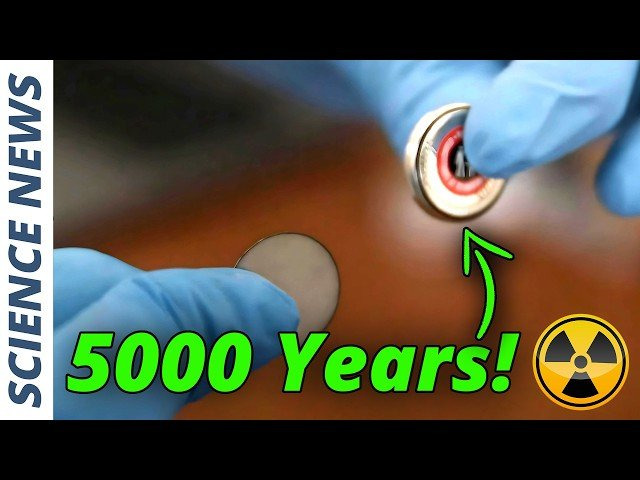
핵 폐기물은 더 이상 처리해야 할 골칫거리가 아닌 5천년 동안 에너지를 제공할 수 있는 귀중한 자원이 될 수 있습니다. 영국 과학자들이 개발한 핵 폐기물 기반 배터리는 방사성 붕괴 에너지를 직접 전기로 변환하는 혁신적인 기술로, 기존의 열에너지 변환 방식보다 월등히 효율적입니다. 이 기술은 의료용 임플란트부터 우주 탐사, 해저 센서까지 다양한 분야에 혁명을 가져올 잠재력을 가지고 있습니다. 핵 폐기물을 에너지원으로 재활용하는 이 혁신적인 접근법은 지속 가능한 에너지 미래를 향한 중요한 발걸음이 될 수 있습니다.
New Nuclear Waste Battery Can Run For 5000 Years
이 영상은 **핵 폐기물**을 활용하여 **5000년** 동안 작동 가능한 새로운 핵 폐기물 배터리에 대한 내용을 다룹니다. 이 배터리는 방사성 붕괴 에너지를 직접 전기로 변환하는 방식으로, 기존의 열
lilys.ai
핵 폐기물 배터리의 등장 배경
인류의 에너지 수요가 지속적으로 증가하는 가운데, 과학자들은 오랫동안 지속 가능하고 효율적인 에너지원을 찾아왔습니다. 핵 발전소에서 발생하는 방사성 폐기물은 수천 년 동안 방사성 붕괴 과정을 거치며 에너지를 방출하지만, 지금까지는 이 에너지를 효과적으로 활용하지 못했습니다3.
NASA는 1970년대부터 우주 탐사 임무에서 열핵배터리(RTG: Radioisotope Thermoelectric Generator)를 사용해 왔습니다. 이 배터리는 방사성 붕괴 열을 전기로 변환하지만, 그 과정이 상당히 비효율적이었습니다. 열을 중간 매개체로 사용하는 대신, 방사성 붕괴 에너지를 직접 전기로 변환하는 새로운 접근법이 필요했습니다.
방사성 붕괴와 에너지 변환의 원리
방사성 물질이 붕괴할 때 방출되는 에너지는 알파, 베타, 감마선 형태로 나타납니다. 특히 베타 붕괴는 전자를 방출하는데, 이 과정에서 발생하는 에너지를 직접 전기로 변환하는 '베타볼타익(betavoltaic)' 기술이 핵 폐기물 배터리의 핵심입니다.
핵 폐기물에서 얻을 수 있는 에너지는 상당합니다. PWR(가압경수로) 사용후핵연료에는 상당량의 탄소-14와 트리튬이 포함되어 있으며, 이들은 에너지원으로 활용될 수 있는 잠재력을 가지고 있습니다3. 특히 탄소-14는 5,700년의 반감기를 가지고 있어, 이론적으로 수천 년 동안 안정적인 에너지를 제공할 수 있습니다.
탄소-14 기반 핵 폐기물 배터리의 혁신
영국의 Arkenlight 회사는 원자로 코어의 그래파이트 차폐에서 생성되는 탄소-14를 활용한 배터리를 개발했습니다. 전 세계적으로 약 25만 톤의 그래파이트 핵 폐기물이 존재하며, 이는 엄청난 양의 잠재적 에너지 자원입니다.
혁신적인 제조 기술
정확한 제조 방법은 공개되지 않았지만, 탄소-14를 기체 형태로 추출한 후 안정적인 탄소 동위원소와 혼합하는 방식이 사용되는 것으로 추정됩니다. 이 과정에서 탄소 나노 구조체가 형성되어 효율적인 에너지 변환을 가능하게 합니다.
이러한 배터리 제조 기술은 최근 리튬이온 배터리 분야에서 연구되고 있는 탄소 기반 소재 기술과 유사한 측면이 있습니다6. 이 연구들은 에너지 밀도가 높고, 비용이 저렴하며, 충전 속도가 빠른 배터리를 개발하는 데 초점을 맞추고 있으며, 이러한 기술적 진보가 핵 폐기물 배터리 개발에도 도움이 될 수 있습니다.
방사선 안전성
탄소-14 기반 배터리는 베타 방사선을 방출하지만, 이 방사선은 종이 한 장이나 피부로도 쉽게 차단될 수 있어 안전성이 높습니다. 그럼에도 불구하고, 방사성 물질을 다루는 데 있어 적절한 보호 장비와 안전 프로토콜은 필수적입니다8.
최종 제품인 베타볼타익 배터리는 방사선으로부터 적절히 보호되어 있어, 일반적인 사용 환경에서 안전하게 활용될 수 있습니다. 이는 방사성 물질에 대한 대중의 우려를 불식시키는 중요한 요소입니다.
핵 폐기물 배터리의 응용 분야
핵 폐기물 배터리의 출력은 일반적으로 마이크로와트 이하로, 일상적인 전자기기에 직접 사용하기에는 제한적입니다. 그러나 이 작은 출력도 특정 분야에서는 혁명적인 변화를 가져올 수 있습니다.
의료용 임플란트
심박 조율기나 인슐린 펌프와 같은 의료용 임플란트는 적은 양의 에너지만 필요로 합니다. 현재 이러한 장치들은 5-10년마다 배터리 교체를 위한 수술이 필요하지만, 핵 폐기물 배터리를 사용하면 환자의 평생 동안 작동할 수 있습니다.
또한, 미래에는 건강 이상을 감지하고 경고하는 소형 임플란트나 통증 조절 장치 등 새로운 형태의 의료 기기가 가능해질 것입니다. 이러한 장치들은 지속적인 모니터링과 안정적인 전원 공급이 필수적이며, 핵 폐기물 배터리는 이러한 요구사항을 완벽하게 충족시킬 수 있습니다.
우주 탐사
우주 환경은 기존 배터리에 매우 혹독합니다. 극한의 온도와 방사선은 일반적인 화학 배터리의 성능을 크게 저하시킵니다. 반면, 핵 폐기물 배터리는 이러한 환경에서도 안정적으로 작동할 수 있어 우주 탐사 임무에 이상적입니다.
특히 태양으로부터 멀리 떨어진 외행성 탐사에서는 태양광 패널의 효율이 크게 떨어집니다. 이러한 상황에서 핵 폐기물 배터리는 장기간 안정적인 전력을 제공할 수 있습니다. 센서, 통신 장비, 위성 탑재물 등을 작동시키는 데 필요한 전력을 수십 년, 심지어 수백 년 동안 공급할 수 있는 잠재력을 가지고 있습니다10.
해저 및 환경 센서
해저나 오지와 같이 접근이 어려운 장소에 설치된 센서는 배터리 교체가 거의 불가능합니다. 핵 폐기물 배터리는 이러한 센서들에 수십 년 또는 수백 년 동안 지속적인 전력을 제공할 수 있습니다.
해양 환경 모니터링, 지진 감지, 기후 변화 연구 등 다양한 분야에서 장기간 작동하는 센서 네트워크가 필요합니다. 이러한 센서들은 저전력으로 작동하므로, 핵 폐기물 배터리의 낮은 출력에도 충분히 작동할 수 있습니다.
기존 원자력 배터리와의 비교
핵 폐기물을 활용한 배터리 기술은 완전히 새로운 개념은 아닙니다. 미국의 시티 랩스(City Labs)는 이미 수년간 원자력 배터리를 상업적으로 판매해 왔습니다.
트리튬 기반 배터리
시티 랩스의 배터리는 주로 트리튬(삼중수소)을 사용합니다. 트리튬은 방사성 수소 동위원소로, 12년의 반감기를 가지고 있습니다. 이 배터리는 약 100 마이크로와트의 전력을 생산할 수 있으며, 주로 환경 센서와 같은 저전력 장치에 사용됩니다.
PWR 사용후핵연료에는 상당량의 트리튬이 포함되어 있어, 이를 추출하여 활용할 수 있는 가능성이 있습니다3. 그러나 트리튬의 짧은 반감기는 수십 년 이상의 장기 작동이 필요한 응용 분야에는 제한적입니다.
탄소-14의 장점
반면, 탄소-14는 5,700년이라는 긴 반감기를 가지고 있어, 이론적으로 수천 년 동안 안정적인 전력을 제공할 수 있습니다. 비록 출력이 트리튬 기반 배터리보다 낮을 수 있지만, 그 지속성은 특정 응용 분야에서 큰 장점이 됩니다.
또한, 원자로에서 발생하는 그래파이트 폐기물에서 탄소-14를 추출하는 것은 핵 폐기물 처리 문제를 부분적으로 해결하는 데 도움이 될 수 있습니다. 이는 환경적 측면에서도 큰 의의를 가집니다.
핵 폐기물 배터리의 미래 전망
핵 폐기물 배터리 기술의 발전은 더 넓은 맥락에서 핵 에너지의 르네상스를 보여주는 중요한 지표가 될 수 있습니다. 기후 변화에 대응하기 위한 저탄소 에너지원의 필요성이 증가함에 따라, 핵 에너지는 다시 주목받고 있습니다12.
기술적 과제와 발전 가능성
현재 핵 폐기물 배터리의 주요 한계는 낮은 출력입니다. 그러나 나노 기술과 새로운 소재 개발을 통해 에너지 변환 효율을 크게 향상시킬 수 있는 가능성이 있습니다. 특히 3차원 나노-탄소 구조를 활용한 배터리 기술은 큰 잠재력을 가지고 있습니다7.
또한, 배터리 열화 및 수명에 관한 연구는 핵 폐기물 배터리의 장기적인 성능을 이해하고 개선하는 데 도움이 될 것입니다6. 이러한 연구는 파라데이 연구소와 같은 기관에서 활발히 진행되고 있으며, 더 효율적이고 안전한 배터리 기술 개발을 목표로 하고 있습니다.
핵 폐기물 관리의 새로운 패러다임
핵 폐기물 배터리는 핵 폐기물 관리에 대한 새로운 접근법을 제시합니다. 지금까지 핵 폐기물은 단순히 처분해야 할 위험 물질로 여겨졌지만, 이제는 귀중한 에너지 자원으로 재인식될 수 있습니다.
이러한 패러다임의 변화는 핵 에너지의 지속 가능성을 크게 향상시킬 수 있습니다. 핵 발전소에서 발생하는 폐기물이 새로운 용도로 재활용됨으로써, 핵 에너지의 전체 수명 주기가 더욱 효율적이고 환경 친화적이 될 수 있습니다.
결론: 핵 폐기물의 새로운 가능성
핵 폐기물을 활용한 배터리 기술은 에너지 저장과 핵 폐기물 관리라는 두 가지 중요한 문제에 대한 혁신적인 해결책을 제시합니다. 비록 현재의 출력은 제한적이지만, 의료용 임플란트, 우주 탐사, 환경 모니터링 등 특정 분야에서는 이미 혁명적인 변화를 가져올 수 있는 잠재력을 보여주고 있습니다.
이 기술은 아직 초기 단계에 있지만, 지속적인 연구와 개발을 통해 더욱 효율적이고 다양한 응용 분야를 개척할 수 있을 것입니다. 핵 폐기물을 문제가 아닌 기회로 바라보는 시각의 전환은 에너지와 환경의 미래에 중요한 의미를 갖습니다.
여러분은 이러한 혁신적인 기술에 대해 어떻게 생각하시나요? 핵 폐기물 배터리가 일상생활에 어떤 변화를 가져올 수 있을지, 그리고 이러한 기술이 핵 에너지의 미래에 어떤 영향을 미칠지 함께 고민해 보는 것은 어떨까요?
해시태그
#핵폐기물배터리 #탄소14배터리 #원자력에너지 #지속가능에너지 #방사성폐기물 #베타볼타익 #의료임플란트 #우주탐사기술 #환경센서 #에너지저장기술 #핵에너지르네상스 #그린테크놀로지 #미래에너지
The Innovation of Nuclear Waste Batteries Lasting 5,000 Years: New Possibilities for Future Energy
Nuclear waste is no longer just a troublesome material to be disposed of, but can be a valuable resource providing energy for 5,000 years. Nuclear waste-based batteries developed by British scientists use innovative technology that directly converts radioactive decay energy into electricity, making them significantly more efficient than conventional thermal energy conversion methods. This technology has the potential to revolutionize various fields from medical implants to space exploration and subsea sensors. This innovative approach to recycling nuclear waste as an energy source could be an important step toward a sustainable energy future.
Background of Nuclear Waste Batteries
As humanity's energy demands continue to increase, scientists have long sought sustainable and efficient energy sources. Radioactive waste from nuclear power plants undergoes radioactive decay for thousands of years, releasing energy, but until now this energy has not been effectively utilized3.
NASA has been using radioisotope thermoelectric generators (RTGs) for space exploration missions since the 1970s. These batteries convert radioactive decay heat into electricity, but the process is quite inefficient. Instead of using heat as an intermediary, a new approach was needed to directly convert radioactive decay energy into electricity.
Principles of Radioactive Decay and Energy Conversion
When radioactive materials decay, they release energy in the form of alpha, beta, and gamma rays. Beta decay in particular releases electrons, and the energy generated in this process can be directly converted into electricity using "betavoltaic" technology, which is the core of nuclear waste batteries.
The energy obtainable from nuclear waste is substantial. Spent nuclear fuel from pressurized water reactors (PWRs) contains significant amounts of carbon-14 and tritium, which have the potential to be utilized as energy sources3. Carbon-14 in particular has a half-life of 5,700 years, theoretically providing stable energy for thousands of years.
Innovation of Carbon-14 Based Nuclear Waste Batteries
The British company Arkenlight has developed batteries utilizing carbon-14 generated from graphite shielding in reactor cores. Globally, there are approximately 250,000 tons of graphite nuclear waste, representing an enormous potential energy resource.
Innovative Manufacturing Technology
While the exact manufacturing method has not been disclosed, it is estimated that carbon-14 is extracted in gaseous form and then mixed with stable carbon isotopes. During this process, carbon nanostructures are formed, enabling efficient energy conversion.
This battery manufacturing technology has similarities to carbon-based material technologies being researched in the lithium-ion battery field6. These studies focus on developing batteries with high energy density, low cost, and fast charging speeds, and such technological advances could also aid in the development of nuclear waste batteries.
Radiation Safety
Carbon-14 based batteries emit beta radiation, but this radiation can be easily blocked by a sheet of paper or skin, making them highly safe. Nevertheless, appropriate protective equipment and safety protocols are essential when handling radioactive materials8.
The final product, a betavoltaic battery, is adequately protected from radiation, allowing it to be safely used in common environments. This is an important factor in alleviating public concerns about radioactive materials.
Applications of Nuclear Waste Batteries
The output of nuclear waste batteries is generally below a microwatt, which is limited for direct use in everyday electronic devices. However, even this small output can bring revolutionary changes in specific fields.
Medical Implants
Medical implants such as pacemakers or insulin pumps require only small amounts of energy. Currently, these devices need surgery every 5-10 years for battery replacement, but with nuclear waste batteries, they could operate throughout a patient's lifetime.
In the future, new forms of medical devices such as small implants that detect and warn of health abnormalities or pain control devices could become possible. These devices require continuous monitoring and stable power supply, and nuclear waste batteries can perfectly meet these requirements.
Space Exploration
The space environment is very harsh on conventional batteries. Extreme temperatures and radiation greatly degrade the performance of typical chemical batteries. In contrast, nuclear waste batteries can operate stably in such environments, making them ideal for space exploration missions.
Especially in outer planet exploration far from the sun, the efficiency of solar panels drops significantly. In such situations, nuclear waste batteries can provide stable power for long periods. They have the potential to supply the power needed for sensors, communication equipment, and satellite payloads for decades, even centuries10.
Subsea and Environmental Sensors
Sensors installed in hard-to-reach places like the seabed or remote areas make battery replacement nearly impossible. Nuclear waste batteries can provide continuous power to these sensors for decades or even centuries.
Various fields such as marine environmental monitoring, seismic detection, and climate change research require sensor networks that operate for long periods. These sensors operate on low power, so they can function sufficiently even with the low output of nuclear waste batteries.
Comparison with Existing Nuclear Batteries
The technology of utilizing nuclear waste for batteries is not an entirely new concept. The American company City Labs has been commercially selling nuclear batteries for years.
Tritium-Based Batteries
City Labs' batteries primarily use tritium, a radioactive hydrogen isotope with a half-life of 12 years. These batteries can produce about 100 microwatts of power and are mainly used in low-power devices such as environmental sensors.
Spent PWR nuclear fuel contains significant amounts of tritium, presenting the possibility of extraction and utilization3. However, tritium's short half-life is limiting for applications requiring operation for more than a few decades.
Advantages of Carbon-14
On the other hand, carbon-14 has a long half-life of 5,700 years, theoretically providing stable power for thousands of years. Although its output may be lower than tritium-based batteries, its durability is a major advantage in certain applications.
Additionally, extracting carbon-14 from graphite waste generated in reactors can help partially solve the nuclear waste disposal problem. This has significant environmental implications as well.
Future Prospects of Nuclear Waste Batteries
The advancement of nuclear waste battery technology could be an important indicator of the renaissance of nuclear energy in a broader context. As the need for low-carbon energy sources increases to address climate change, nuclear energy is gaining attention again12.
Technical Challenges and Development Potential
The main limitation of current nuclear waste batteries is their low output. However, there is potential to greatly improve energy conversion efficiency through nanotechnology and new material development. In particular, battery technology utilizing 3D nano-carbon structures shows great potential7.
Additionally, research on battery degradation and lifetime will help understand and improve the long-term performance of nuclear waste batteries6. Such research is actively being conducted at institutions like the Faraday Institute, aiming to develop more efficient and safer battery technologies.
A New Paradigm for Nuclear Waste Management
Nuclear waste batteries present a new approach to nuclear waste management. Until now, nuclear waste has been viewed simply as hazardous material to be disposed of, but now it can be re-recognized as a valuable energy resource.
This paradigm shift can greatly enhance the sustainability of nuclear energy. By recycling waste generated from nuclear power plants for new uses, the entire life cycle of nuclear energy can become more efficient and environmentally friendly.
Conclusion: New Possibilities for Nuclear Waste
Battery technology utilizing nuclear waste presents an innovative solution to two important issues: energy storage and nuclear waste management. Although current output is limited, it already shows potential to bring revolutionary changes in specific fields such as medical implants, space exploration, and environmental monitoring.
While this technology is still in its early stages, continued research and development could pioneer more efficient and diverse applications. The shift in perspective to view nuclear waste as an opportunity rather than a problem has important implications for the future of energy and the environment.
What do you think about this innovative technology? Would you consider how nuclear waste batteries could change everyday life, and what impact such technology might have on the future of nuclear energy?
Hashtags
#NuclearWasteBattery #Carbon14Battery #NuclearEnergy #SustainableEnergy #RadioactiveWaste #Betavoltaic #MedicalImplants #SpaceExplorationTechnology #EnvironmentalSensors #EnergyStorageTechnology #NuclearRenaissance #GreenTechnology #FutureEnergy
Citations:
- https://www.semanticscholar.org/paper/55b5275f24b5bed8ed0bdb40c2130b2e647ec7fd
- https://www.semanticscholar.org/paper/0421fc3d3432204a582f18af08288dd37177f9fd
- https://www.semanticscholar.org/paper/049a45b5b52e6a40563e13d8a6288753009308c0
- https://www.semanticscholar.org/paper/4b9fa7c82daccb3d24cec94e46f71c6d254cc149
- https://www.semanticscholar.org/paper/d7d0bc7178d5cee160ca7db54bfb52bd595059bc
- https://www.semanticscholar.org/paper/eab8e1101312e422ce641bab3c0036266f05b22a
- https://www.semanticscholar.org/paper/bc0e891db280644eeb856d458467267eebb0474a
- https://pubmed.ncbi.nlm.nih.gov/28251618/
- https://www.semanticscholar.org/paper/331db16e3fcdfaf99fdeb4fd412eba581d1cb833
- https://www.semanticscholar.org/paper/9cfe3f3f7343d88be443d37aca5b923e8bb7cff3
- https://www.semanticscholar.org/paper/a5fdc7a791c0b5ddf165a5907c56574340cc1b2d
- https://www.semanticscholar.org/paper/311159707c8f5e2c84071ca1023be870c9196858
- https://www.semanticscholar.org/paper/e50d8e16f07a968887dfdd480d8dd5444a6ca766
- https://www.semanticscholar.org/paper/5b1776517976e990f2e3b8e8379c92bb628bacb6
- https://www.semanticscholar.org/paper/2923b6b2c5071de080a328bdc7b164910a156af0
- https://www.semanticscholar.org/paper/573e1527a84198eab101ac060d6523c41d867284
- https://www.semanticscholar.org/paper/b735d1c437ef2e5f1814c9f69b2b83db0138933d
- https://www.semanticscholar.org/paper/cfcda41f5a482708eb321739e173f9e24d7352b9
- https://www.semanticscholar.org/paper/566f9f608eba28511c036f7e6236d4f24d8d05dc
- https://www.semanticscholar.org/paper/54b4d0d5c1399b8964981c27ad118ca4017a9b7d
'교양 > 과학기술' 카테고리의 다른 글
| 은하 중심부의 신비: 암흑 물질 입자의 새로운 단서를 찾아서 (5) | 2025.04.06 |
|---|---|
| 우주 여행의 혁명: 선버드 핵융합 로켓과 화성을 향한 새로운 여정 (0) | 2025.04.03 |
| 피라미드의 미스터리: 지하 2km 거대 구조물 발견 주장에 대한 과학적 검증 (1) | 2025.04.01 |
| 우주에서 온 인터넷: 일론 머스크의 스타링크가 바꾸는 글로벌 통신의 미래 (0) | 2025.03.30 |
| 밀도의 마법: 일상부터 과학까지, 우리가 몰랐던 밀도의 놀라운 힘 (0) | 2025.03.30 |


