우주에는 우리가 볼 수 없는 미스터리한 물질이 가득합니다. 바로 암흑 물질입니다. 과학자들은 지금까지 암흑 물질이 우주 물질의 약 85%를 차지한다고 추정하지만, 그 정체는 여전히 베일에 싸여 있습니다. 최근 은하 중심부에서 발견된 특이한 신호들이 암흑 물질의 존재를 증명할 새로운 단서가 될 수 있다는 주장이 제기되고 있습니다. 특히 예상보다 많은 양의 H3+ 이온과 511 keV 감마선 방출이 암흑 물질 입자의 소멸 과정에서 생성된 것일 수 있다는 이론은 천체물리학계의 주목을 받고 있습니다. 이 포스트에서는 암흑 물질의 개념부터 최근 발견된 증거들, 그리고 이에 대한 다양한 시각까지 살펴보겠습니다.
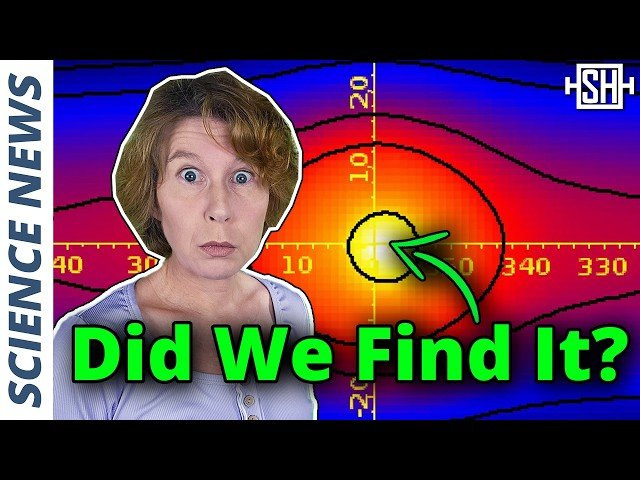
We Already Have Evidence Of Dark Matter, Researchers Say
이 영상은 오랫동안 풀리지 않던 **암흑 물질**의 존재에 대한 새로운 증거 가능성을 제시합니다. 은하 중심에서 발견된 특이한 신호, 특히 예상보다 훨씬 많은 양의 H3+ 이온과 511 keV 감마선 방출
lilys.ai
암흑 물질의 정체와 그 비밀
암흑 물질이란 무엇인가?
암흑 물질(Dark Matter)은 우주 물질의 약 85%를 차지하는 것으로 추정되는 가설상 물질 형태입니다. '암흑'이라는 이름이 붙은 이유는 이 물질이 전자기장과 상호작용하지 않는 것처럼 보이기 때문입니다. 즉, 전자기파를 흡수, 반사 또는 방출하지 않아 직접 관측이 불가능합니다^1. 그럼에도 불구하고 암흑 물질은 중력을 통해 다른 물질에 영향을 미치기 때문에, 간접적인 방법으로 그 존재를 추론할 수 있습니다.
현대 우주론의 표준 모델인 ΛCDM(람다 콜드 다크 매터) 모형에 따르면, 우주의 총 질량-에너지 함량은 5%의 일반 물질과 에너지, 26.8%의 암흑 물질, 그리고 68.2%의 암흑 에너지로 구성되어 있습니다^1. 따라서 우리가 직접 볼 수 있는 물질은 우주 전체의 극히 일부에 불과하며, 대부분은 우리 눈에 보이지 않는 암흑 물질과 암흑 에너지로 이루어져 있다는 것이 현대 과학의 관점입니다.
암흑 물질 발견의 역사
암흑 물질의 존재에 대한 첫 증거는 1930년대 프리츠 츠비키(Fritz Zwicky)가 은하단에 있는 은하들의 운동을 관찰하면서 발견했습니다. 그는 머리털자리 은하단이 눈에 보이는 별의 밝기로 구한 질량보다 더 많은 질량을 갖는다고 판단했고, 이 추가적인 질량이 보이지 않는 물질, 즉 암흑 물질에서 나온다고 추론했습니다^9.
이후 1970년대에 미국 천문학자 베라 루빈(Vera Rubin)은 안드로메다 은하 내의 별들의 공전 속도를 측정하다가 암흑 물질의 존재를 더욱 강력하게 뒷받침하는 현상을 발견했습니다. 은하 중심으로부터 거리와 상관없이 별의 공전 속도가 거의 일정하다는 관측 결과는 기존의 물리 이론으로는 설명할 수 없었습니다^9. 이것은 은하 전체에 퍼져 있는 암흑 물질이 별들에 추가적인 중력을 미치기 때문이라고 해석되었습니다.
은하 중심부의 신비로운 신호들
H3+ 이온과 511 keV 감마선의 미스터리
최근 영국 킹스칼리지 런던 연구팀은 은하 중심부에서 발생하는 설명되지 않는 화학 반응의 원인이 기존 이론과는 다른 새로운 암흑 물질 후보일 가능성을 제기했습니다. 연구팀이 주목한 것은 은하 중심부에 존재하는 거대한 양전하를 띤 수소 구름입니다. 일반적으로 수소 기체는 중성이므로, 이런 현상이 발생하려면 음전하를 띤 전자를 제거할 만큼 충분한 에너지를 공급하는 원천이 필요합니다^2.
이와 함께 과학자들은 오랫동안 은하 중심에서 발생하는 511 keV 에너지를 가진 감마선 방출에 주목해 왔습니다. 이 에너지는 양전자와 전자가 만나 소멸할 때 발생하는 특징적인 값입니다^3. 이러한 신호들은 일반적인 천체물리 현상으로는 완전히 설명하기 어려운 부분이 있어 암흑 물질 연구자들의 관심을 끌고 있습니다.
새로운 암흑 물질 후보 이론
킹스칼리지 런던의 연구팀이 제안한 새로운 암흑 물질 후보는 기존 가설보다 가벼우면서 자기 소멸성을 가집니다. 이 이론에 따르면, 두 개의 암흑 물질 입자가 충돌하면 서로를 소멸시키며, 이 과정에서 음전하를 띤 전자와 양전하를 띤 양전자가 생성됩니다^2. 생성된 전자와 양전자는 은하 중심부의 밀도가 높은 가스 영역에서 중성 원자로부터 전자를 떼어내는 데 필요한 에너지를 제공하게 됩니다. 이 과정을 '이온화'라고 하며, 이것이 은하 중심 분자영역(CMZ)에 이온화된 가스가 풍부한 이유를 설명할 수 있습니다^2.
이 새로운 이론의 주요 장점은 은하 중심부에서 관측되는 두 가지 미스터리한 현상, 즉 이온화된 수소 구름과 511 keV 감마선 방출을 모두 설명할 수 있다는 점입니다. 암흑 물질 입자들이 서로 충돌하여 소멸하는 과정에서 생성된 양전자와 전자가 각각 수소 원자의 이온화와 감마선 방출에 기여한다는 것입니다.
암흑 물질 탐색의 최신 동향
최근의 암흑 물질 탐지 실험들
암흑 물질을 찾기 위한 노력은 전 세계적으로 다양하게 이루어지고 있습니다. 미국 물리학자 새뮤얼 팅은 국제우주정거장에 설치한 알파자기분광계(AMS)를 이용해 암흑 물질의 존재 단서를 찾았습니다. 연구팀은 소립자 250억개를 분광계로 끌어모아 관찰한 결과, 전자와 양전자 80억개가 충돌했음을 확인했으며, 이를 '암흑물질이 충돌하면서 일어나는 상쇄의 과정'으로 해석했습니다^3.
또한, 미국 항공우주국(NASA)과 유럽 입자연구소(CERN) 등이 참가한 국제연구팀은 국제우주정거장(ISS)에 설치한 알파자기 분광기(AMS)를 통해 헬륨의 반물질인 '반헬륨'을 지난 5년간 수차례 검출하는 데 성공했습니다^4. 이는 암흑 물질이 서로 충돌해 붕괴할 때 생겨나는 반양자와 반중성자가 결합해 형성된 것으로, 암흑 물질의 존재를 뒷받침하는 증거가 될 수 있습니다.
한국의 암흑 물질 연구 성과
주목할 만한 최신 성과로, 2025년 2월 국내 연구진이 우주의 숨겨진 기원을 밝힐 암흑 물질을 한빛 원자로에서 발견했다는 소식이 있습니다. 기초과학연구원(IBS) 지하실험 연구단이 이끄는 국내 공동연구진은 상용 원자로를 활용한 네온(NEON) 실험을 통해 가벼운 암흑 물질을 탐색하는 데 성공했습니다^14.
이 실험은 1~1천 keV/c²(킬로전자볼트/광속제곱)에 해당하는 초경량 영역 암흑 물질 탐구를 위해 독창적으로 설계되었으며, 전남 영광군 소재 한빛 원자력본부 제3발전소에서 진행되었습니다. 연구진은 원자로의 가동 기간 데이터와 정지 기간 데이터를 비교 분석해 신호 데이터의 신뢰도를 높였고, 1-10 keV의 에너지 범위에서 미세한 신호를 정밀히 분석하는 데 성공했습니다^14.
암흑 물질에 대한 다양한 관점
회의적 시각과 대안 이론
모든 과학자들이 암흑 물질의 존재를 동일하게 해석하는 것은 아닙니다. 일부 천체물리학자들은 일반적인 암흑 물질로는 잘 설명되지 않는 특정 관측에 주목하여, 일반 상대성 이론의 표준 법칙을 수정해야 한다고 주장합니다. 수정 뉴턴 역학, 텐서-벡터-스칼라 중력, 또는 엔트로피적 중력 등의 대안 이론이 제시되고 있습니다^1.
또한, 과거에 암흑 물질로 해석되었던 현상들이 나중에 다른 원인으로 밝혀진 사례도 있습니다. 예를 들어, 2020년 XENON1T 검출기에 의해 등록된 초과 신호는 처음에는 암흑 물질의 증거로 여겨졌으나, 후속 연구를 통해 배경 효과에서 온 것으로 밝혀졌습니다^5. 이러한 사례들은 암흑 물질 연구에 있어 신중한 접근이 필요함을 시사합니다.
암흑 물질의 특성에 관한 다양한 모델
암흑 물질의 특성에 대해서도 다양한 이론이 존재합니다. 러시아 과학자들은 암흑 물질이 양자응축물(quantum condensate)로 이루어진 구형의 물방울 모양을 하고 있다는 연구 결과를 발표했습니다^7. 이 연구는 축소한 우주 중력의 상호작용을 모델화한 미니클러스터를 통해 진행되었으며, 암흑 물질이 중력장에 영향을 미치고 있다는 사실을 증명하는 중요한 결과로 평가됩니다.
다른 한편으로는 암흑 물질의 주요 후보로 약하게 상호작용하는 무거운 입자(WIMP), 액시온 유사 입자(ALP), 어두운 광자 등이 거론되고 있으며, 각각의 후보에 대한 탐색 공간이 점점 좁아지고 있습니다^5. 최근 연구에서는 기존 모델에서 고려했던 것보다 훨씬 가벼운 형태의 암흑 물질 가능성도 제기되었습니다^2.
암흑 물질 연구의 미래 전망
다음 세대 암흑 물질 탐지기의 개발
암흑 물질 탐지 기술은 계속해서 발전하고 있습니다. 최근 XENONnT와 같은 더 정밀한 검출기가 개발되어 이전보다 약 5배 낮은 배경 잡음으로 측정할 수 있게 되었습니다^5. 이러한 기술적 진보는 암흑 물질 입자의 특성에 대한 더 엄격한 제약을 가능하게 하며, 새로운 발견의 가능성을 높여줍니다.
국내에서도 차세대 중성미자 검출기 '리노-50'의 건설을 통해 중성미자의 질량 구조를 연구하려는 계획이 있습니다^12. 중성미자는 암흑 물질 후보 중 하나로 여겨지기도 하므로, 이러한 연구는 암흑 물질의 본질을 이해하는 데 기여할 수 있습니다.
우주와 기초 물리학에 대한 이해의 확장
암흑 물질 연구는 단순히 새로운 입자를 찾는 것 이상의 의미를 가집니다. 이는 우주의 구조와 진화, 기본적인 물리 법칙에 대한 우리의 이해를 크게 확장시킬 수 있는 영역입니다. 만약 은하 중심부에서 관측된 H3+ 이온과 511 keV 감마선이 실제로 암흑 물질과 관련이 있다면, 이는 암흑 물질 입자의 특성에 대한 중요한 단서를 제공할 것입니다.
킹스칼리지 런던의 샴 발라지 박사는 "이온화와 감마선 방출 사이의 직접적인 연관성을 발견한다면 암흑 물질의 존재를 입증하는 강력한 증거가 될 것"이라고 말하면서도, "현재로서는 이 두 신호 사이에 어느 정도 상관관계가 있지만, 이를 확실한 증거로 판단하기 위해서는 더 많은 데이터가 필요하다"고 신중한 입장을 표명했습니다^2.
결론
암흑 물질은 현대 천체물리학과 우주론의 가장 큰 미스터리 중 하나입니다. 은하 중심부에서 관측된 특이한 신호들, 특히 예상보다 많은 양의 H3+ 이온과 511 keV 감마선 방출은 암흑 물질 입자의 존재와 특성에 대한 흥미로운 단서를 제공합니다. 이러한 신호가 실제로 암흑 물질 입자의 소멸 과정에서 생성된 전자와 양전자에 의한 것인지 확인하기 위해서는 더 많은 연구와 데이터가 필요합니다.
과거에 암흑 물질로 여겨졌던 현상들이 다른 원인으로 밝혀진 사례가 있기에 신중한 접근이 필요하지만, 최근의 연구 성과들은 암흑 물질의 정체를 밝히는 데 한 걸음 더 다가가고 있습니다. 특히 국내 연구진이 한빛 원자로에서 가벼운 암흑 물질을 탐색하는 데 성공한 것은 매우 고무적인 소식입니다.
암흑 물질의 정체를 밝히는 것은 우주의 근본적인 구성 요소를 이해하는 데 중요한 열쇠가 될 것입니다. 앞으로의 연구 발전을 통해 우리가 사는 우주의 비밀이 하나씩 밝혀지기를 기대해 봅니다.
#암흑물질 #우주물리학 #은하중심 #H3이온 #감마선방출 #암흑물질탐지 #천체물리학 #우주의구조 #한빛원자로 #기초과학연구
The Mystery of the Galactic Center: Searching for New Clues to Dark Matter Particles
The universe is filled with a mysterious substance that we cannot see - dark matter. Scientists estimate that dark matter accounts for about 85% of all matter in the universe, yet its true nature remains veiled in mystery. Recent unusual signals discovered at the center of our galaxy may provide new evidence for the existence of dark matter. In particular, the theory that unexpectedly large amounts of H3+ ions and 511 keV gamma ray emissions could be produced by electrons and positrons generated during the annihilation process of dark matter particles has attracted attention from the astrophysics community. In this post, we'll explore everything from the concept of dark matter to recently discovered evidence and various perspectives on this cosmic enigma.
The Identity and Secret of Dark Matter
What is Dark Matter?
Dark matter is a hypothetical form of matter that is estimated to account for approximately 85% of the matter in the universe. The reason it's called "dark" is because it appears not to interact with electromagnetic fields. In other words, it doesn't absorb, reflect, or emit electromagnetic radiation, making it impossible to observe directly^1. Nevertheless, dark matter affects other matter through gravity, allowing its existence to be inferred indirectly.
According to the standard model of modern cosmology, the ΛCDM (Lambda Cold Dark Matter) model, the total mass-energy content of the universe consists of 5% ordinary matter and energy, 26.8% dark matter, and 68.2% dark energy^1. Therefore, the matter that we can directly observe constitutes only a tiny fraction of the entire universe, with most of it composed of invisible dark matter and dark energy according to modern scientific understanding.
The History of Dark Matter Discovery
The first evidence for the existence of dark matter was discovered in the 1930s when Fritz Zwicky observed the movement of galaxies in galaxy clusters. He determined that the Coma Cluster had more mass than could be accounted for by the brightness of visible stars, and inferred that this additional mass came from invisible matter, or dark matter^9.
Later, in the 1970s, American astronomer Vera Rubin discovered phenomena that more strongly supported the existence of dark matter while measuring the orbital velocities of stars within the Andromeda galaxy. The observation that star orbital velocities remained nearly constant regardless of distance from the galactic center could not be explained by existing physical theories^9. This was interpreted as the result of dark matter spread throughout the galaxy exerting additional gravitational force on the stars.
Mysterious Signals from the Galactic Center
The Mystery of H3+ Ions and 511 keV Gamma Rays
Recently, a research team from King's College London suggested that the cause of unexplained chemical reactions occurring at the center of the galaxy could potentially be a new dark matter candidate that differs from existing theories. What caught the researchers' attention was the enormous cloud of positively charged hydrogen at the galactic center. Hydrogen gas is typically neutral, so for this phenomenon to occur, there must be a source providing sufficient energy to remove negatively charged electrons^2.
Along with this, scientists have long focused on 511 keV energy gamma ray emissions occurring at the center of the galaxy. This energy is characteristic of what occurs when positrons and electrons meet and annihilate each other^3. These signals are difficult to fully explain through conventional astrophysical phenomena, attracting the interest of dark matter researchers.
New Dark Matter Candidate Theory
The new dark matter candidate proposed by the King's College London research team is lighter than existing hypotheses and possesses self-annihilation properties. According to this theory, when two dark matter particles collide, they annihilate each other, producing negatively charged electrons and positively charged positrons in the process^2. The electrons and positrons generated provide the energy needed to strip electrons from neutral atoms in the high-density gas regions at the galactic center. This process is called 'ionization' and could explain why ionized gas is abundant in the Central Molecular Zone (CMZ) of the galaxy^2.
The main advantage of this new theory is that it can explain both mysterious phenomena observed at the center of the galaxy: the ionized hydrogen cloud and the 511 keV gamma ray emissions. The theory suggests that positrons and electrons produced when dark matter particles collide and annihilate contribute to both hydrogen ionization and gamma ray emissions.
Latest Trends in Dark Matter Exploration
Recent Dark Matter Detection Experiments
Efforts to find dark matter are taking place in various ways worldwide. American physicist Samuel Ting used the Alpha Magnetic Spectrometer (AMS) installed on the International Space Station to find clues to the existence of dark matter. The research team observed 25 billion particles through the spectrometer and confirmed that 8 billion electrons and positrons had collided, interpreting this as 'the offsetting process that occurs when dark matter collides'^3.
Additionally, an international research team including NASA and CERN successfully detected 'anti-helium,' the antimatter of helium, several times over five years using the Alpha Magnetic Spectrometer (AMS) installed on the International Space Station^4. This could be evidence supporting the existence of dark matter, as it is formed by the combination of anti-protons and anti-neutrons that emerge when dark matter particles collide and decay.
South Korea's Dark Matter Research Achievements
As a notable recent achievement, in February 2025, Korean researchers announced the discovery of dark matter that could reveal the hidden origins of the universe at the Hanbit nuclear reactor. The domestic joint research team led by the Underground Experiment Research Group of the Institute for Basic Science (IBS) successfully searched for light dark matter through the NEON experiment utilizing a commercial reactor^14.
This experiment was uniquely designed to explore ultra-light dark matter in the range of 1-1000 keV/c² (kiloelectron volts/speed of light squared) and was conducted at the Hanbit Nuclear Power Plant Unit 3 in Yeonggwang County, South Jeolla Province. The researchers enhanced the reliability of the signal data by comparing data from reactor operation periods with shutdown periods and successfully conducted precise analysis of subtle signals in the energy range of 1-10 keV^14.
Various Perspectives on Dark Matter
Skeptical Views and Alternative Theories
Not all scientists interpret the existence of dark matter in the same way. Some astrophysicists focus on specific observations that are not well explained by conventional dark matter theories and argue that the standard laws of general relativity should be modified. Alternative theories such as Modified Newtonian Dynamics, Tensor-Vector-Scalar Gravity, or Entropic Gravity have been proposed^1.
There have also been cases where phenomena initially interpreted as dark matter were later found to have different causes. For example, an excess signal registered by the XENON1T detector in 2020 was initially considered evidence of dark matter, but subsequent research revealed it came from background effects^5. Such cases suggest the need for a cautious approach in dark matter research.
Various Models on the Characteristics of Dark Matter
There are also various theories about the characteristics of dark matter. Russian scientists published research results suggesting that dark matter has a spherical droplet shape composed of quantum condensates^7. This research was conducted through mini-clusters that modeled the interaction of scaled-down cosmic gravity and is evaluated as an important result proving that dark matter affects the gravitational field.
On the other hand, major candidates for dark matter include Weakly Interacting Massive Particles (WIMPs), Axion-Like Particles (ALPs), and dark photons, with the search space for each candidate gradually narrowing^5. Recent research has also suggested the possibility of a much lighter form of dark matter than considered in existing models^2.
Future Prospects for Dark Matter Research
Development of Next-Generation Dark Matter Detectors
Dark matter detection technology continues to advance. Recently, more precise detectors like XENONnT have been developed, allowing measurements with approximately 5 times lower background noise than before^5. These technological advancements enable stricter constraints on the characteristics of dark matter particles and increase the possibility of new discoveries.
In South Korea, there are plans to study the mass structure of neutrinos through the construction of the next-generation neutrino detector 'RENO-50'^12. Since neutrinos are also considered one of the candidates for dark matter, such research could contribute to understanding the nature of dark matter.
Expanding Understanding of the Universe and Fundamental Physics
Dark matter research means more than just finding new particles. It is an area that can greatly expand our understanding of the structure and evolution of the universe and basic physical laws. If the H3+ ions and 511 keV gamma rays observed at the center of the galaxy are indeed related to dark matter, this would provide important clues about the characteristics of dark matter particles.
Dr. Shyam Balaji of King's College London stated, "If we find a direct correlation between ionization and gamma ray emissions, it would be strong evidence proving the existence of dark matter," while also cautiously noting, "Currently, there is some correlation between these two signals, but more data is needed to judge this as definitive evidence"^2.
Conclusion
Dark matter is one of the biggest mysteries in modern astrophysics and cosmology. Unusual signals observed at the center of the galaxy, particularly the unexpectedly large amounts of H3+ ions and 511 keV gamma ray emissions, provide intriguing clues about the existence and characteristics of dark matter particles. More research and data are needed to confirm whether these signals are indeed produced by electrons and positrons generated during the annihilation process of dark matter particles.
While a cautious approach is necessary given that phenomena previously considered as dark matter have been found to have other causes, recent research achievements are bringing us one step closer to uncovering the identity of dark matter. The successful search for light dark matter by Korean researchers at the Hanbit reactor is particularly encouraging news.
Uncovering the identity of dark matter will be a key to understanding the fundamental components of the universe. We look forward to the secrets of our universe being revealed one by one through future research developments.
#DarkMatter #CosmicPhysics #GalacticCenter #H3Ion #GammaRayEmission #DarkMatterDetection #Astrophysics #CosmicStructure #HanbitReactor #BasicScience
⁂
#암흑물질 #우주물리학 #은하중심 #H3이온 #감마선방출 #암흑물질탐지 #천체물리학 #우주의구조 #한빛원자로 #기초과학연구
'교양 > 과학기술' 카테고리의 다른 글
| 배터리 혁명: 개구리 실험에서 꿈의 배터리까지, 에너지 저장의 놀라운 여정 (0) | 2025.04.13 |
|---|---|
| 노션은 어떻게 2,000억 개의 노트를 관리하나? 데이터베이스 샤딩과 데이터 레이크 전략 파헤치기 (0) | 2025.04.06 |
| 우주 여행의 혁명: 선버드 핵융합 로켓과 화성을 향한 새로운 여정 (0) | 2025.04.03 |
| 피라미드의 미스터리: 지하 2km 거대 구조물 발견 주장에 대한 과학적 검증 (1) | 2025.04.01 |
| 우주에서 온 인터넷: 일론 머스크의 스타링크가 바꾸는 글로벌 통신의 미래 (0) | 2025.03.30 |


