당신이 최근 경제 뉴스를 살펴보셨다면, 토스, 당근마켓, 오늘의집과 같은 한국의 대표 유니콘 기업들이 설립 후 처음으로 흑자를 달성했다는 소식을 접하셨을 겁니다. 언뜻 보기에 이것은 축하할 일이지만, "과연 이 흑자가 얼마나 건강한 흑자인가?"라는 의문을 던져볼 필요가 있습니다. 이재용 회계사의 날카로운 분석을 통해 단순한 숫자 너머에 있는 진실과 이 기업들의 진정한 경쟁력을 심층적으로 살펴보겠습니다.

유니콘 기업들의 흑자 전환, 그 이면에는
2024년, 한국의 대표적인 유니콘 기업들이 잇따라 흑자 전환에 성공했습니다. 토스는 영업이익 907억 원을 기록하며 창사 이래 처음으로 연간 흑자를 달성했고^1, 당근마켓은 연결 기준 영업이익 25억 원을 기록했으며^2, 오늘의집은 설립 10년 만에 6억 원의 영업이익으로 흑자 전환에 성공했습니다^3.
그러나 이러한 흑자 전환이 의미하는 바가 무엇인지 깊이 생각해볼 필요가 있습니다. 이재용 회계사의 분석에 따르면 최근 3년간 이들 기업의 매출 성장률은 둔화된 반면, 영업이익은 개선되는 경향을 보이고 있습니다^5. 이는 2022년 하반기부터 시작된 투자 혹한기와 함께 스타트업들이 성장보다는 수익성에 집중한 결과로 볼 수 있습니다^4.
당근·토스·오늘의집, 어떻게 흑자 냈을까?
3대 유니콘의 생존 전략과 수익 전환, 그리고 그 다음 이야기
maily.so
흑자 전환의 공통 전략
이들 기업의 흑자 전환에는 몇 가지 공통적인 전략이 있었습니다:
1. 광고 플랫폼의 고도화
- 당근마켓: 광고주 수 37% 증가, 집행 광고 수 52% 증가, 광고 매출 48% 성장^11
- 토스: 금융 상품 추천, 대출 연계 등 수수료 기반의 핀테크 광고 플랫폼으로 전환^6
- 오늘의집: 브랜드 인지도와 충성 고객층을 기반으로 광고 모델 고도화^3
2. 서비스의 수직 확장
- 토스: 송금·대출·보험·카드·증권까지 아우르는 슈퍼앱으로 진화^6
- 당근마켓: 당근알바, 동네생활 등 지역 밀착형 서비스 확대^6
- 오늘의집: 인테리어 소품 판매와 중개, 시공 서비스까지 확장^3
3. 비용 효율화와 조직 최적화
"40% 룰"로 본 유니콘 기업의 가치
벤처 투자 업계에서는 "40% 룰"이라는 흥미로운 평가 지표가 있습니다. 이는 기업의 연간 매출 성장률과 영업이익률의 합이 40% 이상이면 건강한 기업으로 평가하는 방식입니다^8^12. 예를 들어, 매출이 10% 성장하고 영업이익률이 30%라면 40% 룰을 충족하는 것이죠^9.
이재용 회계사의 분석에 따르면, 현재 토스와 당근마켓 정도만이 이 기준을 충족하고 있다고 합니다^5. 다른 기업들은 성장률이나 수익성 측면에서 부족한 부분이 있다는 것이죠.
개별 기업 분석: 숫자 너머의 진실
토스

토스 흑자 전환의 숨은 비결과 미국 상장 전략: 한국 핀테크의 새로운 도전
2021년 출범 이후 "적자 공장"이란 오명을 들었던 토스가 드디어 첫 흑자 전환에 성공했습니다. 설립 11년 만의 성과로, 이 혁신적인 핀테크 기업은 이제 미국 증시 상장이라는 더 큰 꿈을 꾸고 있
agent-katrina.tistory.com
- 2024년 매출 1조 9,556억 원(43% 성장), 영업이익 907억 원 달성^13
- 강점: 월간 활성 이용자(MAU) 2,480만 명으로 한국 인구의 약 절반이 사용^13
- 사용자당 평균 체류 시간이 경쟁사 대비 압도적으로 높음^5
- 수익 기여도가 높은 컨슈머 서비스 부문(송금, 중개, 광고, 간편결제, 증권, 세무 등)의 성장이 흑자를 견인^1
당근마켓
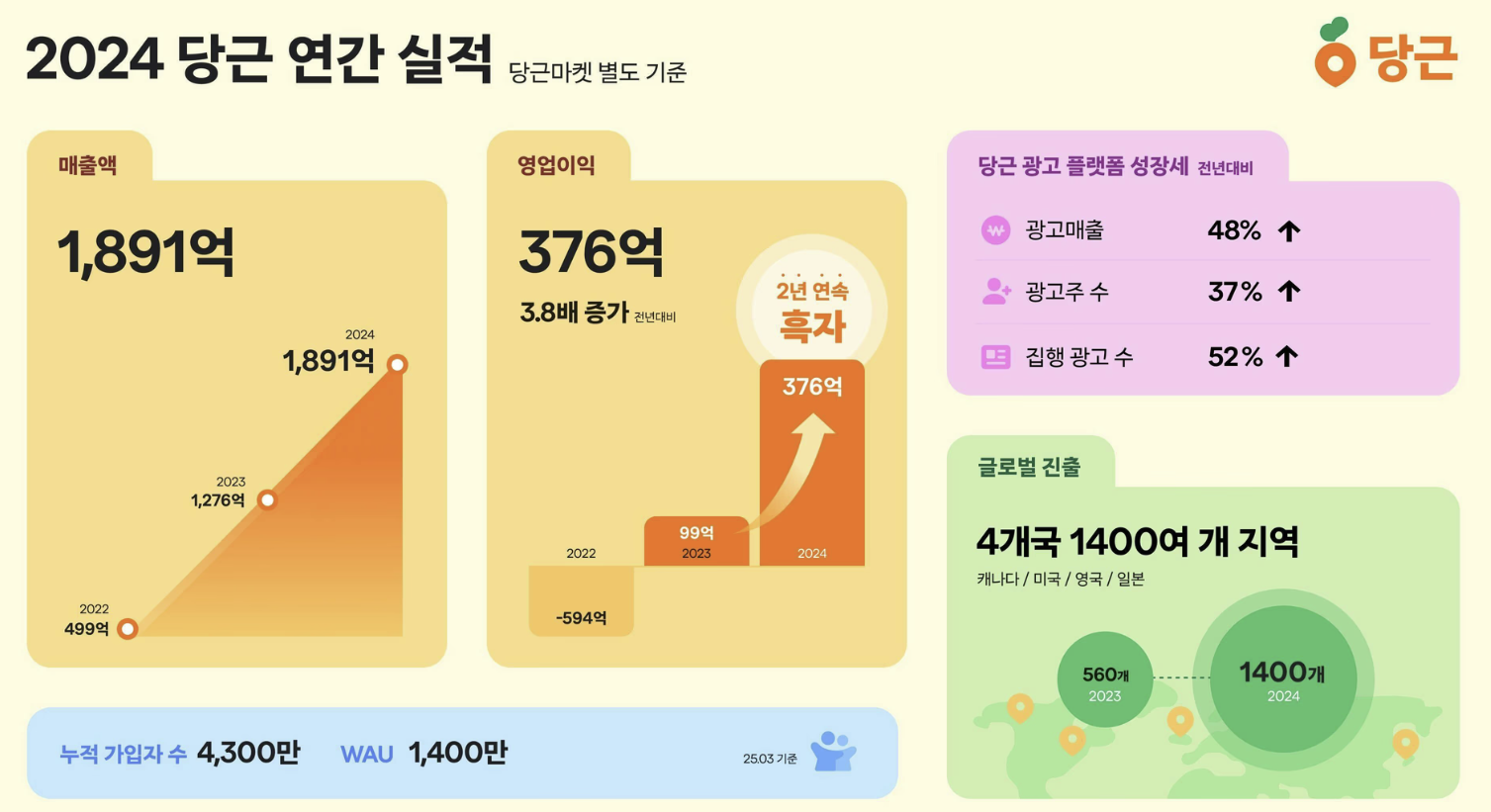
- 2024년 매출 1,891억 원(48% 성장), 연결 영업이익 25억 원 달성^2
- 강점: 광고 기반 수익 모델의 성공적 안착^11
- 고민: 해외 시장 확장(캐나다, 미국, 일본, 영국 등)에 따른 투자 부담^11
- 거래 건수 증가율이 5%에 머물러 성장 한계에 도달했다는 우려^5
오늘의집
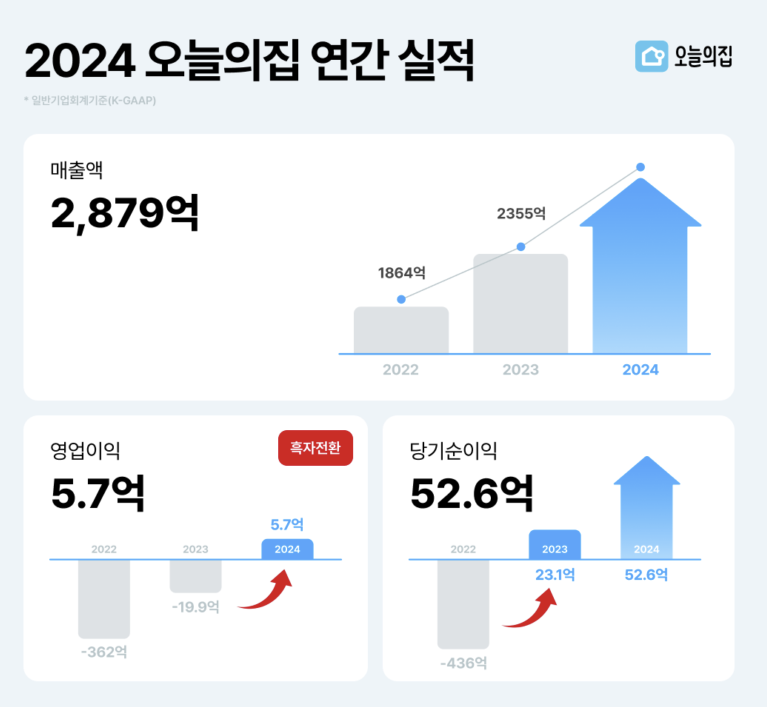
- 2024년 매출 2,879억 원(28% 증가), 영업이익 6억 원으로 겨우 흑자 전환^3
- 고민: 부동산 거래량 감소 등 외부 환경 영향으로 성장 제한적^5
- 100명당 연간 이사율이 12명으로 1970년 이후 최저 수준^5
- 경쟁 심화 속에서 차별화된 서비스 개발 필요^5
흑자 그 이상의 가치를 추구해야 할 때
이재용 회계사는 단순히 흑자를 달성했다는 사실 자체보다 기업의 비즈니스 모델이 선순환 구조를 이루고 있는지를 살펴보는 것이 중요하다고 강조합니다^5. 스타트업의 경우, 매출의 양적·질적 성장이 지속되어야 하며, 최소 30~50% 수준의 꾸준한 매출 성장이 필요하다고 말합니다^5.
특히 유니콘 기업의 가치를 입증하기 위해서는 다음과 같은 질문에 긍정적인 답을 할 수 있어야 합니다:
- 고객 유입과 유지가 원활하게 이루어지고 있는가?
- 고객 만족도와 재구매율은 어떠한가?
- 서비스 이용 시간과 빈도는 증가하고 있는가?
- 고유한 경쟁력을 통해 차별화를 이루고 있는가?
결론: 지속 가능한 성장을 위한 방향
한국의 유니콘 기업들이 드디어 흑자를 달성한 것은 분명 축하할 일입니다. 그러나 이것이 지속 가능한 성장의 신호인지, 아니면 투자 혹한기에 대응하기 위한 일시적인 현상인지는 더 지켜봐야 할 문제입니다.
진정한 성공은 단기적인 흑자 달성이 아니라, 고객에게 지속적인 가치를 제공하며 시장에서 독보적인 위치를 확보하는 것에 있습니다. 토스, 당근마켓, 오늘의집과 같은 기업들이 앞으로도 혁신을 멈추지 않고 본질적인 경쟁력을 강화해 나간다면, 한국을 대표하는 글로벌 기업으로 성장할 수 있을 것입니다.
당신이 스타트업 창업자나 투자자라면, 단순한 흑자 달성보다는 비즈니스 모델의 건강성과 지속 가능성에 더 주목하시길 권합니다. 수익성과 성장성의 균형을 이루며, 장기적인 관점에서 경쟁력을 강화해 나가는 것이 진정한 성공의 열쇠가 될 것입니다.
#유니콘기업 #흑자전환 #토스 #당근마켓 #오늘의집 #스타트업투자 #40퍼센트룰 #이재용회계사 #비즈니스모델 #스타트업성장 #수익구조 #마케팅전략 #사용자경험 #고객충성도 #플랫폼비즈니스
Beyond the Numbers: Korean Unicorns' Profitability – Is It Truly Sustainable?
If you've been following economic news recently, you've likely heard that Korean unicorn companies like Toss, Danggeun Market, and Today's Home have achieved their first-ever annual profits. While this appears to be cause for celebration at first glance, we need to ask: "How healthy is this profitability, really?" Through accountant Lee Jae-yong's incisive analysis, we'll delve deeper into the truth beyond the simple numbers and examine these companies' genuine competitiveness.
The Reality Behind Unicorns' Profitability
In 2024, Korea's representative unicorn companies successively achieved profitability. Toss recorded an operating profit of 90.7 billion won, marking its first annual profit since establishment^1, Danggeun Market recorded a consolidated operating profit of 2.5 billion won^2, and Today's Home succeeded in turning a profit of 600 million won after 10 years since founding^3.
However, we need to deeply consider what this profitability actually means. According to Lee Jae-yong's analysis, these companies have shown slowing revenue growth over the past three years, while operating profits have improved^5. This can be seen as a result of startups focusing on profitability rather than growth since the investment winter began in late 2022^4.
Common Strategies for Profitability
These companies employed several common strategies to achieve profitability:
1. Advanced Advertising Platforms
- Danggeun Market: 37% increase in advertisers, 52% increase in ad placements, 48% growth in ad revenue^11
- Toss: Transformation into a fintech advertising platform based on financial product recommendations and loan connections^6
- Today's Home: Sophisticated advertising models based on brand recognition and loyal customer base^3
2. Vertical Service Expansion
- Toss: Evolution into a super app covering money transfers, loans, insurance, cards, and securities^6
- Danggeun Market: Expansion of community-based services like Danggeun Jobs and Neighborhood Life^6
- Today's Home: Extension from interior item sales to brokerage and construction services^3
3. Cost Optimization and Organizational Efficiency
Evaluating Unicorns with the "Rule of 40"
In the venture investment industry, there's an interesting evaluation metric called the "Rule of 40." This assesses whether a company is healthy if the sum of its annual revenue growth rate and operating profit margin exceeds 40%^8^12. For example, if revenue grows by 10% and the operating profit margin is 30%, the company meets the Rule of 40^9.
According to Lee Jae-yong's analysis, currently only Toss and Danggeun Market satisfy this criterion^5. Other companies are lacking in either growth rate or profitability aspects.
Individual Company Analysis: Truth Beyond Numbers
Toss
- 2024 revenue: 1.96 trillion won (43% growth), operating profit: 90.7 billion won^13
- Strength: Monthly Active Users (MAU) of 24.8 million, approximately half of Korea's population^13
- Average user retention time overwhelmingly higher than competitors^5
- Growth in consumer service sectors (transfers, brokerage, advertising, easy payments, securities, tax services) driving profitability^1
Danggeun Market
- 2024 revenue: 189.1 billion won (48% growth), consolidated operating profit: 2.5 billion won^2
- Strength: Successful establishment of advertising-based revenue model^11
- Concern: Investment burden from global market expansion (Canada, US, Japan, UK)^11
- Transaction growth rate limited to 5%, raising concerns about growth limitations^5
Today's Home
- 2024 revenue: 287.9 billion won (28% increase), operating profit: 600 million won, barely turning profitable^3
- Concern: Growth limited by external factors such as decreased real estate transaction volume^5
- Annual moving rate of 12 people per 100 is at the lowest level since 1970^5
- Need for differentiated service development amid intensifying competition^5
Seeking Value Beyond Profitability
Lee Jae-yong emphasizes that more important than achieving profitability itself is examining whether a company's business model forms a virtuous cycle^5. For startups, both quantitative and qualitative growth in revenue must continue, requiring steady revenue growth of at least 30-50%^5.
To prove their unicorn status, companies should be able to positively answer the following questions:
- Are customer acquisition and retention functioning smoothly?
- How are customer satisfaction and repurchase rates?
- Are service usage time and frequency increasing?
- Is the company achieving differentiation through unique competitiveness?
Conclusion: Direction for Sustainable Growth
It's certainly commendable that Korean unicorn companies have finally achieved profitability. However, whether this signals sustainable growth or is merely a temporary phenomenon in response to the investment winter remains to be seen.
True success lies not in short-term profitability but in providing continuous value to customers and securing an unrivaled position in the market. If companies like Toss, Danggeun Market, and Today's Home continue to innovate and strengthen their fundamental competitiveness, they can grow into global companies representing Korea.
If you're a startup founder or investor, I recommend focusing more on the health and sustainability of the business model rather than simple profitability. Balancing profitability and growth potential while strengthening competitiveness from a long-term perspective will be the key to true success.
#UnicornCompanies #ProfitabilityTransition #Toss #DanggeunMarket #TodaysHome #StartupInvestment #RuleOf40 #LeeJaeyongAccountant #BusinessModel #StartupGrowth #RevenueStructure #MarketingStrategy #UserExperience #CustomerLoyalty #PlatformBusiness
#유니콘기업 #흑자전환 #토스 #당근마켓 #오늘의집 #스타트업투자 #40퍼센트룰 #이재용회계사 #비즈니스모델 #스타트업성장 #수익구조 #마케팅전략 #사용자경험 #고객충성도 #플랫폼비즈니스
'이슈 > 경제' 카테고리의 다른 글
| 미국 에너지 정책의 대전환: 트럼프노믹스와 글로벌 에너지 시장의 새로운 판도 (0) | 2025.04.24 |
|---|---|
| 재건축 초과이익 환수제의 진실: 통계 조작에서 부담금 폐지 논란까지 (0) | 2025.04.24 |
| 달콤한 반전! 설탕값 급락으로 멈춰설 가공식품 물가 상승, 슈거플레이션의 끝이 보인다 (0) | 2025.04.24 |
| 비트코인, 2025년 디지털 골드로 주목받는 이유 (완벽 가이드) (0) | 2025.04.23 |
| IMF 충격 발표: 한국 경제성장률 전망치 1.0%로 급락, 그 배경과 의미는? (0) | 2025.04.23 |


