현대 물리학의 발전 방향에 대해 의문을 품고 있는 사람들이 있습니다. 그중에서도 독일 출신 이론물리학자 자비네 호센펠더(Sabine Hossenfelder)는 특히 주목할 만한 인물입니다. 그녀는 현대 물리학계, 특히 입자 물리학 분야에 가차 없는 비판을 가하며 과학계에 파장을 일으키고 있습니다. 그녀가 입자 물리학계의 적이 된 이유와 주장하는 바는 무엇일까요? 이번 글에서는 호센펠더의 도전적인 관점과 그것이 물리학계에 던지는 의미에 대해 살펴보겠습니다.
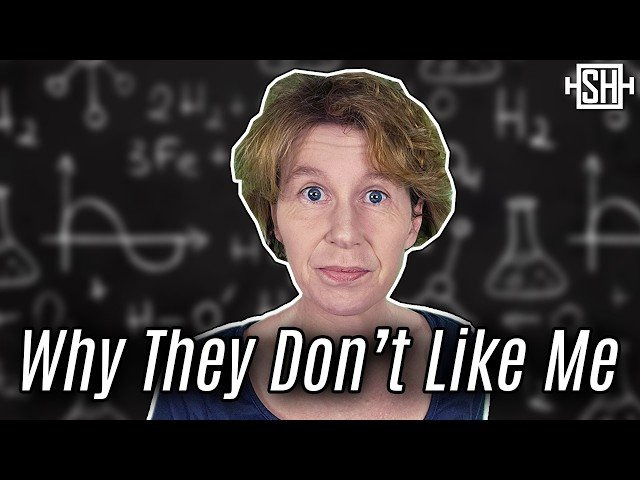
How I Became Particle Physicists’ Enemy #1
이 영상은 이론 물리학자 사비네 호센펠더가 **입자 물리학계의 비판자**가 된 이유와 그 과정에서 겪은 어려움을 설명합니다. 그녀는 현대 물리학계가 **검증 불가능한 이론**에 과도하게 의존
lilys.ai
수학의 함정에 빠진 현대 물리학
자비네 호센펠더는 "수학의 함정(Lost in Math)"이라는 책을 통해 현대 물리학의 문제점을 날카롭게 지적합니다. 그녀의 핵심 주장은 현대 물리학자들이 실험적 검증보다 수학적 아름다움과 미학적 기준에 과도하게 의존하고 있다는 것입니다^3^7.
호센펠더에 따르면:
- 물리학자들은 이론을 판단할 때 '자연스러움', '아름다움', '단순성', '우아함' 등의 미학적 기준을 지나치게 중요시합니다^6.
- 이러한 미학적 편향이 실험적 검증과 모순될 수 있으며, 이는 과학적 발전을 저해할 수 있습니다^3.
- 실제로 과학자들이 추(醜)하다고 판단했던 많은 이론들이 나중에 사실로 밝혀진 사례가 많습니다^6.
그녀는 "수학으로 문제를 해결하려면 그것이 진짜 문제인지를 먼저 확인해야 한다"고 주장합니다^2. 다시 말해, 물리학이 곧 수학은 아니며 물리학은 적합한 수학을 선택할 뿐이라는 것입니다.
거대 강입자 충돌기(LHC)와 대형 프로젝트에 대한 비판
호센펠더의 가장 강력한 비판 중 하나는 거대 강입자 충돌기(LHC)와 같은 대형 프로젝트에 대한 것입니다. 그녀는 이러한 프로젝트가 실질적인 과학적 진보를 가져오지 못한다고 지적합니다^9.
호센펠더는 다음과 같이 주장합니다:
- "LHC는 세상에서 가장 비싼 실험 중 하나이며, LHC가 새로운 것을 발견할 가능성은 보이지 않는다"^9.
- LHC는 매년 약 2.86억 달러의 운영 비용이 들지만, 힉스 입자 발견 이후 의미 있는 발견을 하지 못했습니다^9.
- 암흑 물질 연구와 같은 분야에는 LHC보다 훨씬 저렴하고 효과적인 방법이 있습니다^9.
호센펠더는 LHC가 2008년 가동 열흘 만에 두 번째 고장을 일으켰던 사례를 들며, 이러한 대형 프로젝트의 비효율성을 지적합니다^4. 그녀는 14년간 95억 달러를 투입한 이 프로젝트가 과연 그 비용에 걸맞은 과학적 성과를 내고 있는지 의문을 제기합니다.
실험적 검증의 중요성과 양자중력 연구
호센펠더는 특히 양자중력 연구에 있어서 실험적 검증의 중요성을 강조합니다. 그녀는 "실험적 입력이 없다면 과학적 이론을 개발할 수 없다"고 단언합니다^5.
그녀의 주장은 다음과 같습니다:
- "데이터가 없다면 이론은 과학이 아니다. 실험적 시험이 없다면 양자중력은 물리학이 아니다."^5
- 현재 양자중력 연구는 실험적 검증보다 이론 개발에 치중하고 있습니다^5.
- 양자중력 현상학에 대한 연구비 지원과 일자리가 전혀 없는 상황입니다^5.
호센펠더는 물리학자들이 양자 중력과 같은 이론 내부적 불일치나, 천체 물리학에서 데이터와 이론 간의 불일치를 실험적으로 검증하는 데 더 집중해야 한다고 제안합니다.
과학계의 편향과 사회적 영향
호센펠더는 과학계 내의 다양한 편향이 과학적 방법론을 위협하고 있다고 지적합니다^2. 그녀는 다음과 같은 편향들을 언급합니다:
- 확증 편향: 자신의 이론을 지지하는 증거만 찾으려는 경향
- 매몰 비용 오류: 이미 많은 시간과 자원을 투자했기 때문에 틀린 이론을 계속 고수하는 경향
- 내집단 편향: 자신이 속한 그룹의 이론을 선호하는 경향
- 편향맹점: 자신은 편향에 사로잡히지 않았다고 생각하는 고집^2
이러한 편향들이 과학적 발전을 저해하고 있으며, 과학자들이 이를 인식하고 비판 문화를 잘 세워야 한다고 주장합니다.
물리학의 한계와 미래
최근 출간된 "물리학은 어디까지 설명할 수 있는가"라는 책에서 호센펠더는 현대 물리학의 한계를 날카롭게 진단합니다^15. 그녀는 "물리학자들의 이론적 주장 중 일부는 실은 과학이라기보다 믿음에 기반한 추측에 가깝다"고 지적합니다^15.
이 책에서 그녀는 다음과 같은 질문들을 던집니다:
- 상대성이론, 빅뱅이론, 엔트로피, 양자역학, 다중우주, 시뮬레이션 우주 등 현대 물리학을 이루는 주요 이론들이 과학적으로 타당한가?^15
- 현대 물리학 연구 중 일부는 과학적이지 않은 것은 아닌가?^15
- 물리학의 기반은 무엇이고, 그것은 어디까지 우리의 세계를 설명할 수 있는가?^14
호센펠더는 "만일 경험적으로 확인된 지식과 당신의 믿음이 충돌한다면, 당신은 의미를 찾고 있는 게 아니라 망상에 빠진 것"이라고 경고합니다^15.
결론: 과학적 방법론의 재고
자비네 호센펠더의 주장은 물리학계, 나아가 과학계 전체에 중요한 화두를 던지고 있습니다. 그녀는 현대 물리학이 실험적 검증보다 이론적 미학에 치중하고 있으며, 이로 인해 막대한 자원이 비효율적으로 사용되고 있다고 비판합니다.
호센펠더의 비판은 단순히 현재의 시스템을 부정하는 것이 아니라, 과학이 본연의 역할을 되찾기 위한 방향성을 제시하고 있습니다. 그녀가 제안하는 대안은 다음과 같습니다:
- 과학자들은 이론을 판단할 때 미학적 기준보다 실험적 증거를 우선시해야 합니다.
- 대형 프로젝트에 막대한 예산을 투입하기 전에 그 과학적 가치를 철저히 검증해야 합니다.
- 양자 중력과 같은 이론과 실험 사이의 불일치를 해결할 수 있는 분야에 더 많은 관심과 자원을 할당해야 합니다.
- 과학자들은 다양한 인지적, 사회적 편향을 인식하고 이를 극복하기 위한 시스템을 마련해야 합니다.
호센펠더의 주장은 논쟁의 여지가 있지만, 그녀가 제기하는 질문들은 현대 물리학뿐만 아니라 과학 전반에 걸쳐 우리가 진지하게 고민해볼 필요가 있는 중요한 것들입니다. 과학은 끊임없는 질문과 검증을 통해 발전하는 것이며, 호센펠더와 같은 비판적 목소리는 그 과정에서 중요한 역할을 합니다.
The Challenger in Modern Physics: Uncomfortable Questions Raised by Sabine Hossenfelder
There are people who question the direction of modern physics development. Among them, German theoretical physicist Sabine Hossenfelder is a particularly notable figure. She has been making waves in the scientific community by delivering unsparing criticism of modern physics, especially in the field of particle physics. What are the reasons she became an adversary of the particle physics community and what is she arguing? In this article, we will examine Hossenfelder's challenging perspectives and their implications for the physics community.
Modern Physics Trapped in the Mathematical Maze
Sabine Hossenfelder sharply points out the problems of modern physics through her book "Lost in Math." Her core argument is that modern physicists are overly dependent on mathematical beauty and aesthetic criteria rather than experimental verification^3^7.
According to Hossenfelder:
- Physicists place too much importance on aesthetic criteria such as 'naturalness,' 'beauty,' 'simplicity,' and 'elegance' when judging theories^6.
- Such aesthetic biases can contradict experimental verification, which can hinder scientific development^3.
- In fact, many theories that scientists judged to be ugly later turned out to be true^6.
She argues that "to solve a problem with mathematics, you must first confirm whether it is a real problem"^2. In other words, physics is not mathematics itself; physics merely selects appropriate mathematics.
Criticism of the Large Hadron Collider (LHC) and Large-Scale Projects
One of Hossenfelder's strongest criticisms is directed at large-scale projects like the Large Hadron Collider (LHC). She points out that such projects do not bring about substantial scientific progress^9.
Hossenfelder argues:
- "The LHC is one of the most expensive experiments in the world, and the possibility of the LHC discovering something new does not appear likely"^9.
- The LHC costs about $286 million annually to operate, but it has not made significant discoveries since the Higgs boson^9.
- There are much cheaper and more effective methods for researching dark matter than the LHC^9.
Hossenfelder cites the case where the LHC broke down for the second time just ten days after its operation in 2008, pointing out the inefficiency of such large-scale projects^4. She questions whether this project, which invested $9.5 billion over 14 years, is producing scientific achievements commensurate with its cost.
The Importance of Experimental Verification and Quantum Gravity Research
Hossenfelder particularly emphasizes the importance of experimental verification in quantum gravity research. She asserts that "without experimental input, scientific theory cannot be developed"^5.
Her arguments are as follows:
- "Without data, theory is not science. Without experimental testing, quantum gravity is not physics."^5
- Current quantum gravity research is focused on theory development rather than experimental verification^5.
- There is no funding or job opportunities for quantum gravity phenomenology^5.
Hossenfelder suggests that physicists should focus more on experimentally verifying theoretical internal inconsistencies such as quantum gravity, or discrepancies between data and theory in astrophysics.
Scientific Biases and Social Impact
Hossenfelder points out that various biases within the scientific community threaten scientific methodology^2. She mentions the following biases:
- Confirmation bias: The tendency to seek only evidence that supports one's theory
- Sunk cost fallacy: The tendency to persist with a wrong theory because much time and resources have already been invested
- In-group bias: The tendency to prefer theories from one's own group
- Bias blind spot: The stubbornness to think that one is not caught in bias^2
She argues that these biases hinder scientific development, and scientists need to recognize this and establish a culture of criticism.
The Limits and Future of Physics
In her recently published book "Existential Physics," Hossenfelder sharply diagnoses the limitations of modern physics^15. She points out that "some of the theoretical claims of physicists are closer to belief-based speculation than science"^15.
In this book, she poses the following questions:
- Are the major theories constituting modern physics, such as the theory of relativity, the Big Bang theory, entropy, quantum mechanics, the multiverse, and the simulation universe, scientifically valid?^15
- Is part of modern physics research not scientific?^15
- What is the foundation of physics, and how far can it explain our world?^14
Hossenfelder warns that "if your beliefs conflict with empirically confirmed knowledge, you are not searching for meaning but are deluded"^15.
Conclusion: Reconsideration of Scientific Methodology
Sabine Hossenfelder's arguments pose important topics for the physics community and the scientific community as a whole. She criticizes modern physics for focusing more on theoretical aesthetics than experimental verification, resulting in inefficient use of vast resources.
Hossenfelder's criticism is not simply a negation of the current system but presents a direction for science to reclaim its inherent role. The alternatives she proposes are as follows:
- Scientists should prioritize experimental evidence over aesthetic criteria when judging theories.
- Before investing enormous budgets in large-scale projects, their scientific value should be thoroughly verified.
- More attention and resources should be allocated to fields that can resolve discrepancies between theory and experiment, such as quantum gravity.
- Scientists should recognize various cognitive and social biases and establish systems to overcome them.
While Hossenfelder's arguments are controversial, the questions she raises are important ones that we need to seriously consider not only in modern physics but across science in general. Science develops through constant questioning and verification, and critical voices like Hossenfelder's play an important role in that process.
#물리학 #자비네호센펠더 #양자물리학 #거대강입자충돌기 #LHC #수학의함정 #이론물리학 #양자중력 #과학철학 #과학비평 #SabineHossenfelder #TheoreticalPhysics #QuantumGravity #ScientificMethodology #LostInMath
'교양 > 과학기술' 카테고리의 다른 글
| 알파폴드 노벨상 수상, 신약 개발의 미래를 바꾸다 - 구글과 제약 산업의 혁신적 협력 (1) | 2025.04.16 |
|---|---|
| 블랙홀의 심연으로: 사건의 지평선을 넘었을 때 일어나는 놀라운 현상들 (0) | 2025.04.16 |
| 배터리 혁명: 개구리 실험에서 꿈의 배터리까지, 에너지 저장의 놀라운 여정 (0) | 2025.04.13 |
| 노션은 어떻게 2,000억 개의 노트를 관리하나? 데이터베이스 샤딩과 데이터 레이크 전략 파헤치기 (0) | 2025.04.06 |
| 은하 중심부의 신비: 암흑 물질 입자의 새로운 단서를 찾아서 (5) | 2025.04.06 |


