소프트웨어 산업이 근본적으로 변화하고, 기존의 플랫폼 경제가 재편되는 가운데 한국은 AI 혁명 시대에 중대한 기로에 서 있습니다. 검색 결과를 종합해 보면, 데이터센터 구축과 전력 공급 문제부터 중국의 급부상, AI 기술 격차까지 다양한 도전에 직면해 있습니다. 그러나 위기 속에서도 기회는 존재합니다. 이 글에서는 AI 혁명이 가져올 한국 경제의 주요 쟁점과 미래 전략을 심층적으로 분석합니다.
AI 혁명과 소프트웨어 산업의 재편
현재 소프트웨어 산업이 근본적으로 변화하고 있습니다. 애플리케이션 중심의 기존 모델이 무너지고, AI가 소프트웨어의 핵심으로 자리 잡는 'AI 우선(AI-first)' 시대가 본격적으로 도래하고 있습니다^5. 이는 단순한 기술 변화를 넘어 산업 구조 자체를 재편하는 혁명적 변화입니다.
기존의 컴퓨팅 방식은 개별 앱이 플랫폼을 통해 배포되고, 유저가 필요할 때마다 이를 실행하는 구조였습니다. 하지만 생성형 AI가 발전하면서 이 패러다임이 흔들리고 있습니다. AI 기반 인터페이스는 앱을 직접 실행하지 않고도 필요한 작업을 수행할 수 있는 환경을 제공합니다^5. 이는 네이버나 카카오와 같은 국내 플랫폼 기업들에게 큰 도전이 될 수 있습니다.
플랫폼 경제의 종말과 네트워크 효과의 약화
AI 주도의 변화 속에서 기존 소프트웨어 시장을 장악했던 '앱 마켓플레이스' 모델도 위기를 맞고 있습니다. 현재 애플과 구글 같은 기업들이 앱을 통해 30%의 수수료를 챙기던 방식이 AI 기반 시스템에서는 점차 무력화될 가능성이 높습니다^5. 사용자가 특정 소프트웨어를 설치할 필요 없이 AI가 직접 서비스를 제공하는 환경이 자리 잡으면, 기존 앱 생태계는 점점 설 자리를 잃게 됩니다.
이러한 변화는 박종훈의 지식한방에서 언급된 '네트워크 효과의 약화'와 정확히 일치합니다. 더 이상 친구나 거래처가 사용한다고 해서 그 서비스를 의무적으로 사용할 필요가 없어지기 때문입니다. 각자에게 더 유리하거나 차별화된 AI 서비스를 선택할 수 있는 시대가 오고 있습니다.
데이터와 에너지: AI 경쟁력의 핵심 요소
AI 시대의 경쟁력을 좌우하는 핵심 요소로 '데이터 품질'과 '에너지 가격'이 부상하고 있습니다. 이는 박종훈이 지적한 바와 정확히 일치합니다.
데이터 품질과 저작권 전쟁
AI 학습 데이터의 저작권 침해 문제가 심각해지고 있습니다. 뉴욕타임스가 오픈AI를 상대로 제기한 저작권 소송에서 법원이 오픈AI의 기각 요청을 거부한 사례는 이 문제의 심각성을 잘 보여줍니다^6. 법원은 오픈AI가 AI 학습이 공정 이용(fair use)에 해당한다고 주장했지만 뉴욕타임스의 저작권 침해 가능성을 배제할 수 없다고 판단했습니다^6.
특히 오픈AI가 뉴욕타임스 기사를 무단 활용해 사용자들이 유료 콘텐츠를 우회하도록 조장했다는 주장도 인정됐습니다^6. 이는 AI 시대에 고품질 데이터 확보와 저작권 문제가 얼마나 중요한지를 보여주는 사례입니다.
에너지와 데이터센터 경쟁력
AI 서비스가 일상화될수록 인터넷을 통해 오가는 데이터의 양은 급속도로 증가하고 있으며, 실시간 처리, 높은 신뢰성 등 AI 서비스의 요구사항도 다양해지고 있습니다^9. 이에 따라 데이터센터와 에너지 인프라의 중요성이 더욱 커지고 있습니다.
슈나이더 일렉트릭은 데이터센터에서 AI가 소비하는 전력 비중이 2023년 8% 수준에서 2028년 15~20%까지 증가할 것으로 전망했습니다^15. 한국도 AI 용도를 포함한 전반적 데이터센터가 급증하면서 전력 수급 문제가 대두되고 있습니다. 한국데이터센터에너지효율협회에 따르면 국내 상업용 데이터센터가 지난해 38개에서 2028년 63개로 두 배 가량 늘 것으로 예상되며, 이에 따른 전력량도 지난해 587메가와트(MW)에서 2028년 1446MW로 세 배 가량 증가할 전망입니다^15.
한국의 AI 인프라 위기와 정책적 도전
한국의 AI 경쟁력 강화를 위한 노력은 여러 현실적 장벽에 부딪히고 있습니다. 특히 정부 정책과 예산 문제가 AI 인프라 구축에 큰 걸림돌이 되고 있습니다.
국가 AI 컴퓨팅센터의 난항
네이버, SK텔레콤, KT, LG유플러스, 삼성SDS, LG CNS 등 주요 정보기술(IT) 기업들이 참여 의향을 밝힌 '국가 인공지능(AI) 컴퓨팅센터' 구축 사업이 예산 문제로 차질을 빚고 있습니다^7. 정부는 AI 경쟁력 확보를 위해 국가 차원에서 그래픽처리장치(GPU)를 대량 확보하고, 이를 연구기관과 스타트업의 연구개발(R&D) 기반으로 제공할 계획이었습니다. 하지만 이를 뒷받침할 추가경정예산(추경) 편성이 지연되면서, 연내 사업 추진이 불투명해진 상황입니다^7.
유상임 과학기술정보통신부 장관은 "예산이 없어 올해 GPU가 들어오지 못할 수도 있다"며 "대학과 스타트업이 마음 놓고 GPU를 쓰지 못하면 R&D가 1년 늦어지고 이는 국가 AI 경쟁력이 4년 뒤처지는 결과를 낳는다"고 우려를 표했습니다^7. 이는 박종훈이 지적한 대로 한국의 AI 후진국화가 현실로 다가오고 있음을 보여줍니다.
데이터센터 규제와 전력 문제
데이터센터를 하나의 산업이 아니라 '전기먹는 하마'로 인식하는 시각도 문제입니다. 업계에 따르면 데이터센터 지역 분산 정책, 분산에너지 활성화 특별법 시행, 디지털서비스 안정성 강화 방안, 제로에너지건축물(ZEB) 인증 확대 등 데이터센터 관련 크고 작은 규제가 10여개에 달합니다^15.
나연묵 단국대 교수(컴퓨터공학)는 "데이터센터는 AI 경쟁력을 좌우할 인프라로, 규제 일변도에서 벗어나 진흥책을 고민해야할 때"라면서 "말레이시아, 태국 등 아시아 주변 국가에서 더 적극적으로 데이터센터 산업을 육성하는 상황에서 규제만 지속하다간 데이터센터 국가 경쟁력뿐 아니라 AI 주권을 뺏기는 상황까지 초래할 수 있다"고 지적했습니다^15.
수도권 집중에서 벗어나는 데이터센터 개발
한국의 데이터센터는 현재 큰 변화를 겪고 있습니다. 수도권 데이터센터 개발 중심이 서울에서 인천·부천으로 이동하고 있다는 조사 결과가 나왔습니다. 전력 공급과 토지 부족 문제로 기업들이 신규 입지를 서부 수도권으로 넓히는 가운데 글로벌 투자와 대규모 거래가 맞물리며 시장 재편이 가속화됐다는 분석입니다^16.
쿠시먼앤드웨이크필드가 발간한 '2024년 하반기 데이터센터 보고서'에 따르면 지난해 하반기 기준으로 데이터센터 신규 개발의 46%는 인천·부천 권역에서 이뤄질 예정입니다. 현재 수도권 데이터센터 운영 용량은 520메가와트(MW)로, 개발 및 공사 중 물량 638MW가 완료되면 1기가와트(GW)를 넘을 전망입니다^16.
이러한 변화는 서울 내 전력 공급 제한과 토지 부족 문제가 심각해졌기 때문입니다. 그러나 이러한 분산 움직임이 근본적인 해결책이 될 수 있을지는 의문입니다. 전력 인프라와 지역 균형 발전을 위한 보다 포괄적인 접근이 필요합니다.
중국 AI의 급부상과 한국의 위기
중국이 오픈소스를 앞세워 글로벌 인공지능(AI) 시장의 주도권을 확보하려 하고 있습니다. 딥시크·알리바바 등 주요 테크 기업들이 개방형 혁신을 강조하며 AI 비용을 낮추고 접근성을 확대하는 상황으로, 이는 미국의 폐쇄형 모델과 차별화된 전략입니다^8.
딥시크의 충격과 오픈소스 전략
딥시크는 최근 가장 주목받는 중국 오픈소스 AI 모델입니다. 지난 1월 발표된 '딥시크-R1'은 720B 파라미터 규모의 모델로, 오픈AI 'GPT-4o'와 동급의 성능을 제공하면서도 구축 비용을 200분의 1 수준인 100만 토큰당 14센트(한화 약 190원)로 낮춘 것이 특징입니다^8. 이러한 비용 절감 효과와 성능을 동시에 잡은 모델은 글로벌 AI 업계에 큰 충격을 주었습니다.
이는 박종훈이 지적한 중국의 AI 급부상과 정확히 일치하는 현상입니다. 한국은 '패스트 팔로워' 전략을 구사했지만, AI 분야에서 중국에게 추월당할 위기에 처한 것이 현실입니다.
미래 전략: AI 시대 한국의 기회와 도전
한국이 AI 강국으로 도약하기 위해서는 구체적인 전략과 실천이 필요합니다. 검색 결과를 바탕으로 몇 가지 중요한 방향성을 제시할 수 있습니다.
네트워크 AI 발전과 통신망 혁신
기존의 통신망만으로는 다양하고 고도화된 AI 서비스의 요구사항을 충족하기 어렵다는 문제가 있습니다. 이를 효과적으로 극복하기 위해서는 이제 통신망 자체도 AI 기술과 결합하여 진화해야 하며, 바로 이 지점에서 '네트워크(Network) AI'라는 개념이 등장하게 됐습니다^9.
'네트워크 AI'는 네트워크 기술과 AI가 결합한 기술 개념으로, 'AI for Network'와 'Network for AI' 두 가지 방향으로 구분됩니다. 'AI for Network'는 AI가 네트워크 운용의 지능화와 효율화를 지원하는 개념이며, 'Network for AI'는 네트워크가 AI 서비스를 더욱 능동적으로 지원하는 역할을 수행하는 개념입니다^9. 이러한 네트워크 혁신은 한국이 강점을 가질 수 있는 분야입니다.
저전력 AI 반도체 기술 개발
AI 분야에서 중요한 또 다른 경쟁력은 전력 효율성입니다. 미국 AI 반도체 스타트업 '엔차지AI'가 개발 중인 '아날로그 인메모리 컴퓨팅(AIMC)' 기반 AI 반도체는 심층 신경망 추론 작업에 드는 시간과 에너지 소비를 줄일 수 있는 방식입니다^11. 노트북·스마트폰 등에 탑재 가능하면서도 기존 AI 반도체 대비 전력소비를 20배 절감할 수 있는 기술이 특징입니다^11.
삼성벤처투자가 이 기업에 투자했다는 점은 고무적입니다. 한국은 반도체 강국으로서의 경험과 역량을 바탕으로 AI 특화 반도체 분야에서 경쟁력을 확보할 수 있습니다.
결론: AI 시대 한국의 선택
AI 혁명은 단순한 기술 변화가 아닌 경제와 사회 전반을 재편하는 대변혁입니다. 한국은 과거 IT 강국으로서의 영광에 안주할 것이 아니라, 적극적인 변화와 투자를 통해 AI 강국으로 도약해야 합니다.
특히 박종훈이 강조한 데이터 품질과 에너지 경쟁력은 AI 시대에 가장 중요한 요소임이 검색 결과를 통해서도 확인됩니다. 한국 정부와 기업은 이 두 가지 요소에 집중적인 투자와 혁신을 이루어야 합니다.
저작권 문제 해결을 위한 제도적 개선, 데이터센터 규제 완화와 진흥 정책 수립, 전력 인프라 강화, 지역 균형 발전을 고려한 AI 인프라 구축 등이 시급합니다. 또한 중국의 오픈소스 전략에서 배울 점을 찾고, 한국만의 차별화된 경쟁력을 발굴해야 합니다.
AI 혁명 시대에 한국이 글로벌 리더가 될지, 아니면 추격자에 머물지는 지금 우리의 선택에 달려 있습니다. 과감한 투자와 혁신, 그리고 신속한 정책 결정이 필요한 시점입니다.
여러분은 어떻게 생각하시나요? AI 시대에 한국이 가야 할 방향에 대해 여러분의 의견을 댓글로 남겨주세요.
#AI혁명 #한국경제 #데이터센터 #에너지정책 #중국AI #오픈소스AI #GPU부족 #네트워크AI #저작권전쟁 #플랫폼경제 #AI반도체 #국가AI컴퓨팅센터 #딥시크 #AI경쟁력 #전력효율성
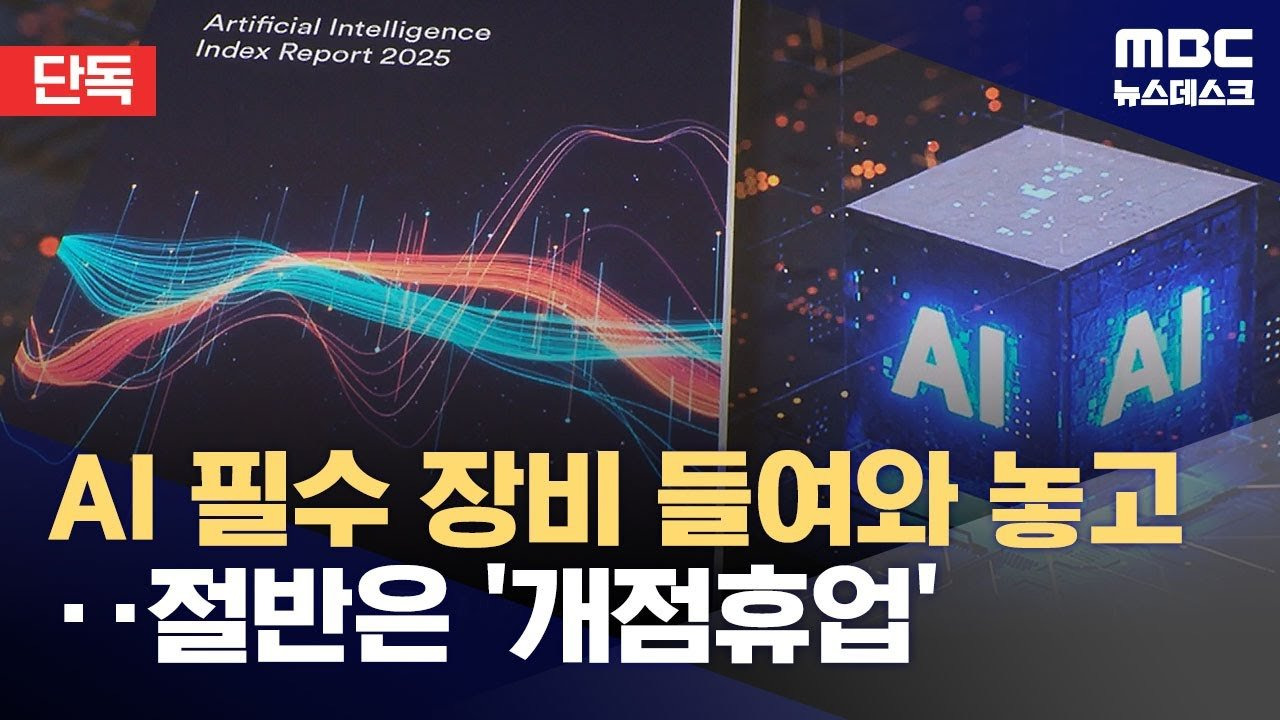
AI Revolution Era, Korea's Challenges and Opportunities: Data and Energy Competitiveness Will Determine the Future
As the software industry undergoes fundamental changes and the existing platform economy is being reorganized, Korea stands at a critical crossroads in the AI revolution era. Synthesizing the search results, Korea faces various challenges from data center construction and power supply issues to China's rapid rise and AI technology gaps. However, opportunities exist even amidst these crises. This article deeply analyzes the major issues and future strategies for the Korean economy in the AI revolution.
AI Revolution and Software Industry Restructuring
The software industry is currently undergoing fundamental changes. The existing application-centered model is collapsing, and AI is taking center stage as the core of software, ushering in the 'AI-first' era^5. This represents a revolutionary change that goes beyond simple technological evolution to reshape the industry structure itself.
The conventional computing approach involved individual apps being distributed through platforms, with users executing them as needed. However, with the advancement of generative AI, this paradigm is being shaken. AI-based interfaces provide an environment where necessary tasks can be performed without directly executing apps^5. This poses a significant challenge to domestic platform companies like Naver and Kakao.
The End of Platform Economy and Weakening Network Effects
Amid AI-driven changes, the 'app marketplace' model that dominated the existing software market is also facing a crisis. The current method where companies like Apple and Google collect 30% commission through apps is likely to be gradually neutralized in AI-based systems^5. As an environment takes hold where users can receive services directly through AI without needing to install specific software, the existing app ecosystem will increasingly lose its footing.
This change precisely aligns with the 'weakening of network effects' mentioned in Park Jong-hoon's knowledge session. There is no longer a need to mandatorily use a service just because friends or business partners use it. We are entering an era where everyone can choose AI services that are more advantageous or differentiated for them.
Data and Energy: Core Elements of AI Competitiveness
'Data quality' and 'energy prices' are emerging as key factors determining competitiveness in the AI era. This exactly matches what Park Jong-hoon pointed out.
Data Quality and Copyright Wars
Copyright infringement issues with AI training data are becoming serious. The case where the court rejected OpenAI's dismissal request in the copyright lawsuit filed by The New York Times against OpenAI demonstrates the severity of this issue^6. The court determined that although OpenAI claimed AI training constituted fair use, it could not exclude the possibility of The New York Times' copyright infringement^6.
Notably, the claim that OpenAI used New York Times articles without permission, encouraging users to bypass paid content, was also acknowledged^6. This case shows how important high-quality data acquisition and copyright issues are in the AI era.
Energy and Data Center Competitiveness
As AI services become more commonplace, the volume of data traveling through the internet is rapidly increasing, and the requirements for AI services, such as real-time processing and high reliability, are also diversifying^9. Consequently, the importance of data centers and energy infrastructure is growing.
Schneider Electric projected that the proportion of power consumed by AI in data centers will increase from 8% in 2023 to 15-20% by 2028^15. Korea is also facing power supply issues as data centers, including those for AI purposes, are rapidly increasing. According to the Korea Data Center Energy Efficiency Association, the number of commercial data centers in Korea is expected to double from 38 last year to 63 by 2028, with corresponding power consumption tripling from 587 megawatts (MW) last year to 1446MW by 2028^15.
Korea's AI Infrastructure Crisis and Policy Challenges
Korea's efforts to strengthen AI competitiveness are hitting several practical barriers. Government policies and budget issues, in particular, are becoming major obstacles to building AI infrastructure.
National AI Computing Center's Difficulties
The 'National Artificial Intelligence (AI) Computing Center' construction project, which major information technology (IT) companies such as Naver, SK Telecom, KT, LG Uplus, Samsung SDS, and LG CNS have expressed interest in participating in, is facing setbacks due to budget issues^7. The government planned to secure a large number of graphics processing units (GPUs) at the national level and provide them as an R&D foundation for research institutes and startups. However, with delays in supplementary budget allocation, the project's implementation within the year has become uncertain^7.
Minister of Science and ICT Yoo Sang-im expressed concern, saying, "Without a budget, GPUs might not arrive this year," and "If universities and startups cannot freely use GPUs, R&D will be delayed by a year, resulting in national AI competitiveness falling behind by four years."^7 This shows that Korea's regression to an AI underdeveloped country, as pointed out by Park Jong-hoon, is becoming a reality.
Data Center Regulations and Power Issues
Viewing data centers as 'electricity-consuming hippos' rather than as an industry is also problematic. According to the industry, there are about ten large and small regulations related to data centers, including data center regional dispersion policy, special law enforcement for distributed energy activation, digital service stability enhancement measures, and expansion of Zero Energy Building (ZEB) certification^15.
Professor Na Yeon-muk of Dankook University (Computer Engineering) pointed out, "Data centers are infrastructure that will determine AI competitiveness, and it's time to move away from regulation-only approaches and consider promotion policies," adding, "If we continue with regulations while neighboring Asian countries like Malaysia and Thailand are more actively fostering the data center industry, we could not only lose national competitiveness in data centers but also AI sovereignty."^15
Data Center Development Moving Away from Seoul Concentration
Korea's data centers are currently undergoing significant changes. Survey results show that the center of data center development in the Seoul metropolitan area is moving from Seoul to Incheon and Bucheon. Analysis suggests that market reorganization is accelerating as companies expand new locations to western metropolitan areas due to power supply and land shortage issues, coinciding with global investments and large-scale transactions^16.
According to the '2024 Second Half Data Center Report' published by Cushman & Wakefield, as of the second half of last year, 46% of new data center developments are planned for the Incheon-Bucheon area. The current operating capacity of data centers in the metropolitan area is 520 megawatts (MW), and when the 638MW under development and construction are completed, it is expected to exceed 1 gigawatt (GW)^16.
This shift is due to severe power supply limitations and land shortages in Seoul. However, it is questionable whether this dispersal movement can be a fundamental solution. A more comprehensive approach is needed for power infrastructure and balanced regional development.
China's AI Rise and Korea's Crisis
China is seeking to secure dominance in the global artificial intelligence (AI) market by leveraging open source. Major tech companies like DeepSeek and Alibaba are emphasizing open innovation, lowering AI costs, and expanding accessibility, which is a differentiated strategy from the closed model of the United States^8.
The Impact of DeepSeek and Open Source Strategy
DeepSeek is currently one of the most notable Chinese open-source AI models. Released in January, 'DeepSeek-R1' is a model with 720B parameters that offers performance equivalent to OpenAI's 'GPT-4o' while reducing construction costs to 1/200th of the level at 14 cents (approximately 190 KRW) per million tokens^8. This model, which achieved both cost reduction and performance, has shocked the global AI industry.
This phenomenon exactly matches the rapid rise of Chinese AI as pointed out by Park Jong-hoon. Korea employed a 'fast follower' strategy but now faces the risk of being overtaken by China in the AI field.
Future Strategy: Korea's Opportunities and Challenges in the AI Era
For Korea to leap forward as an AI powerhouse, specific strategies and implementations are necessary. Based on the search results, several important directions can be suggested.
Network AI Development and Communication Network Innovation
Existing communication networks alone cannot meet the requirements of diverse and advanced AI services. To effectively overcome this, communication networks themselves need to evolve by combining with AI technology, which is where the concept of 'Network AI' emerged^9.
'Network AI' is a technological concept that combines network technology and AI, divided into two directions: 'AI for Network' and 'Network for AI.' 'AI for Network' is a concept where AI supports the intelligentization and efficiency of network operations, while 'Network for AI' is a concept where networks play a more active role in supporting AI services^9. This network innovation is an area where Korea can have strengths.
Low-Power AI Semiconductor Technology Development
Another important competitiveness in the AI field is power efficiency. The 'Analog In-Memory Computing (AIMC)' based AI semiconductors being developed by the US AI semiconductor startup 'Encharge AI' can reduce the time and energy consumption required for deep neural network inference tasks^11. It features technology that can be mounted on notebooks, smartphones, etc., while reducing power consumption by 20 times compared to existing AI semiconductors^11.
It is encouraging that Samsung Venture Investment has invested in this company. Korea, with its experience and capabilities as a semiconductor powerhouse, can secure competitiveness in the field of AI-specialized semiconductors.
Conclusion: Korea's Choice in the AI Era
The AI revolution is not just a technological change but a major transformation reshaping the entire economy and society. Korea should not rest on its past glory as an IT powerhouse but should leap forward as an AI powerhouse through active change and investment.
The data quality and energy competitiveness emphasized by Park Jong-hoon are confirmed through search results as the most important factors in the AI era. The Korean government and companies need to focus on investment and innovation in these two areas.
Institutional improvements to resolve copyright issues, deregulation and promotion policies for data centers, strengthening power infrastructure, and AI infrastructure construction considering balanced regional development are urgent. Additionally, Korea should find lessons from China's open source strategy and discover its own differentiated competitiveness.
Whether Korea becomes a global leader or remains a follower in the AI revolution era depends on our choices now. Bold investment, innovation, and swift policy decisions are needed.
What do you think? Please leave your comments on the direction Korea should take in the AI era.
#AIRevolution #KoreanEconomy #DataCenter #EnergyPolicy #ChineseAI #OpenSourceAI #GPUShortage #NetworkAI #CopyrightWar #PlatformEconomy #AISemiconductor #NationalAIComputingCenter #DeepSeek #AICompetitiveness #PowerEfficiency
#AI혁명 #한국경제 #데이터센터 #에너지정책 #중국AI #오픈소스AI #GPU부족 #네트워크AI #저작권전쟁 #플랫폼경제 #AI반도체 #국가AI컴퓨팅센터 #딥시크 #AI경쟁력 #전력효율성
'이슈 > AI' 카테고리의 다른 글
| AI 혁신가의 비밀 무기: 김덕중 소장이 알려주는 업무 효율 200% 높이는 AI 도구 활용법 (0) | 2025.04.10 |
|---|---|
| AI 에이전트의 세계: 단순한 자동화를 넘어 자율 의사결정으로 (0) | 2025.04.10 |
| 크라우드웍스: 당신도 참여할 수 있는 AI 데이터 혁명의 현장 (2) | 2025.04.08 |
| 혁신적인 AI 스타트업을 위한 아이디어 발굴법: Y Combinator의 투자 전문가들이 알려주는 비밀 (0) | 2025.04.07 |
| 2025년 AI 혁명의 새 물결: 라마 4, 오픈 웨이트, 미드저니 V7의 충격적 진화 (1) | 2025.04.07 |


