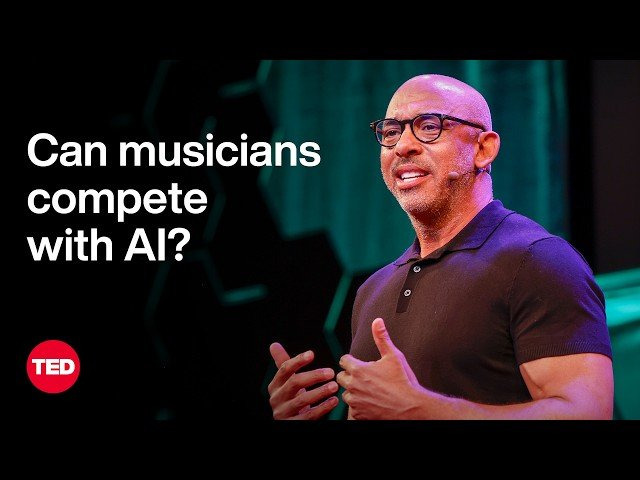
AI 시대에 음악가들이 창의적으로 생존하고 번영하기 위한 실용적인 가이드라인을 소개합니다. Harvey Mason Jr.가 제시하는 네 가지 핵심 전략을 통해 기술 변화 속에서도 인간만의 독창성을 지키는 방법을 알아봅시다.
A Survival Guide for Musicians in the Age of AI | Harvey Mason jr. | TED
이 영상은 AI 시대에 음악가들이 어떻게 생존하고 번성할 수 있는지에 대한 **실질적인 가이드라인**을 제시합니다. Harvey Mason Jr.는 음악 산업의 변화에 대한 두려움을 솔직하게 드러내면서도, AI
lilys.ai
음악 산업이 빠르게 변화하고 있습니다. 인공지능(AI)은 몇 초 만에 노래를 작곡할 수 있고, 목소리를 복제하며, 심지어 특정 아티스트의 스타일을 모방할 수도 있습니다. 이런 상황에서 인간 음악가들의 미래는 어떻게 될까요? Recording Academy(그래미상을 주관하는 기관)의 CEO이자 프로듀서인 Harvey Mason Jr.는 TED 강연을 통해 AI 시대에 음악가들이 생존하고 번영할 수 있는 구체적인 전략을 제시했습니다^3^15.
1. 이해하기(Understand): AI의 작동 방식과 영향 파악하기
Mason은 무엇보다 AI의 작동 방식과 그 영향을 이해하는 것이 중요하다고 강조합니다. 그는 자신의 경험을 통해 AI에 대한 두려움을 솔직하게 드러냅니다^3.
AI가 가져온 음악 산업의 변화
Mason은 자신이 운영하는 스튜디오에서 오랜 동료인 Andrew에게 AI에 대한 연구를 의뢰했는데, 결과를 본 후 팀원들의 표정이 실망감으로 가득 찼다고 말합니다. AI가 순식간에 곡을 만들어내는 현실을 마주하고 음악가들이 느끼는 불안감을 대변하고 있는 것입니다^3.
"AI는 몇 초 만에 곡을 생성해낼 수 있지만, 인간은 이를 만드는 데 수 주가 걸립니다. 이러한 격차는 많은 음악가들에게 위협으로 다가옵니다."
현재 AI 음악 생성 기술은 다양한 서비스로 제공되고 있습니다. OpenAI의 MuseNet은 클래식부터 현대 음악까지 다양한 장르와 스타일을 학습하여 새로운 곡을 작곡할 수 있고, AIVA(AI Virtual Artist)는 게임과 광고 음악 제작에 활용되며, Amper Music는 영상과 광고를 위한 배경음악에 최적화되어 있습니다^4.
2. 적응하기(Adapt): 기술 변화를 기회로 삼기
두 번째 단계는 적응입니다. Mason은 음악가들이 역사적으로 항상 새로운 기술 변화에 적응해왔다고 말합니다^3.
음악 역사 속의 기술 적응 사례
Mason은 과거 피아노 롤과 같은 기술이 등장했을 때 피아노 연주자들이 불안해했던 사례를 언급합니다. 하지만 그들은 결국 이러한 변화에 적응했고, 그 과정에서 새로운 기회를 발견했습니다^3.
아버지의 교훈: 기술을 포용하라
Mason은 자신의 아버지가 드럼 머신이라는 새로운 기술을 마주했을 때의 이야기를 공유합니다. 처음에는 직업적 위협을 느꼈지만, 그는 포기하는 대신 이 기술을 배워 오히려 자신의 경력을 발전시켰습니다^3.
"아버지는 기술에 굴복하지 않고 드럼 머신을 배우기로 결심했으며, 결국 역사상 첫 번째로 레코드에 드럼 머신을 사용한 드러머가 되었습니다."
이 사례는 기술 변화가 위협이 아닌 기회가 될 수 있음을 보여줍니다. 현재 많은 음악가들도 AI를 창작의 도구로 활용하며 새로운 가능성을 탐색하고 있습니다^4.
3. 옹호하기(Advocate): 창작자의 권리를 위해 목소리 내기
세 번째 단계는 옹호입니다. 음악가들은 AI 시대에 자신들의 창작물과 권리를 보호하기 위해 적극적으로 목소리를 내야 합니다^3.
저작권 보호를 위한 노력
Mason은 저작권 사무소 책임자와의 대화를 통해 생성형 AI와 저작권 보호에 대한 논의의 중요성을 강조했습니다^3. 실제로 AI 음악이 저작권 침해 문제를 일으키고 있는 상황에서, 이러한 옹호 활동은 매우 중요합니다^6.
법적 보호 장치 마련하기
Mason은 여러 의원들과 대화하며 인간의 창의성과 예술성을 보호하는 법안 마련에 힘썼고, 그 결과 주 및 연방 차원의 법안이 통과되었습니다. 특히 'No Fakes Act'는 인간 창작자의 권리를 보호하는 중요한 발걸음이 되었습니다^3.
"우리는 주 차원에서 몇 개의 법안을 통과시켰고, 현재 'No Fakes Act'라는 연방 법안이 하원과 상원을 통과하고 있습니다. 이 법안이 올해 말까지 서명되어 인간의 예술성을 보호하기 시작하기를 바랍니다."
영국에서는 AI의 저작권 학습 목적 사용을 허용하는 저작권법 개정안이 추진되면서 뮤지션들의 강력한 반발을 불러일으키고 있습니다^6. 이처럼 AI 시대에는, 창작자가 자신의 권리를 지키기 위한 적극적인 옹호 활동이 필수적입니다.
4. 경쟁하기(Compete): 인간만의 강점 활용하기
마지막 단계는 경쟁입니다. Mason은 AI와 경쟁하기 위해 인간만이 가진 독특한 강점을 활용해야 한다고 강조합니다^3.
인간 창의성의 독특한 가치
Mason은 인간 창작자가 자신의 감정과 경험을 통해 만들어내는 작품이 AI가 생성하는 것과는 근본적으로 다르다고 주장합니다^3.
"우리는 불확실성과 혼란, 컴퓨터와 AI가 싫어하는 것들을 우리의 삶의 일부로 받아들이고, 이를 통해 영감을 받은 예술을 창조해야 합니다. 우리가 살고, 사랑하고, 웃고, 울고, 싸우고, 축하하고, 꿈꾸고, 믿어온 경험들로부터 이야기를 만들어내야 합니다."
AI는 뛰어난 기술을 가졌지만, 인간의 깊이 있는 감정과 복잡한 경험을 완전히 이해하고 표현하는 데는 한계가 있습니다^6. 바로 이 점이 인간 창작자의 가장 큰 강점입니다.
인간 창작의 미래
Mason은 AI가 우리로부터 배우지 않고는 정말 훌륭한 음악을 만들 수 없다고 주장합니다^3. AI는 비지도 학습, 빠른 발전 등에 대해 이야기할 수 있지만, 스티비 원더의 'Songs in the Key of Life'나 너바나의 'Nevermind', 나스의 'Illmatic', 마일스 데이비스의 'Kind of Blue'와 같은 명반을 만들어내지는 못할 것이라고 말합니다.
"AI는 아마도 알고리즘에 맞는 꽤 괜찮은 음악을 만들어낼 수 있을 것입니다. 우리가 전에 들었고 좋아했던 노래처럼 들리는 음악일 수도 있습니다. 하지만 그 이상은 우리가 하는 일과 경쟁할 수 없을 것입니다."
AI 시대의 음악 산업 전망과 창작자의 역할
AI가 음악 산업에 미치는 영향은 이미 현실이 되고 있습니다. AI 작곡 음원이 공모전에 출품되면서 혼란이 발생하고, 일부 공모전은 AI 작곡 참여를 거부하거나 행사를 취소하기도 합니다^11. 또한 Spotify의 새로운 로열티 정책은 적은 스트리밍 횟수를 가진 곡에 로열티를 지급하지 않아 신인 뮤지션들에게 타격을 주고 있습니다^6.
그러나 동시에 AI는 새로운 창작의 가능성도 열어주고 있습니다. 서울대학교에서 열린 '아트&테크' 세미나에서는 AI가 음악 산업에 미치는 영향과 가능성을 탐구했으며, 이 과정에서 AI가 단순히 보조적 역할을 넘어 창작의 동반자로 자리 잡을 수 있다는 시각이 제시되었습니다^12.
Mason의 메시지는 명확합니다: 인간의 창의성이 AI 시대에도 생존하고 번영하기 위해서는 이해, 적응, 옹호, 경쟁이라는 네 가지 단계가 필요합니다. 그리고 무엇보다 인간만이 가진 감정, 경험, 이야기가 진정한 예술 창작의 원천이며, 이것이 AI와의 경쟁에서 우리가 가진 가장 큰 강점입니다^3.
"음악은 마음을 바꾸고, 치유하고, 통합할 수 있는 힘을 가지고 있습니다. 우리는 지금 그 어느 때보다 이런 음악이 필요합니다. 인간 창작자들과 그들이 세상을 움직일 수 있는 음악을 만들어내는 놀라운 능력을 믿습니다."
A Survival Strategy for Musicians in the AI Era: Harvey Mason Jr.'s 4-Step Approach
Introducing practical guidelines for musicians to creatively survive and thrive in the AI era. Through the four core strategies presented by Harvey Mason Jr., let's explore how to maintain human originality amidst technological changes.
The music industry is rapidly evolving. Artificial Intelligence (AI) can compose songs in seconds, replicate voices, and even mimic the styles of specific artists. What does this mean for the future of human musicians? Harvey Mason Jr., CEO of the Recording Academy (which oversees the Grammy Awards) and a producer, presented specific strategies for musicians to survive and thrive in the AI era during his TED talk^3^15.
1. Understanding: Grasping How AI Works and Its Impact
Mason emphasizes the importance of understanding how AI works and its impact. He candidly reveals his own fears about AI through personal experience^3.
Changes in the Music Industry Brought by AI
Mason shares that in his studio, he asked his longtime colleague Andrew to research AI, but the team's expressions were filled with disappointment after seeing the results. This represents the anxiety musicians feel when confronted with the reality that AI can create songs instantly^3.
"AI can generate songs in seconds, while it takes humans weeks to create them. This gap presents a threat to many musicians."
Currently, AI music generation technology is available through various services. OpenAI's MuseNet can compose new pieces by learning different genres and styles from classical to modern music, AIVA (AI Virtual Artist) is utilized for game and advertising music production, and Amper Music is optimized for background music for videos and advertisements^4.
2. Adapting: Turning Technological Changes into Opportunities
The second step is adaptation. Mason explains that musicians have historically always adapted to new technological changes^3.
Examples of Technological Adaptation in Music History
Mason mentions cases where piano players became anxious when technologies like piano rolls emerged. However, they eventually adapted to these changes and discovered new opportunities in the process^3.
Lessons from His Father: Embrace Technology
Mason shares the story of when his father encountered a new technology called the drum machine. Although he initially felt a professional threat, instead of giving up, he learned this technology and actually advanced his career^3.
"My father decided to learn the drum machine rather than succumb to technology, and eventually became the first drummer in history to use a drum machine on a record."
This case shows that technological change can be an opportunity rather than a threat. Many musicians today are also exploring new possibilities by utilizing AI as a creative tool^4.
3. Advocating: Speaking Up for Creators' Rights
The third step is advocacy. Musicians need to actively speak up to protect their creations and rights in the AI era^3.
Efforts for Copyright Protection
Mason emphasized the importance of discussing generative AI and copyright protection through conversations with the head of the copyright office^3. In a situation where AI music is causing copyright infringement issues, such advocacy activities are very important^6.
Establishing Legal Protections
Mason worked to create legislation to protect human creativity and artistry by conversing with various legislators, resulting in the passage of bills at both state and federal levels. In particular, the 'No Fakes Act' became an important step in protecting the rights of human creators^3.
"We've passed a couple of bills at the state level, and currently, a federal bill called the 'No Fakes Act' is passing through the House and Senate. I hope this bill will be signed by the end of this year to start protecting human artistry."
In the UK, a copyright law amendment allowing AI to use copyrighted materials for learning purposes is being pushed forward, causing strong opposition from musicians^6. In the AI era, active advocacy to protect one's rights as a creator is essential.
4. Competing: Utilizing Uniquely Human Strengths
The final step is competition. Mason emphasizes that to compete with AI, we must utilize the unique strengths that only humans possess^3.
The Unique Value of Human Creativity
Mason argues that works created by human creators through their emotions and experiences are fundamentally different from those generated by AI^3.
"We need to embrace uncertainty and chaos, things that computers and AI dislike, as part of our lives, and create art inspired by them. We need to craft stories from our experiences of living, loving, laughing, crying, fighting, celebrating, dreaming, and believing."
AI has excellent technology, but it has limitations in fully understanding and expressing deep human emotions and complex experiences^6. This is the greatest strength of human creators.
The Future of Human Creation
Mason claims that AI cannot create truly great music without learning from us^3. AI can talk about unsupervised learning and rapid development, but it won't be able to create masterpieces like Stevie Wonder's 'Songs in the Key of Life,' Nirvana's 'Nevermind,' Nas's 'Illmatic,' or Miles Davis's 'Kind of Blue.'
"AI will probably be able to create pretty good music that fits algorithms. It might sound like songs we've heard and liked before. But beyond that, it won't be able to compete with what we do."
Music Industry Outlook in the AI Era and the Role of Creators
The impact of AI on the music industry is already becoming a reality. Confusion arises as AI-composed music is submitted to competitions, and some competitions refuse AI composition entries or cancel events^11. Additionally, Spotify's new royalty policy, which doesn't pay royalties to songs with few streaming counts, is impacting new musicians^6.
However, AI is also opening up new creative possibilities. At an 'Art & Tech' seminar held at Seoul National University, the impact and possibilities of AI on the music industry were explored, suggesting that AI could become a creative partner beyond just playing a supportive role^12.
Mason's message is clear: To survive and thrive in the AI era, human creativity needs the four steps of understanding, adaptation, advocacy, and competition. Above all, the emotions, experiences, and stories that only humans possess are the true source of artistic creation, and this is our greatest strength in competing with AI^3.
"Music has the power to change minds, heal, and unite. We need this music now more than ever. I believe in human creators and their amazing ability to create music that can move the world."
해시태그
#AI시대 #음악창작 #HarveyMasonJr #인공지능음악 #저작권보호 #음악산업 #창작자생존전략 #AI작곡 #AIvsHuman #Spotify #음악기술 #AI적응 #창의성 #인간창작 #음악가가이드 #TED강연 #테크놀로지 #RecordingAcademy #그래미시상식 #미래음악
'이슈 > AI' 카테고리의 다른 글
| xAI와 엔비디아의 전략적 파트너십, 그리고 차세대 유니콘 스타트업의 부상 (1) | 2025.04.05 |
|---|---|
| AI 혁명의 중심, MCP: 인지적 자원을 절약하는 지능형 도구의 활용법 (0) | 2025.04.05 |
| AI와 공간 컴퓨팅의 융합: 현실과 디지털의 경계를 허무는 혁신 기술 (1) | 2025.04.05 |
| 팔란티어: 국방 기술의 새로운 지평을 여는 데이터 전쟁의 숨은 영웅 (0) | 2025.04.05 |
| 바이브 코딩과 AI 프로그래밍 혁명: 개발자의 역할이 바뀐다 (0) | 2025.04.04 |


